French impressionist Pierre-Auguste Renoir (1841-1919) was born in Limoges and grew up in Paris. In April 1874, Renoir and about thirty additional artists, showed works at the “First Impressionist Exhibition,” held in Paris, giving rise to the Impressionist movement that employed vibrant colors, purple shades, and lively brushstrokes. In 1881 Renoir painted “Two Sisters (On the Terrace,)” where his models were actually not related. Renoir painted the work at “Restaurant Fournaise,” located in a village named Chatou. The restaurant had breathtaking views of the Seine, and Renoir concluded that it offered nature and scenes of animated gatherings outside of the urban setting.
In the painting, the older of the duo wore a beautiful red hat that centered the work, while the younger model’s colorful headdress showed a floral bouquet of many colors. In Renoir’s perfect brushwork, the faces appeared dreamy, and the river and boats in the background complemented the blossoming trees around. At the bottom left of the paintings’s forground, the models’ sewing basket became vibrant with colorful balls of wool. Renoir painted the basket and its content with an array of reds, varying shades of blue, whimsical greens, splendid whites, connecting them to the dresses and hats, and balancing the entire composition.
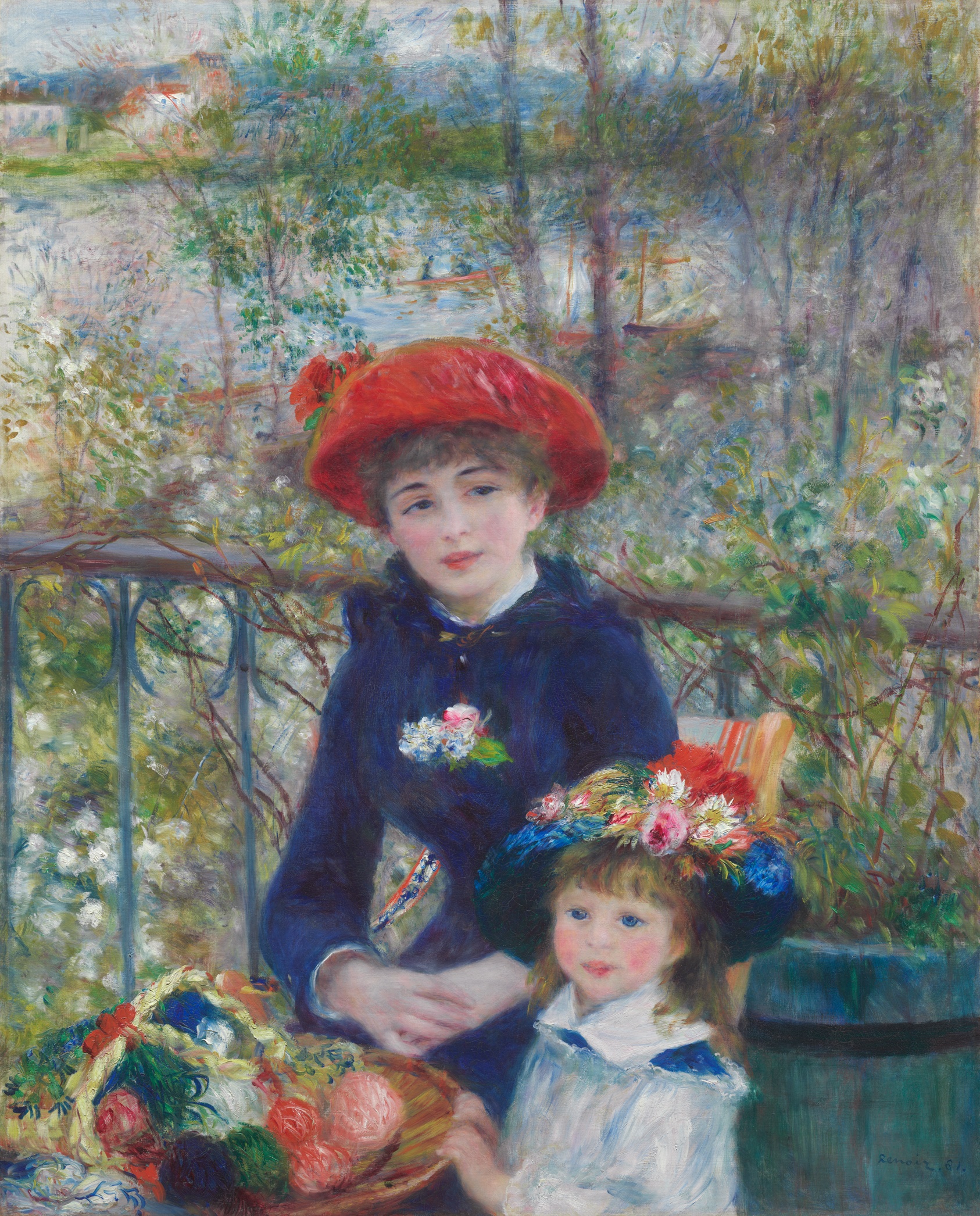
In 1933 The Art Institute of Chicago was bequeathed “Two Sisters (On the Terrace)”, and currently the painting is on view in gallery 201.
Currently in Chicago, visitors to the Garfield Park Conservatory & Gardens, could explore the 2026 Artist’s Garden Show entitled “Pigments!”.
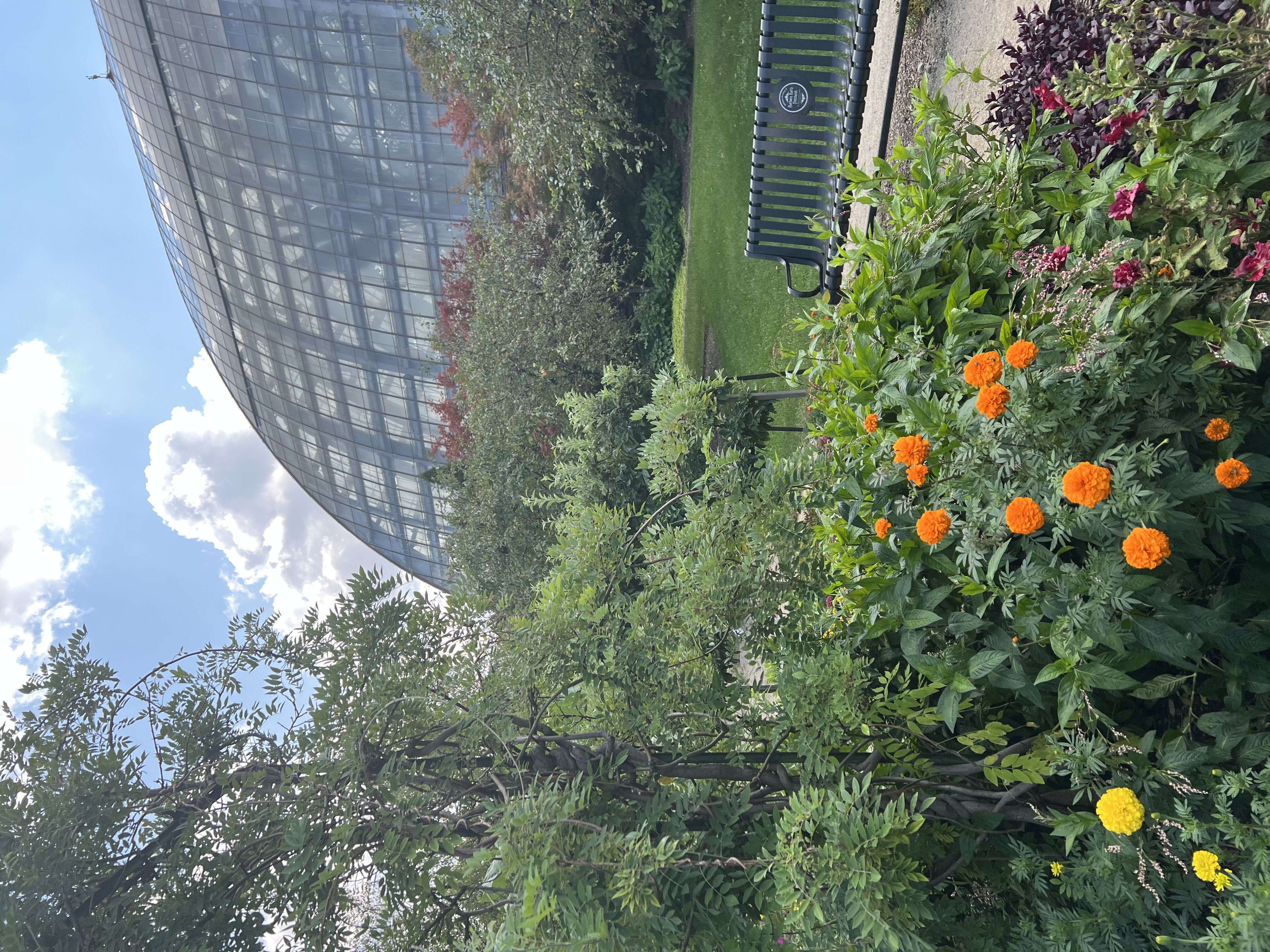
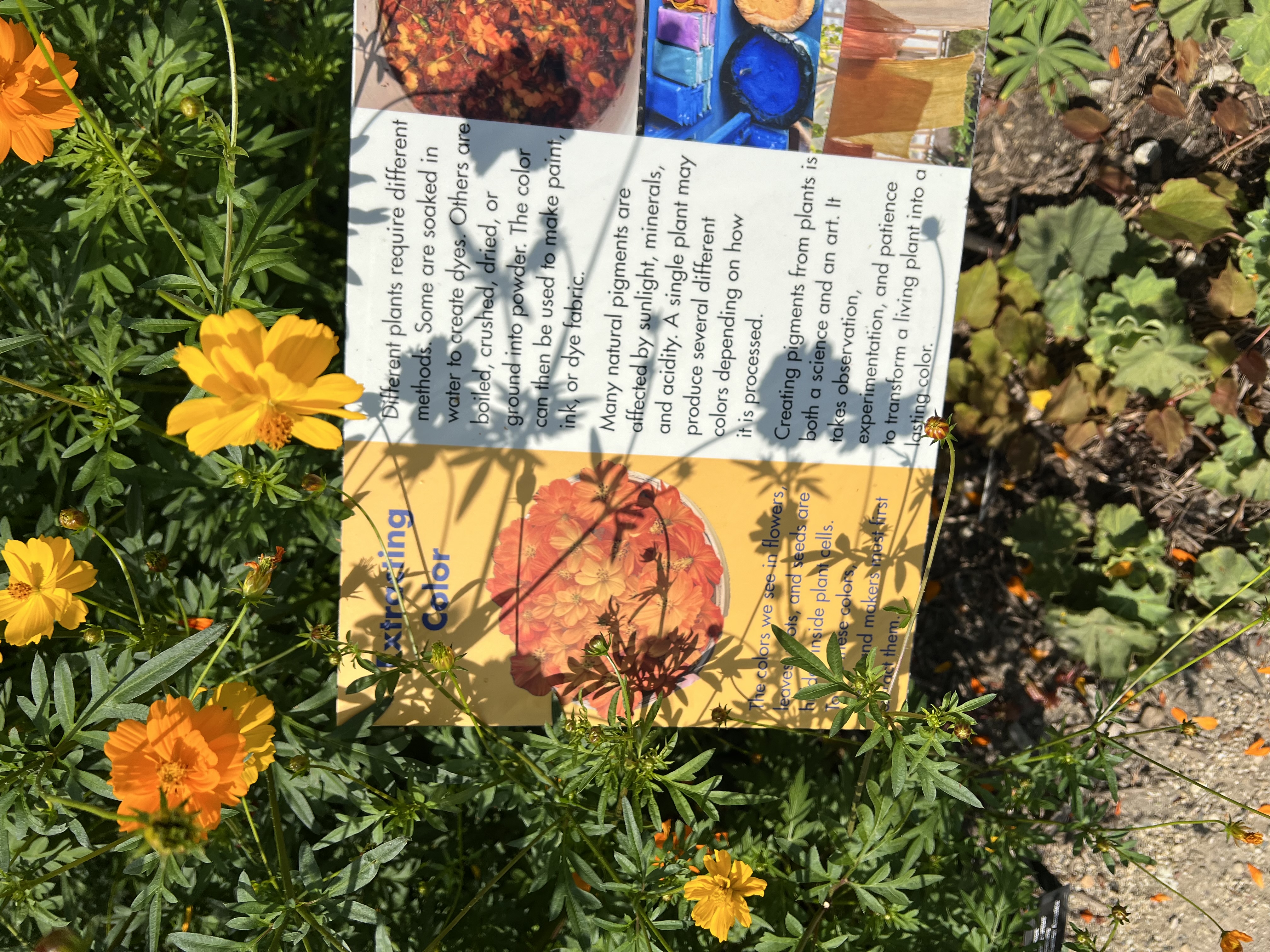
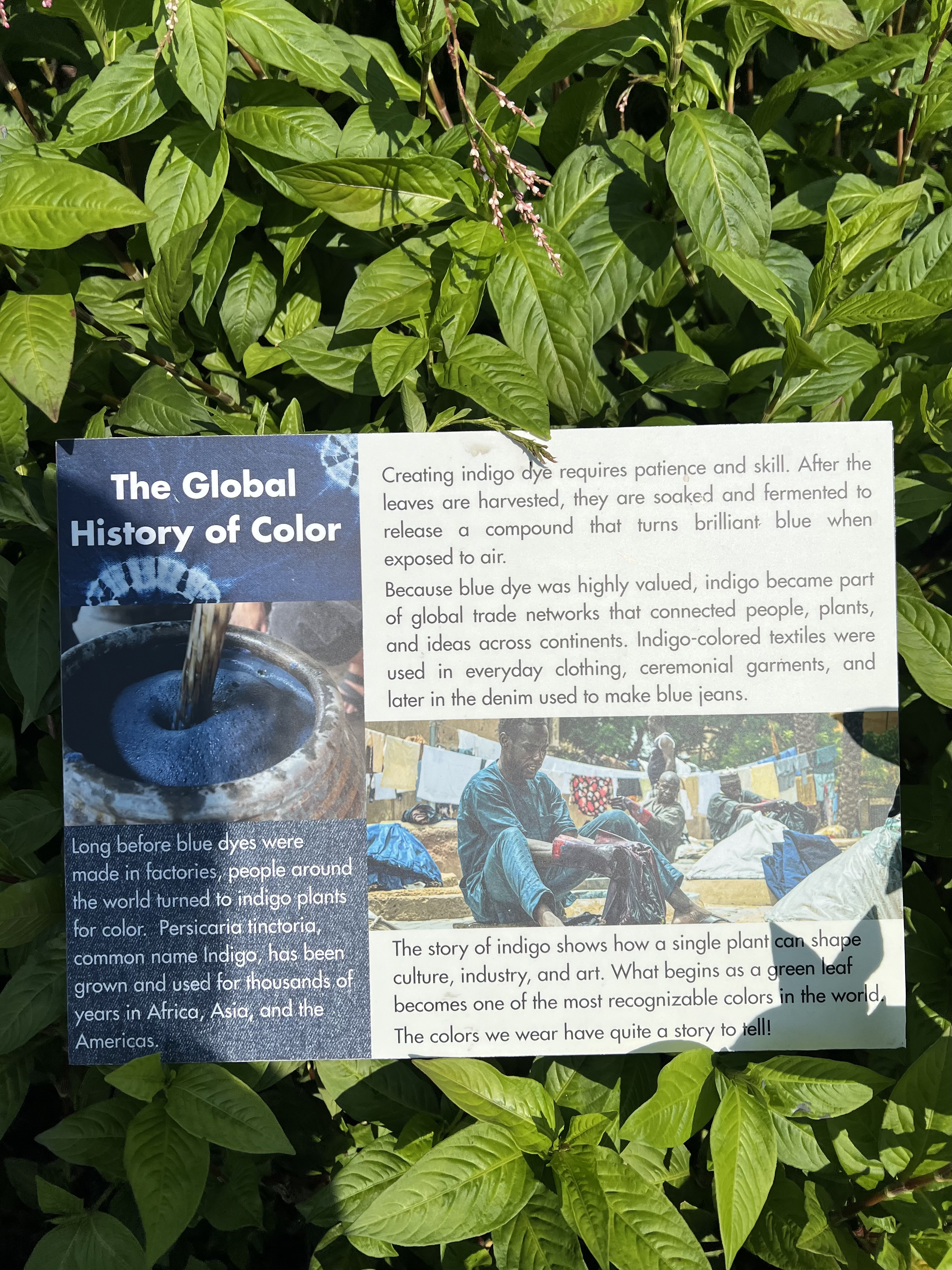
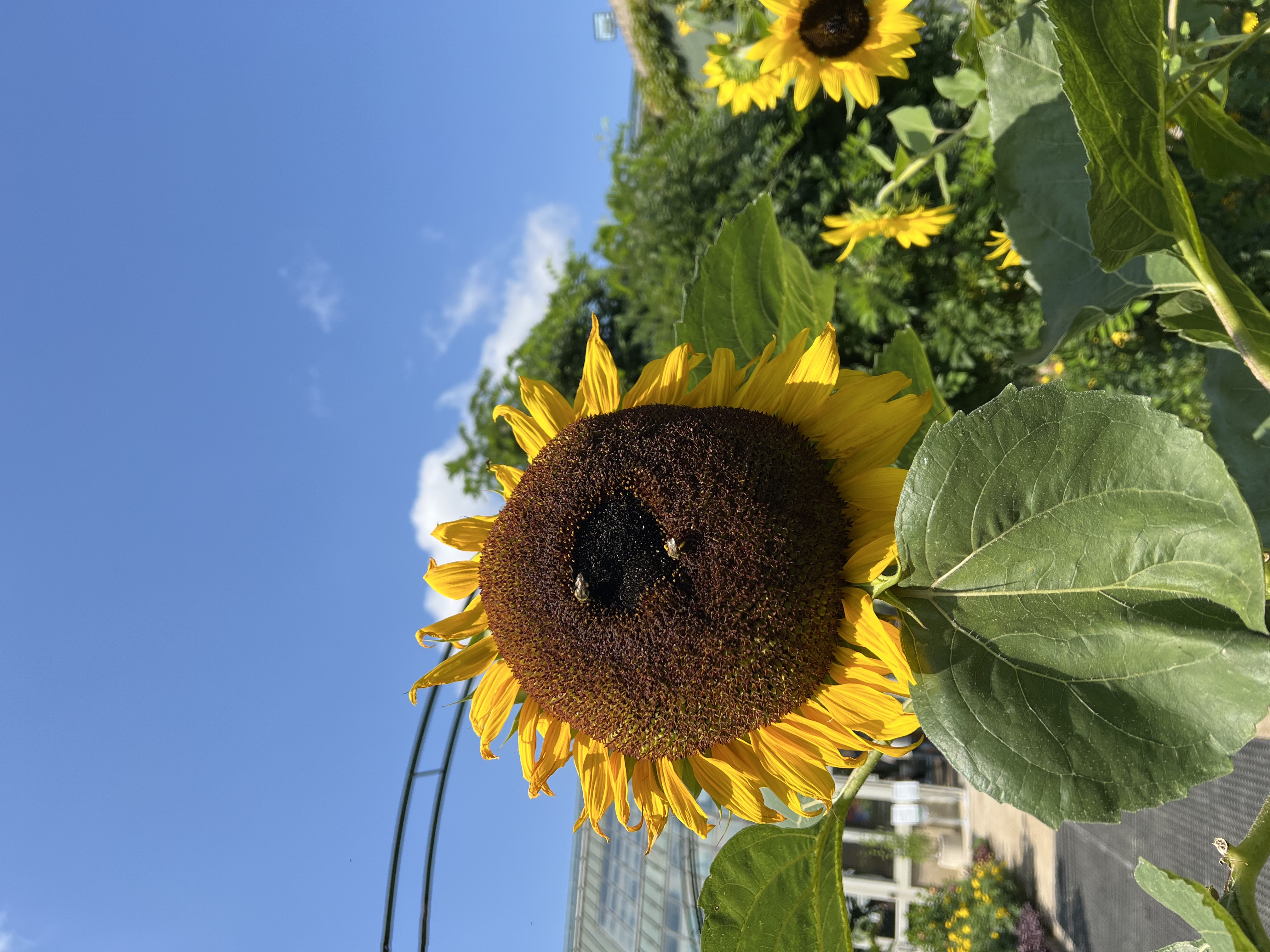
The plants grow in the Pigments garden and are accompanied by printed insight into the history and usage of pigments. Pigments from plants have been used for thousands of years, from ancient civilizations to the Renaissance to contemporary times. Today, there are many artists who create works with natural materials, finding them easy to control and friendly to our planet. Pigments from plants are used in oil paintings, drawings, printmaking, weaving, stitching, and more. We learn that blues can be made using the indigo plant, which was originally used to dye the denim for blue jeans. Plants such as henna produce a reddish color, while some sunflower seeds produce a black. Due to constructions the entrance to Garfield Park Conservatory & Gardens is different for a few weeks, and the alternate entrance is right next to the Pigment garden. The Pigments! Artist’s Garden Show runs through September 13, 2026.