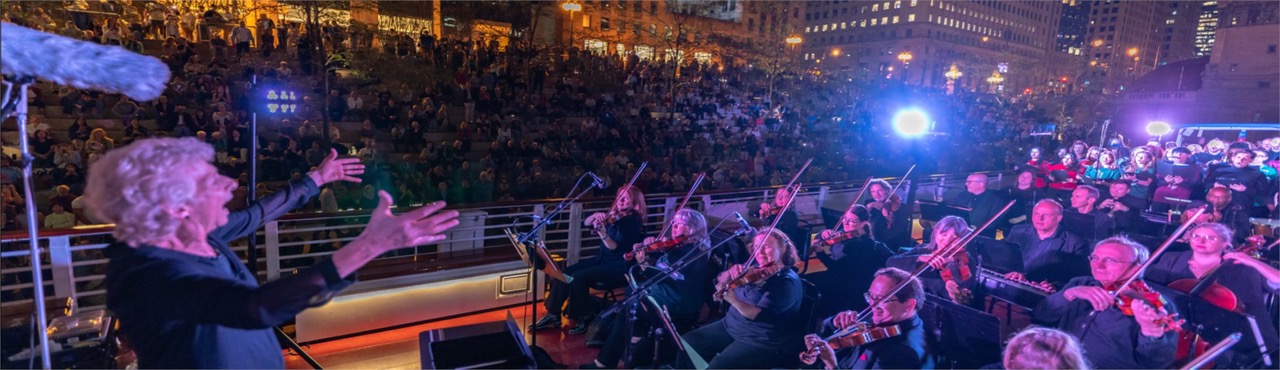
On September 9 Chicago’s Riverwalk will be filled with glorious music as the Music of the Baroque’s Dame Jane Glover conducts a citywide singalong from a boat filled with its chorus, orchestra and the young singers from the Strong Voices chorus, made up of young musicians from the ensemble’s choral education program at seven Chicago public high schools. The Riverwalk and bridges at LaSalle and Clark as well as several restaurants along the Chicago river will offer great vantage points for the festivities and singers are practicing their Hallelujahs for the glorious culmination, proving that the chorus shouldn’t be associated with just the holidays.
Starting just after 7 p.m., Dame Glover and the musicians travel on Shoreline Sightseeing’s Bright Star from Riverwalk East End towards the Merchandise Mart, performing en route. The same program will be repeated for the duration of the evening, recalling that Handel penned his famous “Water Music” in 1717 for a boat party on the River Thames.
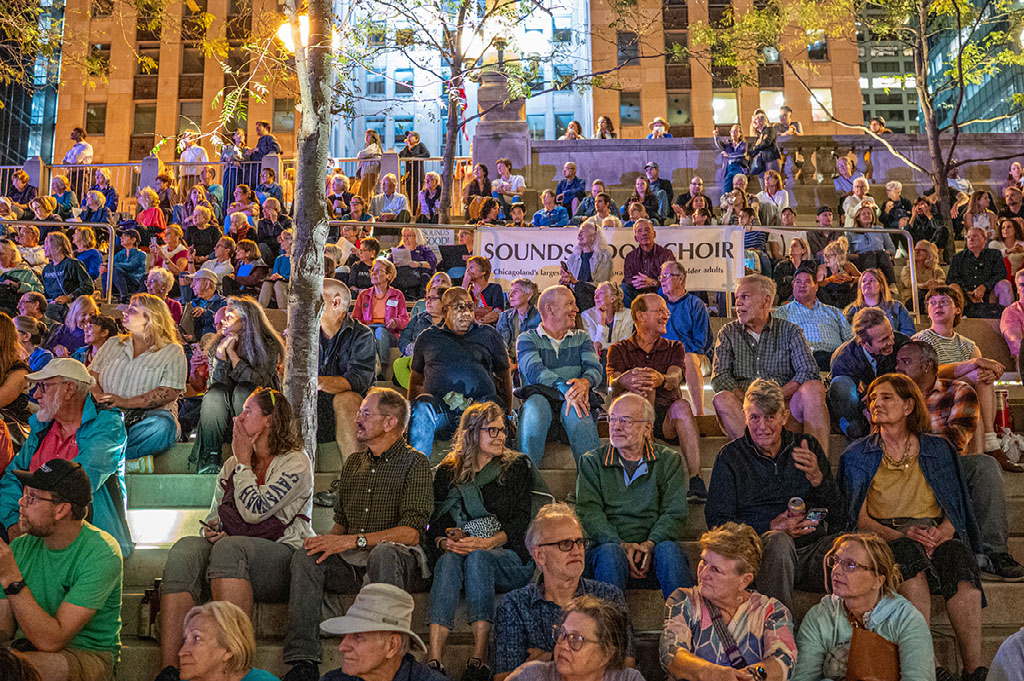
Elizabeth Taggart, Marketing Manager of the Sounds Good Choir which expects 200 of its singers to gather on the riverbanks for the evening, told us more about the joy anticipated.
“At the Clark Street bridge Jane Glover will invite the crowd to sing the Hallelujah Chorus after a program of excerpts from ‘Water Music’ and ‘Music for the Royal Fireworks,’” said Taggart, who once served as the Music of the Baroque’s Director of Communications. She told us about the Sounds Good choir of older adults, started in 2016.

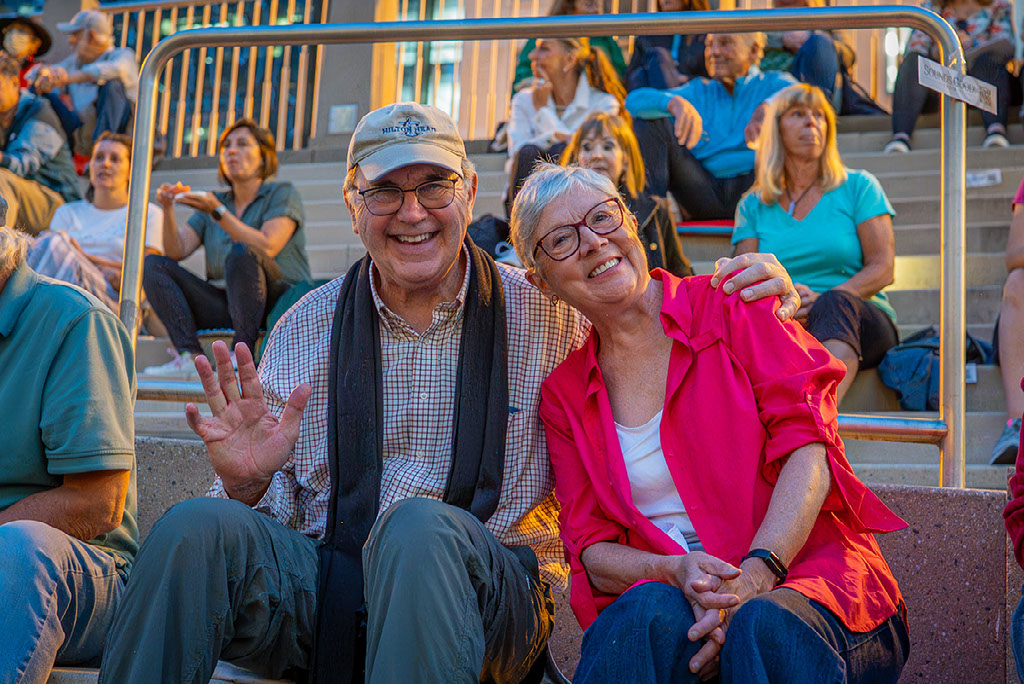
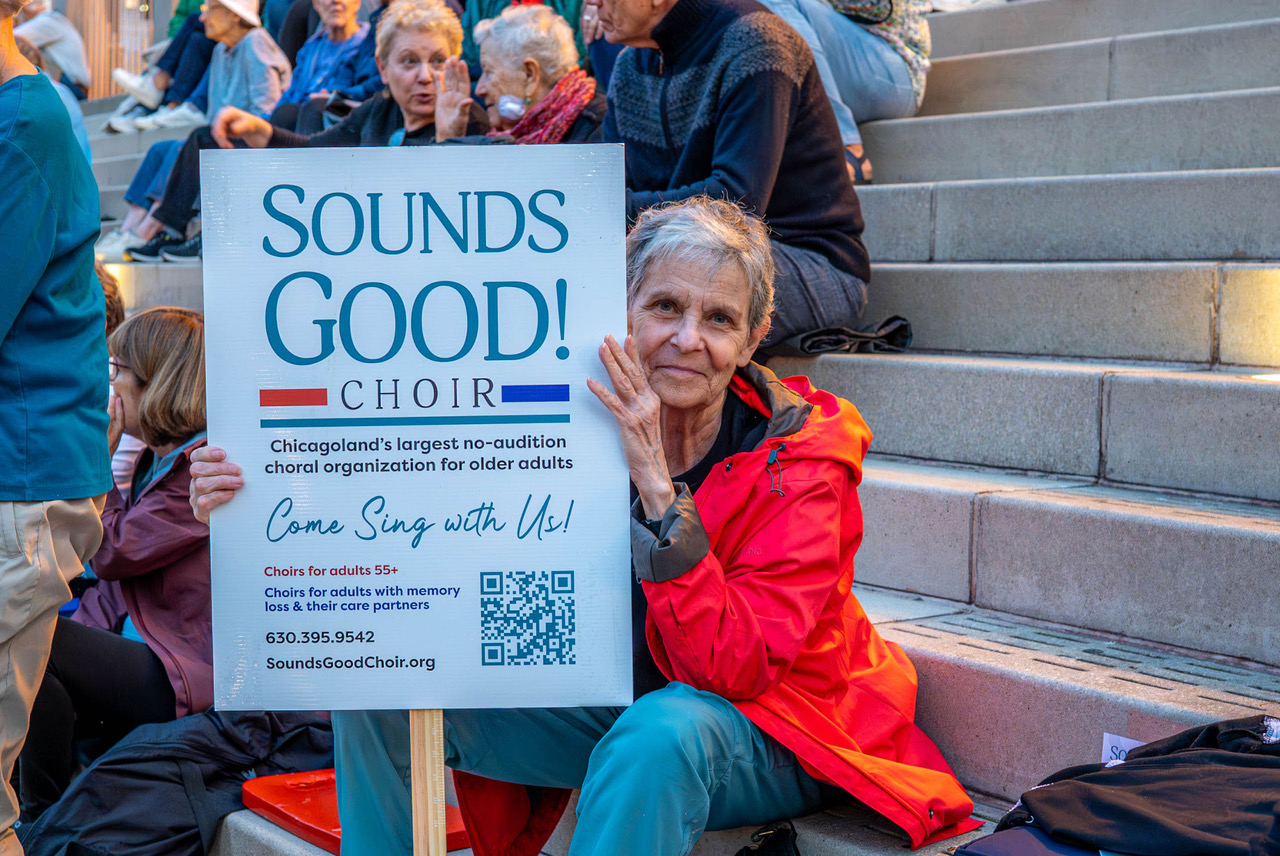
“Last year we were the only choir group participating in the event and 75 of us got there early to save our spaces, all wore matching shirts. We held banners and loved being together. We have a completely different culture than most choirs where you have to compete to become a part of it, be it a community or church choir. There are no auditions, no solos and we have created a culture of no criticisms, no ‘helpful suggestions’; we are here to have fun, relax and sing, while a sense of comfort abounds. Anyone questioning the remarkable power of music to enhance the health and well-being of older adults should go to a Sounds Good Choir concert. Social isolation has been called an epidemic in the United States, especially among older adults, but you wouldn’t know it from these singers, many of whom have made friends and found social lives they previously didn’t enjoy after joining one of the choirs.”
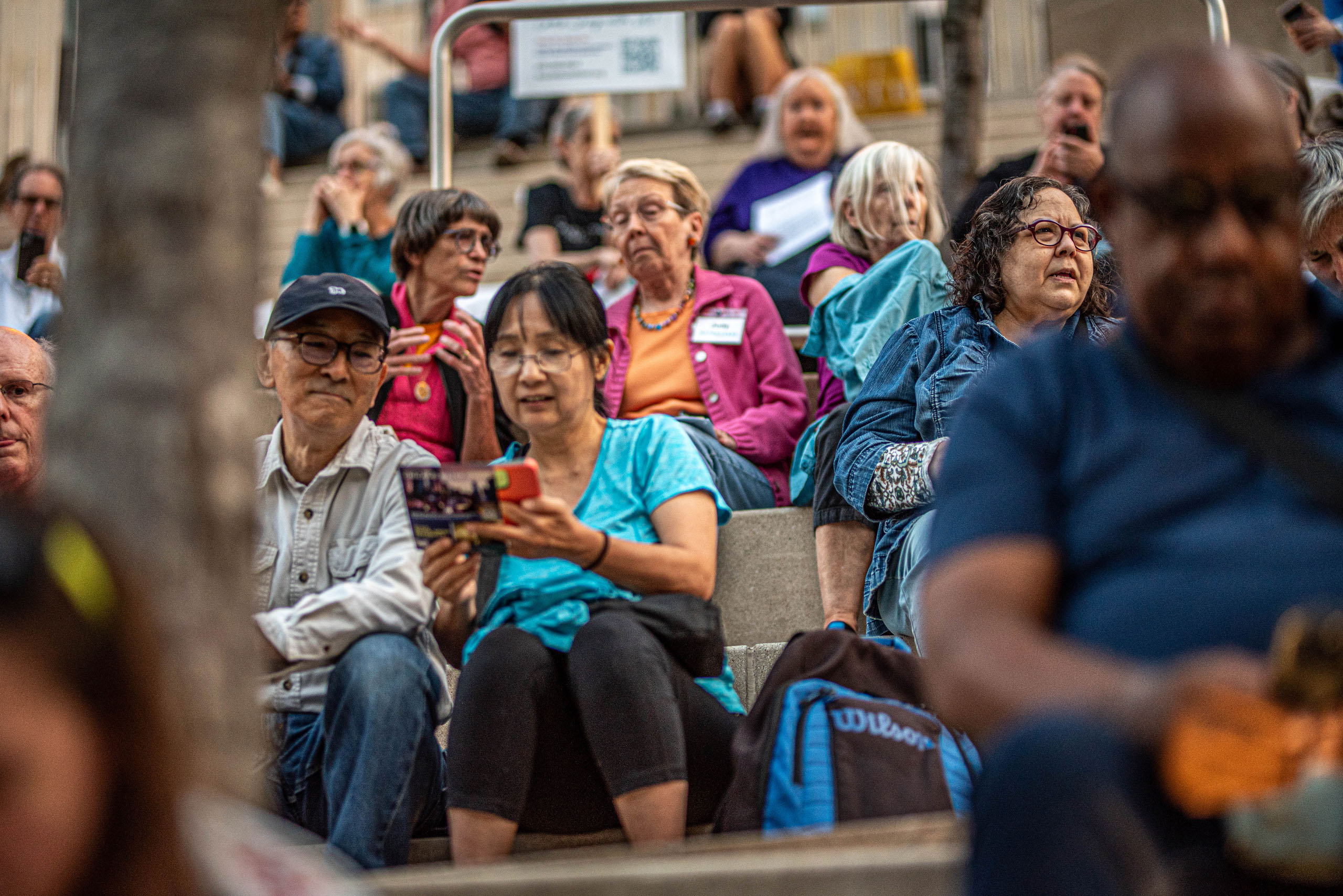
“It might be good for me,” says Bob Horner, a bass who sings with the Gold Coast and Oak Park/River Forest Sounds Good choirs, “but to me it’s just a lot of fun and the chance to sing.”
And fun certainly happens when the roughly 500 choir members learn, rehearse, and perform choral music together under the direction of the nonprofit’s professional conductors and accompanists.
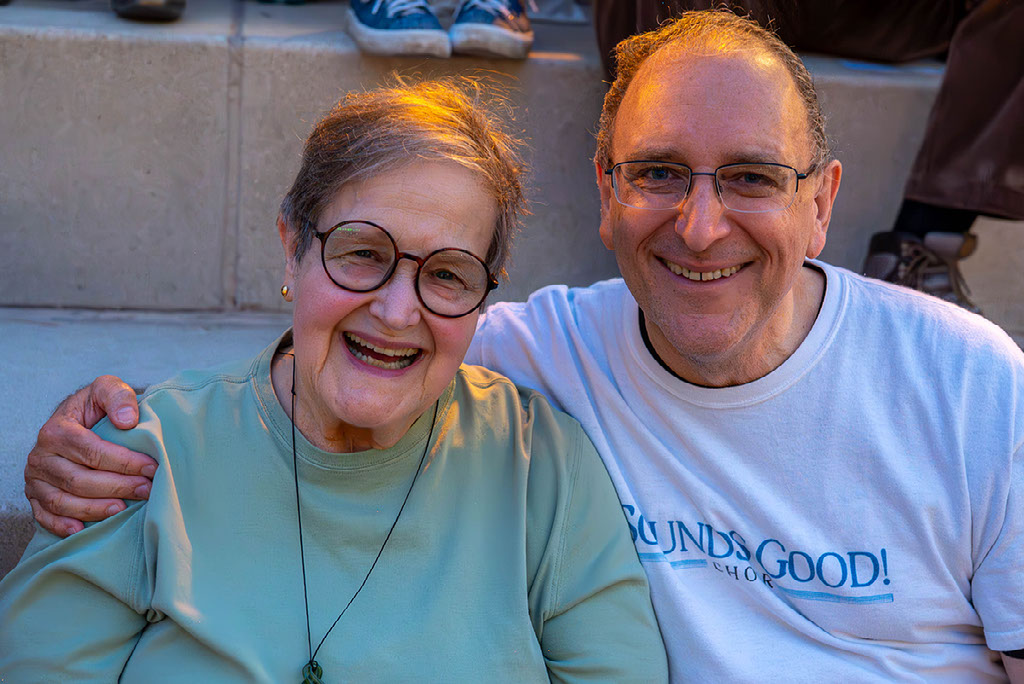
In 2016 Conductor Jonathan Miller, who started Chicago a cappella, and his wife, Sandy Siegel Miller, co-founded the nonprofit Sounds Good Choir.
Their goal was to provide a fun, welcoming community where older adults “55 and better” could enhance their health and well-being through the joy of music without worrying about auditions. Today, Sounds Good Choir is the second largest choral organization for older adults in the nation, and is Chicagoland’s largest no-audition choral organization for adults 55+. The premise was, and remains, simple: everyone is welcome regardless of ability or experience. Meetups in Grant Park for concerts, special day-long rehearsals during the spring and fall sessions, and other events like the city-wide sing-along are activities the organization intends to increase.
“At Sounds Good Choir it is important for the well-being of our singers not only to make music together, but also to socialize. We want to make it a priority for both aspects of the organization,” says Chris Cherry, the new artistic director for the Sounds Good choirs.
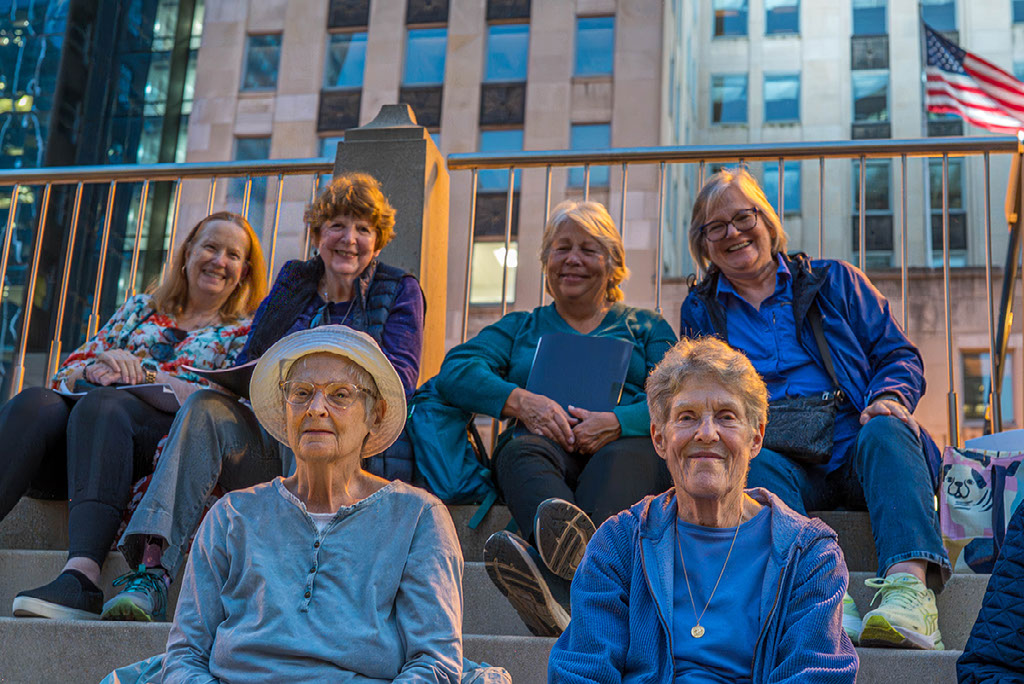
Taggart told us:
“The session fee for the Sounds Good choral program is $210, which works out to $14 per week for the 15-week session, and includes sheet music, professional conductor and accompanist, concert, online practice tracks, and an optional online rehearsal with singers from all choirs. Joining one choir means you can sing as much as you want during a session, rehearsing and performing with as many of the community choirs as you like. All choirs are led by professional conductors and accompanists during weekly, 90-minute rehearsals that culminate with free, all-ages community concerts open to the public. Three sessions are held throughout the year; 15-week Fall and Spring sessions and an eight-week “Summer Rocks” session devoted to classic rock hits. These concerts are always accompanied by a live band made up of some of Chicago’s finest professional rock musicians.
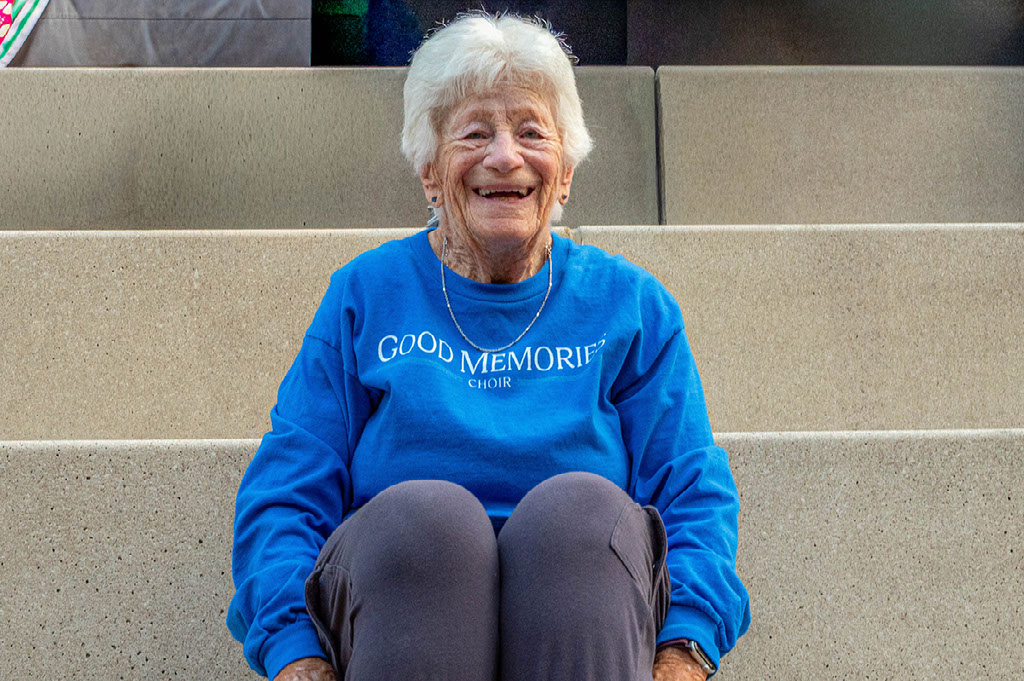
Excited at the prospect of offering those same health benefits to persons in the early stages of dementia, the Millers created the Good Memories program in 2018. By modifying the Sounds Good repertoire, they were better able to address the needs of those facing the challenges of memory loss. Today singers in both the Sounds Good and Good Memories programs improve their cognitive abilities and experience other health benefits regardless of where they are on the spectrum of brain aging.
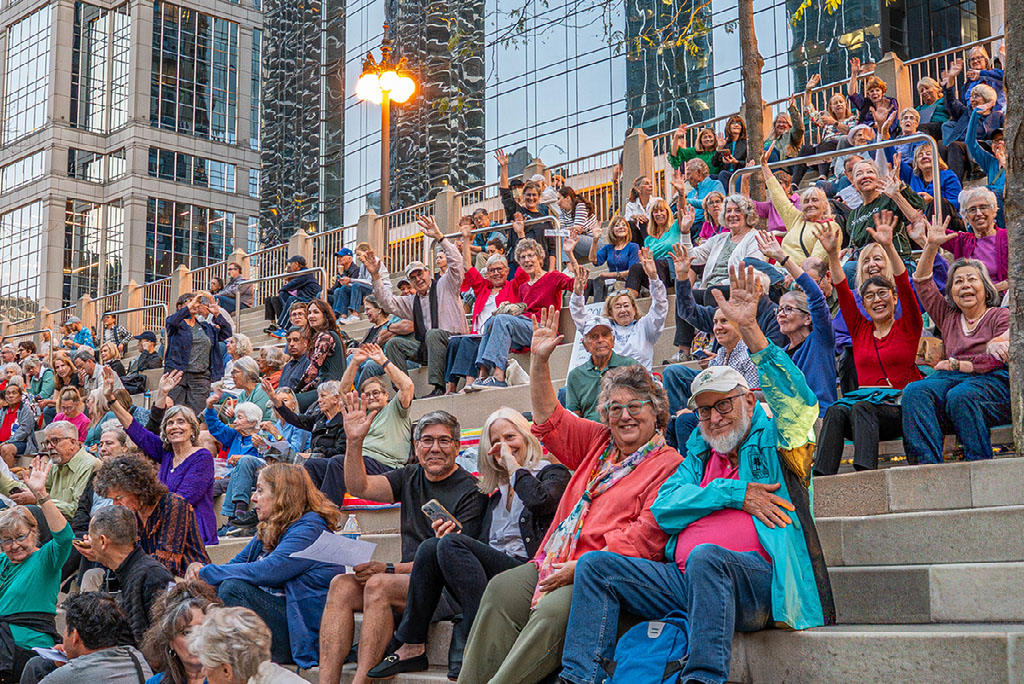
The Good Memories program—unique to the Chicago area and virtually all of Illinois—brings together adults with early-stage dementia and their care partners to have fun singing new and familiar music. Good Memories offers a weekly opportunity for people with memory loss to socialize and sing together in a safe, stress-free atmosphere. Assistance from volunteer singers is available, as needed. No formal diagnosis is needed to participate and there are no labels; no distinction, at all, is made between participants. Singers who have care partners attend together, and there are also singers who live independently without a caregiver.
“It is a transformational experience for everyone, from the conductor and volunteers to the singers with memory loss and their care partners—whether it is a professional caregiver, a parent and child, spouses, best friends. When asked what impact, if any, singing with Good Memories has had, ‘life changing’ is the description most often seized upon,” Taggart said.
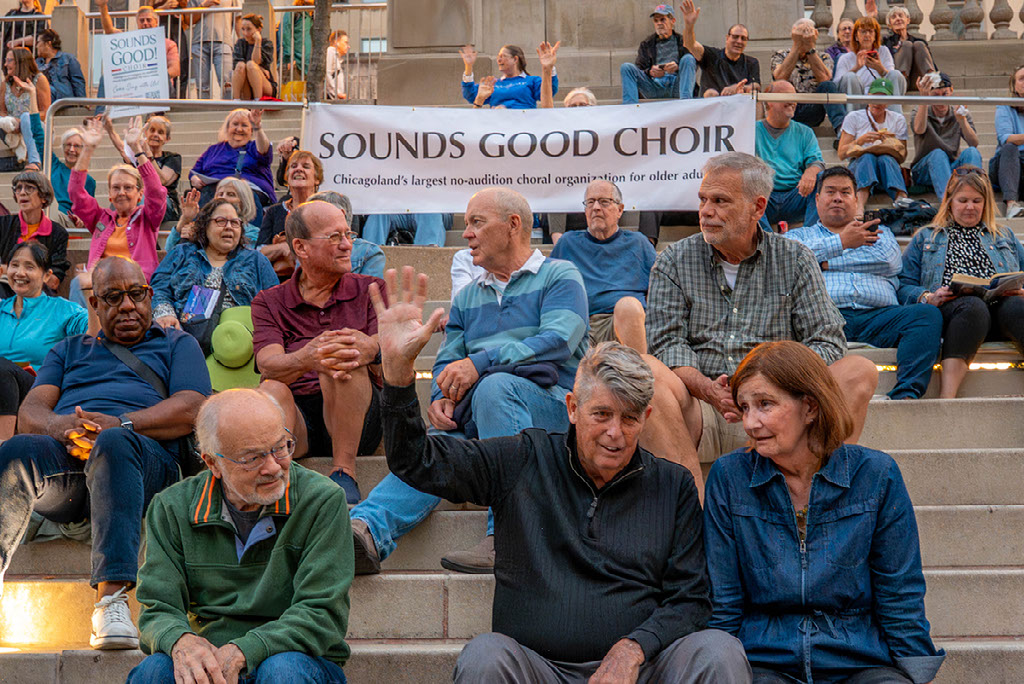
“Twenty minutes in and I can see a change in the singers,” says Miller. “Everyone in the room is alert, alive, and fully present, including people with memory loss who were not very engaged or responsive when they arrived. You can feel it in the room when all of our brains are turned on. From that point forward and through the end of the rehearsal, you can’t tell who has memory loss and who doesn’t.”
“For singers with early-stage dementia, a difficult repertoire can detract from the delight of singing with others,” said Sandy Siegel Miller, Good Memories’ program director. “Rehearsing and performing a whole concert of three and four-part music the way our Sounds Good choirs do is often too challenging for our Good Memories singers, and the pace of rehearsals is too fast. I wanted the experience of Good Memories to be more accessible, more fun, and more focused on the amazing community that we’ve built.”
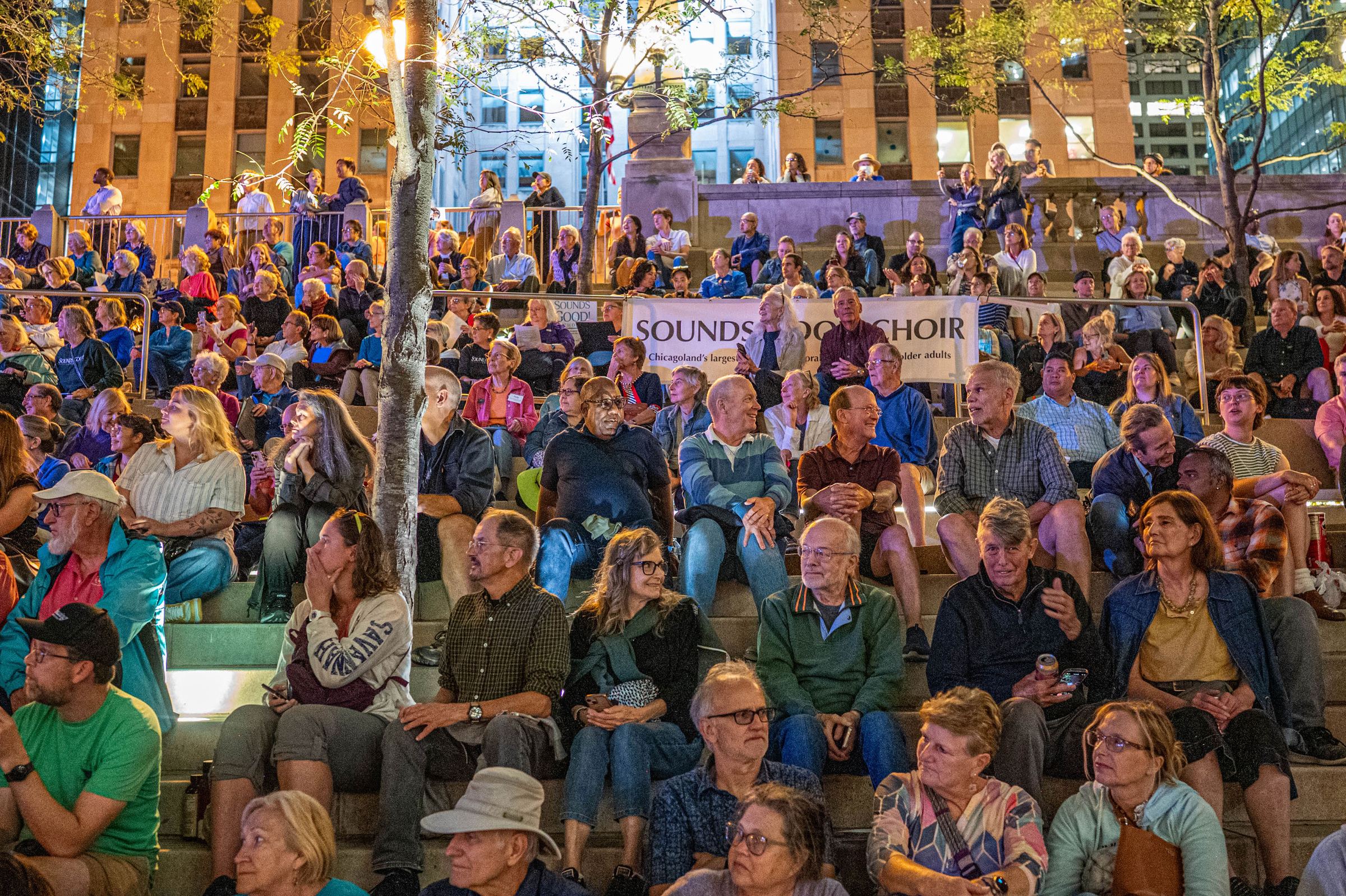
Lyric sheets with and without musical notation are provided for each song, and rehearsals are informal, with breaks for snacks and lots of socializing. Good Memories participants sing six to eight songs, typically familiar tunes that can be sung in unison or with harmony, but new music is introduced. Learning something new and being treated like a person, instead of a medical case to be managed, is one of the appealing aspects of Good Memories.
“Most places you go you’re just a patient,” explains one man with early-stage dementia, who attends with his wife. “Here, I’m someone who is learning a new skill, I’m keeping my mind alive. There aren’t fun things to do for people like us, it’s all support groups and appointments. Here, it’s just fun. You don’t need to explain yourself. You just sing and have a good time.”
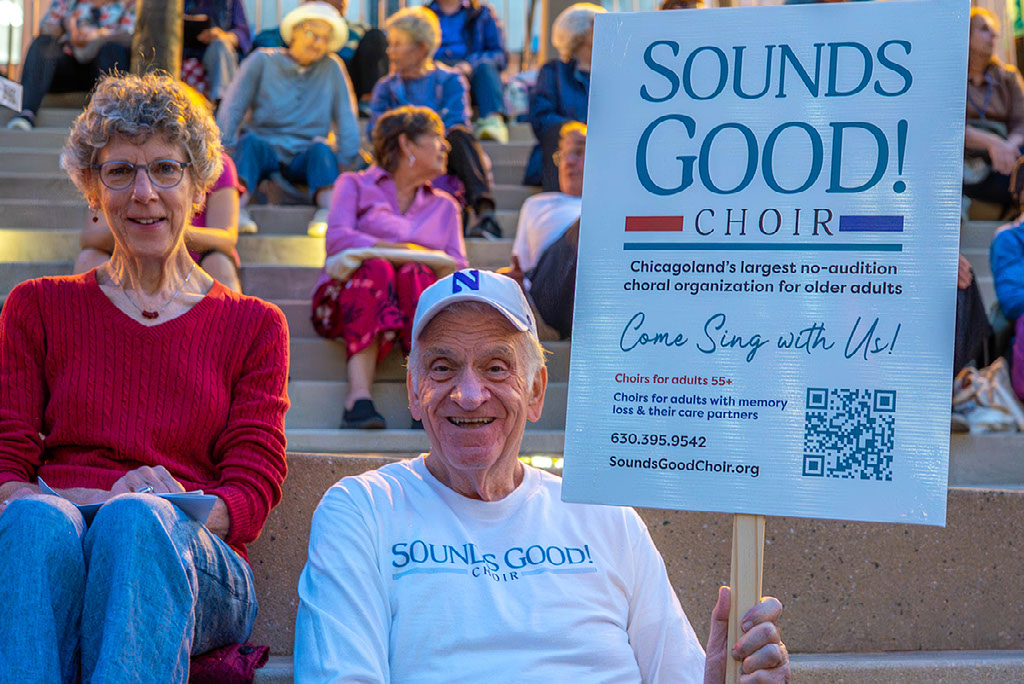
Every Good Memories rehearsal ends the same way, with a rousing rendition of Roy Rogers’ classic song, Happy Trails. The Good Memories program has expanded to three choirs: Gold Coast, Hinsdale, West Pullman.
Not confined to music programs, Sounds Good Choir also contributes to research at the intersection of music, health, and neuroscience. The choral organization partnered with the Mesulam Center for Cognitive Neurology and Alzheimer’s Disease at Northwestern University, providing funding and research subjects for a study on the benefits of singing in a choir, now in its fourth year. Findings from the study were published recently in the Journal of Alzheimer’s Disease.
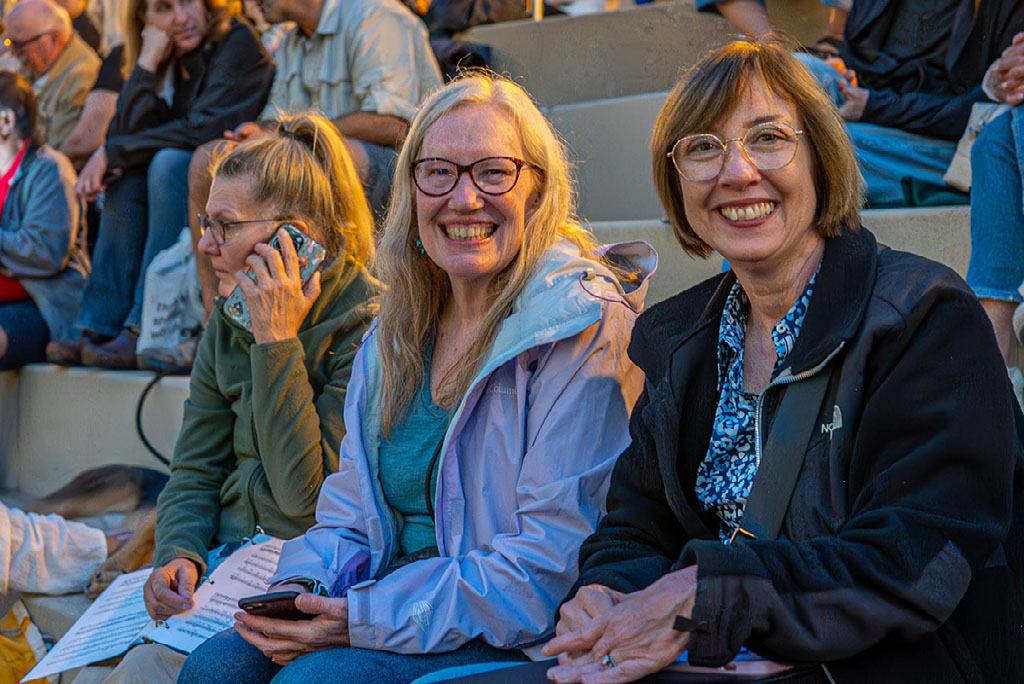
For more information about the Sounds Good Choir organization and its two choral programs, Sounds Good and Good Memories, visit SoundsGoodChoir.org.
For more information about the September 9 Riverwalk event visit: baroque.org