Dr. Ruth Gannon Cook, an emeritus professor at DePaul University, is called Dr. Ruth by students, but to colleagues and friends she’s known as the female Robert Langdon, the Da Vinci Code protagonist.
Ruth grew up in New Orleans, a multi-cultural city, steeped in mystical, mysterious folklore with traditions dating back hundreds of years. A fourth-generation New Orleans native, her family emigrated there from Europe and intermarried with Native Americans and other minorities. She credits her grandmother for awakening a fascination with signs and symbols. As a curious five-year-old she would listen to her grandmother, a traiteur (healer), pass on the rich legacies of her New Orleans ancestors.
“I was always inquisitive, wondering and asking how things worked, why people did the things they did, and asking why humans always did those things. As I got older, I started reading about the things that intrigued me, spending hours at the library poring over history, archeology, and mythological legends. Through the years I began to see patterns emerge in those areas and questioned why humans seemed to repeat those patterns through millennia.”
Inspired, Ruth went on to study ancient symbolisms of nationalities, such as the French and Italian symbols of Tarocchi, the Judaic symbols of the Torah and Kabbalah, the Nordic symbols of the Vikings, the Eastern symbols of the Chinese and Hindu cultures, the African tribal symbols and the Middle Eastern symbols of the ancient Arabic cultures.
Her quest for knowledge led her to academia receiving a doctorate from the University of Houston, College of Education where she focused on Semiotics and Distance Education. Today she is a recognized expert in the field of Semiotics, the study of signs, symbols, text, language, stories, metaphors, gestures. Her impressive academic credentials include more than 120 papers and presentations on semiotics at conferences in the United States, Canada, and Europe as well as two academic books.
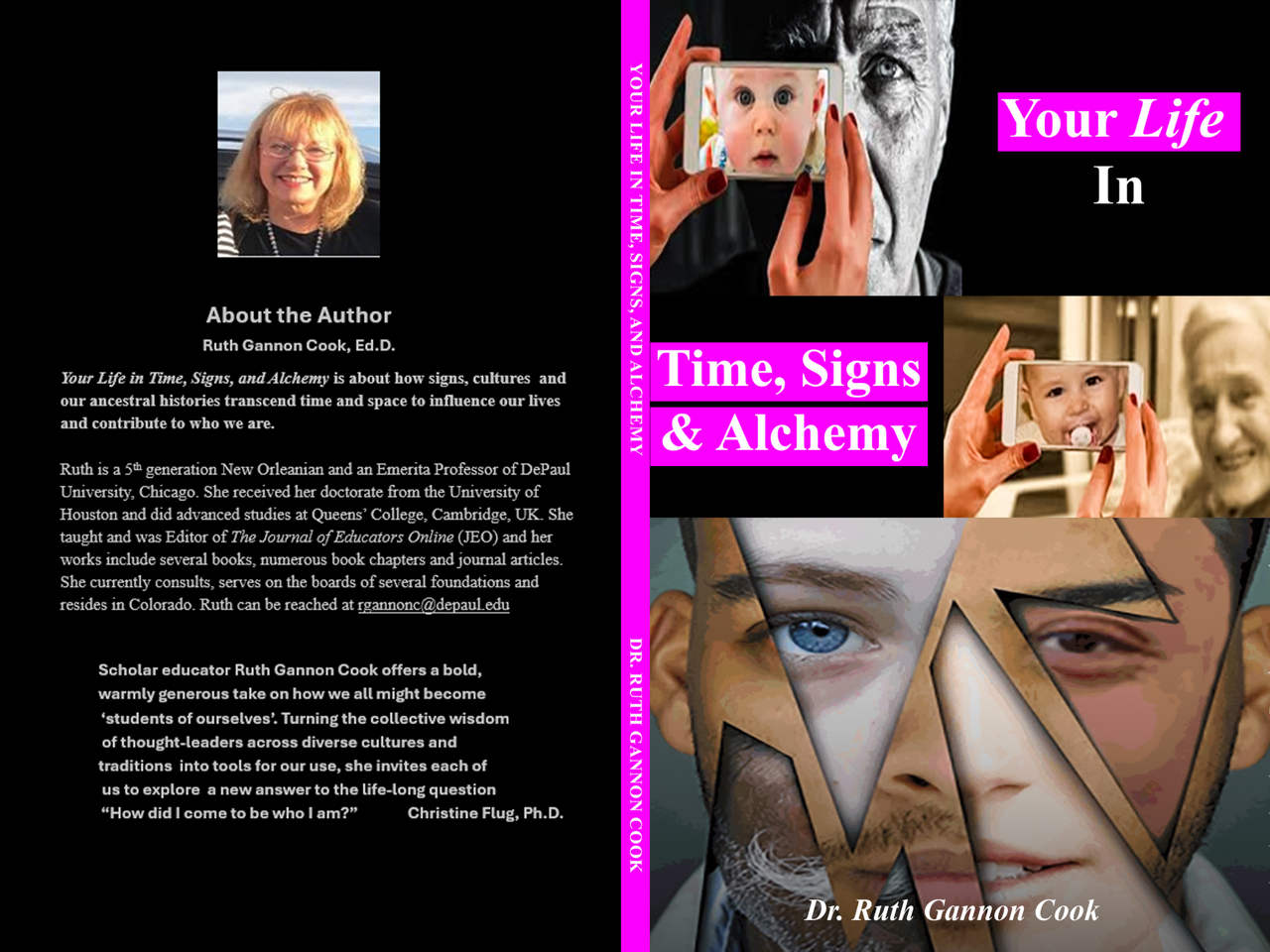
Life handed her a curveball when five years ago she received a terminal cancer diagnosis. For years, she had thought about writing a book for general readers. “But I kept delaying it until doctors told me I had a 7 percent chance of surviving cancer surgery. I knew then it was time.” After surviving surgery and intensive follow-up treatment, she started writing her book, Your Life in Time, Signs, and Alchemy. Now cancer-free, she gratefully places herself among the 7 percent.
Ruth points out that everyone receives signs that change is needed. However, not everyone listens. “What usually happens is that you first get a gentle nudge—a quiet feeling that you should do something—but it’s easy to ignore. Then something happens again to remind you, a little more loudly. Once again, you ignore it until the warning becomes impossible to overlook. Eventually, you realize that you must make the change—you must act. For me, the terminal cancer diagnosis was the impetus to write this book.”
She points out that signs are all around us and we should start paying closer attention to what catches our eye or lingers in our thoughts. Sometimes an idea quietly enters your mind, only to keep appearing in unexpected ways. You may think about taking a trip someday, then overhear someone talking about that very destination. Later, you visit a restaurant that reminds you of it, and soon afterward a travel flyer arrives in the mail advertising discounted fares to the same place. Coincidence? Perhaps. But when something repeatedly captures your attention, it may be worth asking why. Even if taking that trip seems impossible right now, you might begin making tentative plans or simply remain open to the possibility.
The introduction to her book cautions readers not to expect a typical “pop culture self-help” book. Instead, it is an expansive and imaginative journey into the world of symbols, stories, and personal transformation. She reminds readers that our family stories, traditions, and memories become a permanent part of who we are, shaping how we see ourselves and the world around us.
Do you knock on wood or avoid walking under a ladder? These familiar superstitions, often passed down by parents or grandparents, illustrate how beliefs and stories can become woven into our lives. We frequently accept them without questioning their origins or requiring proof, and in turn, we pass them along to our own children.
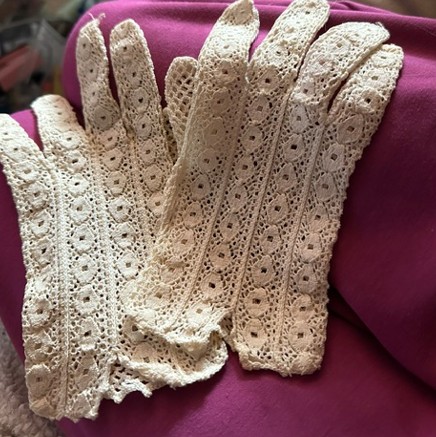
For good luck, brides like to wear “something old, something new, something borrowed, something blue.” While the exact origin of the tradition is unknown, this familiar saying can be traced to a Victorian-era English wedding rhyme. Each item is said to carry its own meaning: “something old” represents continuity, “something new” symbolizes hope for the future, “something borrowed” brings good fortune, and “something blue” represents love, fidelity, and purity. Ruth’s daughter wore her great-great-grandmother’s 100-year-old gloves at her own wedding.
Many of us have lucky charms—artifacts that may be as ordinary as a favorite team T-shirt, an award, or a cherished piece of jewelry. But Ruth questions, “are these objects really lucky? Or is their power rooted in the history, memories, and family stories attached to them? We remember who gave them to us or where we purchased them. We remember what they mean or how they make us feel.”

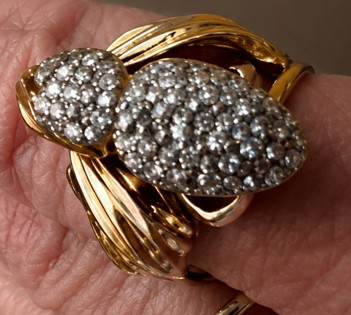
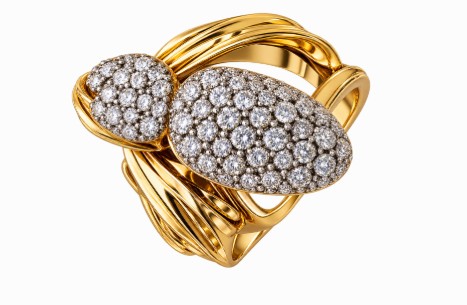
Bumble bee ring Ruth always wears to remind her that she can do whatever it takes.
Ruth has her own artifacts. “I carry a tiny little crystal pig, Penelope, when I go to important events like my Master’s and Doctoral defenses. I have a bumble bee ring which I always wear because the bumble bee is supposedly too fat to fly—yet it does! It reminds me that I can do it—whatever it takes.”
(Your Life in Time, Signs, and Alchemy is available from Amazon.com or drruthg.com)