
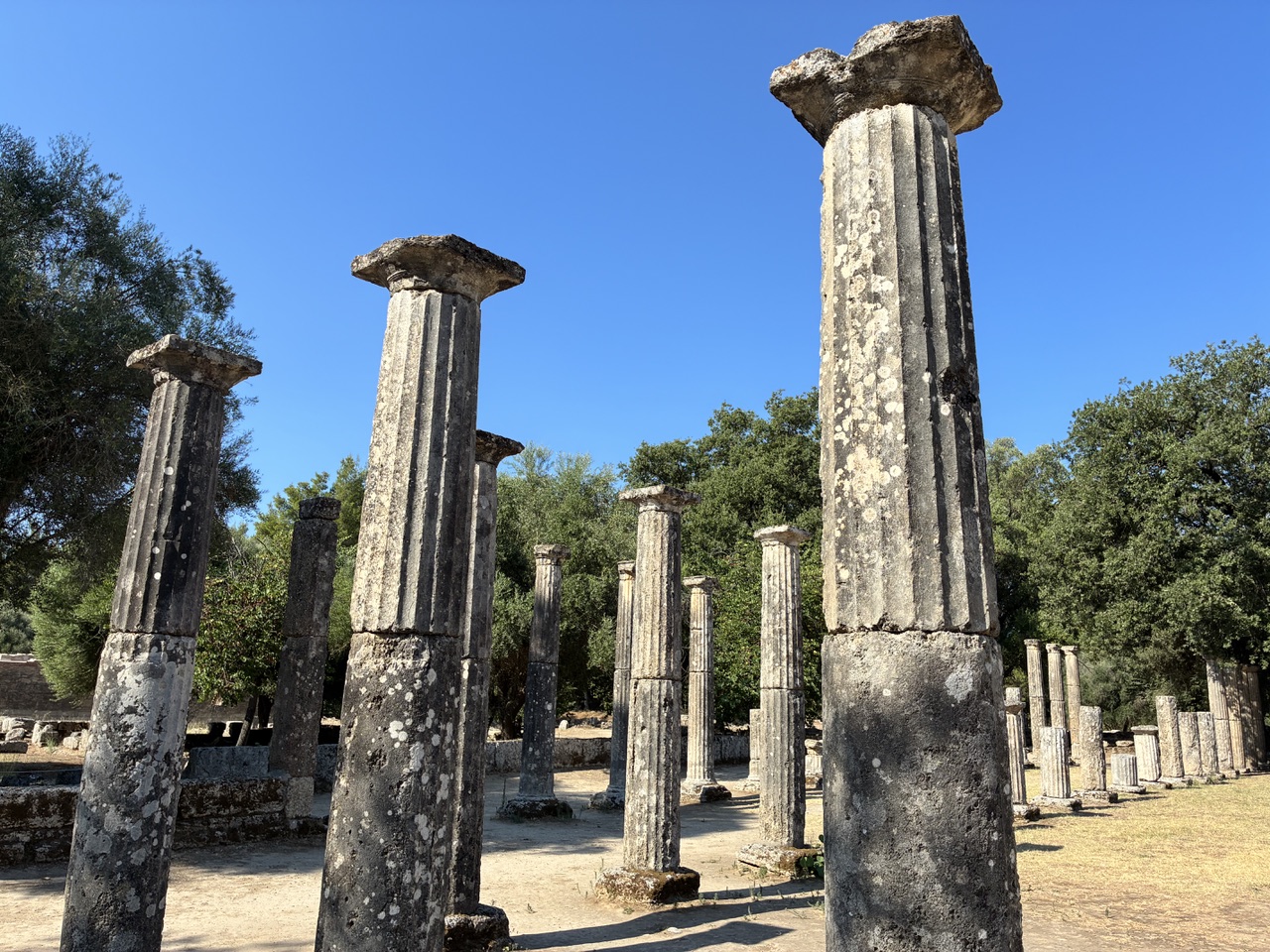
Those original Games in Olympia were organized to honor gods that we learn about in mythology, such as the husband-and-wife team of Zeus and Hera. Successful athletes received olive wreaths rather than medals. And perhaps the most drastic change from LA28 two years hence: All competitors were naked men.
“For them, it was normal to be naked,” our tour guide explained, adding that the gymnasium — coined from a Greek word for naked — was a place where unclothed men could train.
Unlike today’s athletes, whose entire lives are defined by thorough regimens, the Greeks arrived one month before the Games to prepare. A handful of limestone buildings for boxing, wrestling and pankration (a combination of the two sports; perhaps an early version of mixed-martial arts) welcomed contestants. The athletes — who lathered their bodies in olive oil to protect them from the sun and to loosen muscles — mainly slept in tents and under trees as they prepared for the Games.
The Olympics lasted one day every four years during its first century and slowly grew (both Summer and Winter Games are a little more than a fortnight today). Runners would engage in a sprint of 600 feet; that event was called a stadion, the precursor to what we know today as stadium. The longest race was 14,440 feet — or 24 times back and forth. Religious ceremonies were conducted steps away.
A false start on the track engendered corporal punishment. That was a light sentence compared to the one married women faced; those who tried to compete or even watch the Games could be punished by death. Despite these disciplines of local citizens, wars against enemies would be suspended during the Olympics.
But that doesn’t mean the enemies listened. The import of these quadrennial Games to the locals was described by Dartmouth College Professor Paul Christesen, an expert in ancient Greece, at Olympics.com:
“The classic example is that when the Persians invaded Greece in the summer of 480 (BC) a lot of the Greek city states agreed that they would put together an allied army, but they had a very hard time getting one together because so many people wanted to go to the Olympics. So, they actually had to delay putting the army together to defend the country against the Persians.” — Paul Christesen, Dartmouth College
A modern version might witness Chicagoans continuing to watch a Bears’ game despite hordes trying to overrun the city.
For the boxers and wrestlers, weight classifications did not exist; in the pankration, there were only two rules — no biting and no gouging. Sometimes, those rules didn’t help; athletes in all three sports died.
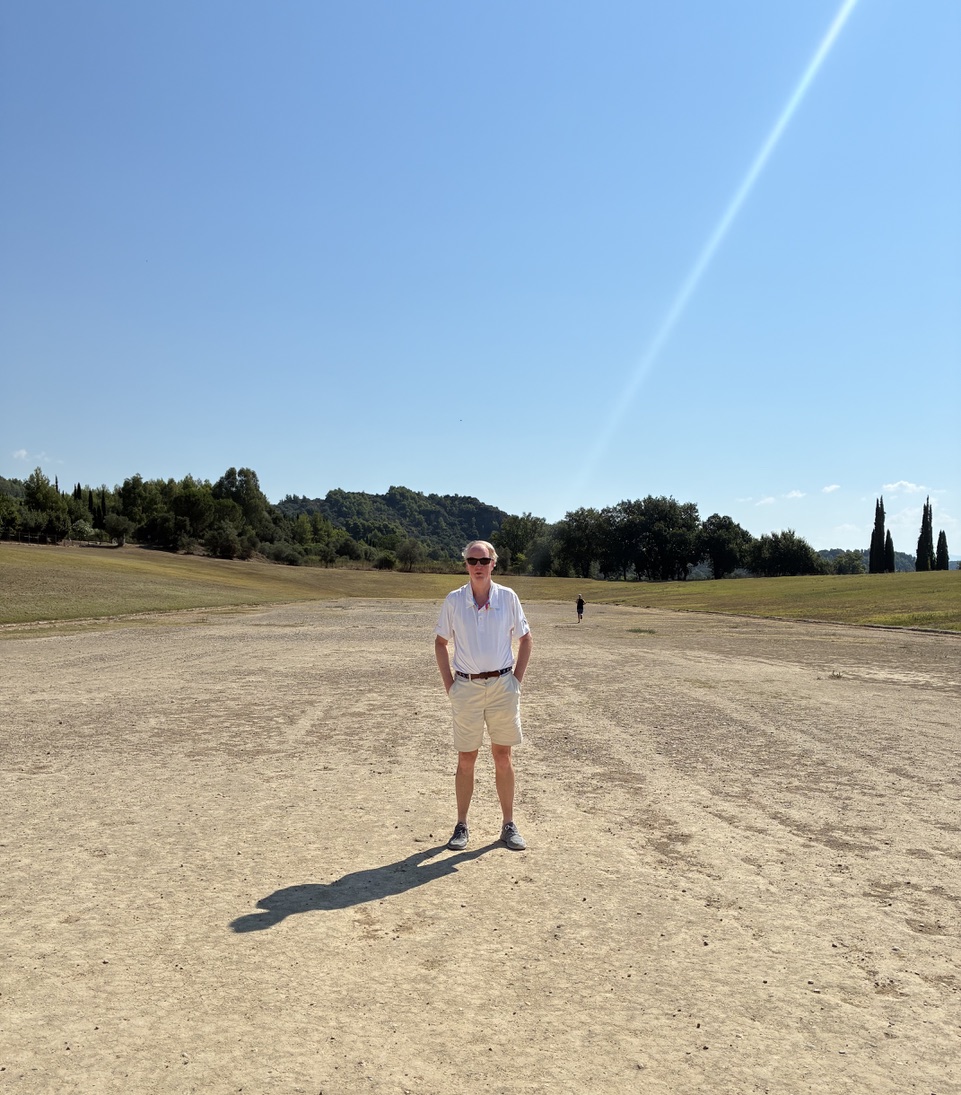
About 40,000 spectators would watch events in the stadium, which featured athletes emerging from a tunnel much like today’s NFL games.
The site remains involved with today’s Olympics in one way: the torch flame is lit amid the ruins of the Temple of Hera. A concave mirror concentrates the sun rays to create the flame. Girls dance and sing, and the torch is handed to an athlete to begin the journey to the next Olympic stadium. That fire was an important part of the ancient Games, as the Greeks believed Prometheus had brought fire to earth for mankind’s benefit.
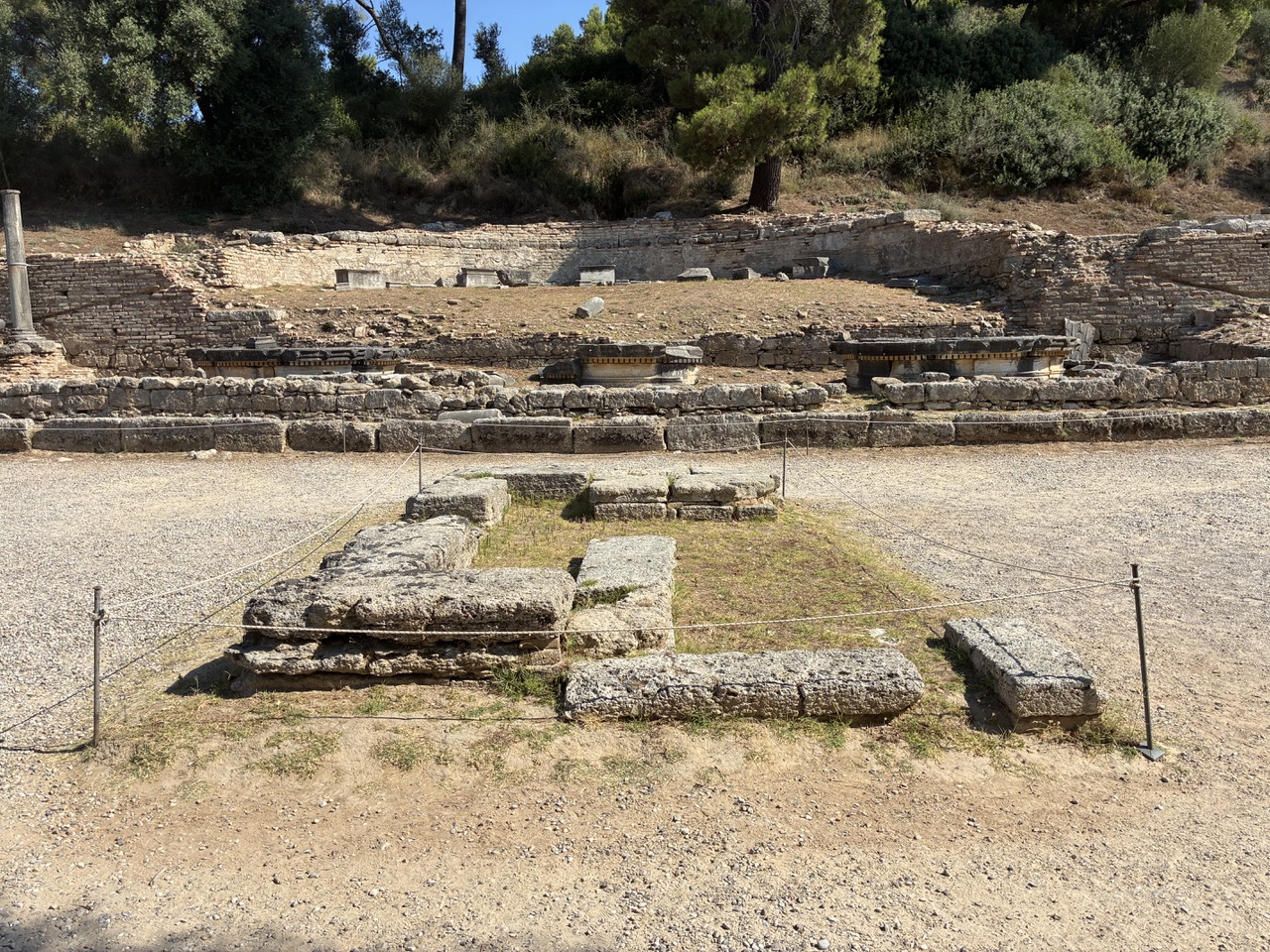
The ancient Games lasted until the fourth century AD — more than 1,000 years. The Roman Empire had taken over the area and ordered much of the religious space destroyed. In the 19th century, an expedition removed much of the river silt that had covered the site (Olympia is located between two rivers, which explains the presence of ubiquitous large trees bathed with leaves and olives). The expedition’s work revealed the origins of the athletic and religious sites — though not the hippodrome, where the dangerous chariot races featuring four horses per rider thrilled audiences. An Olympic revival in 1896 in Athens created the modern Games — where, thankfully, athletes are clothed to this day.

