There are leaders whose accomplishments can be measured in programs created, legislation passed, buildings saved or organizations strengthened. And then there are leaders whose greatest accomplishment may be changing how people understand the work itself.
For Bonnie McDonald, after 14 years as President and CEO of Landmarks Illinois, the record includes both.
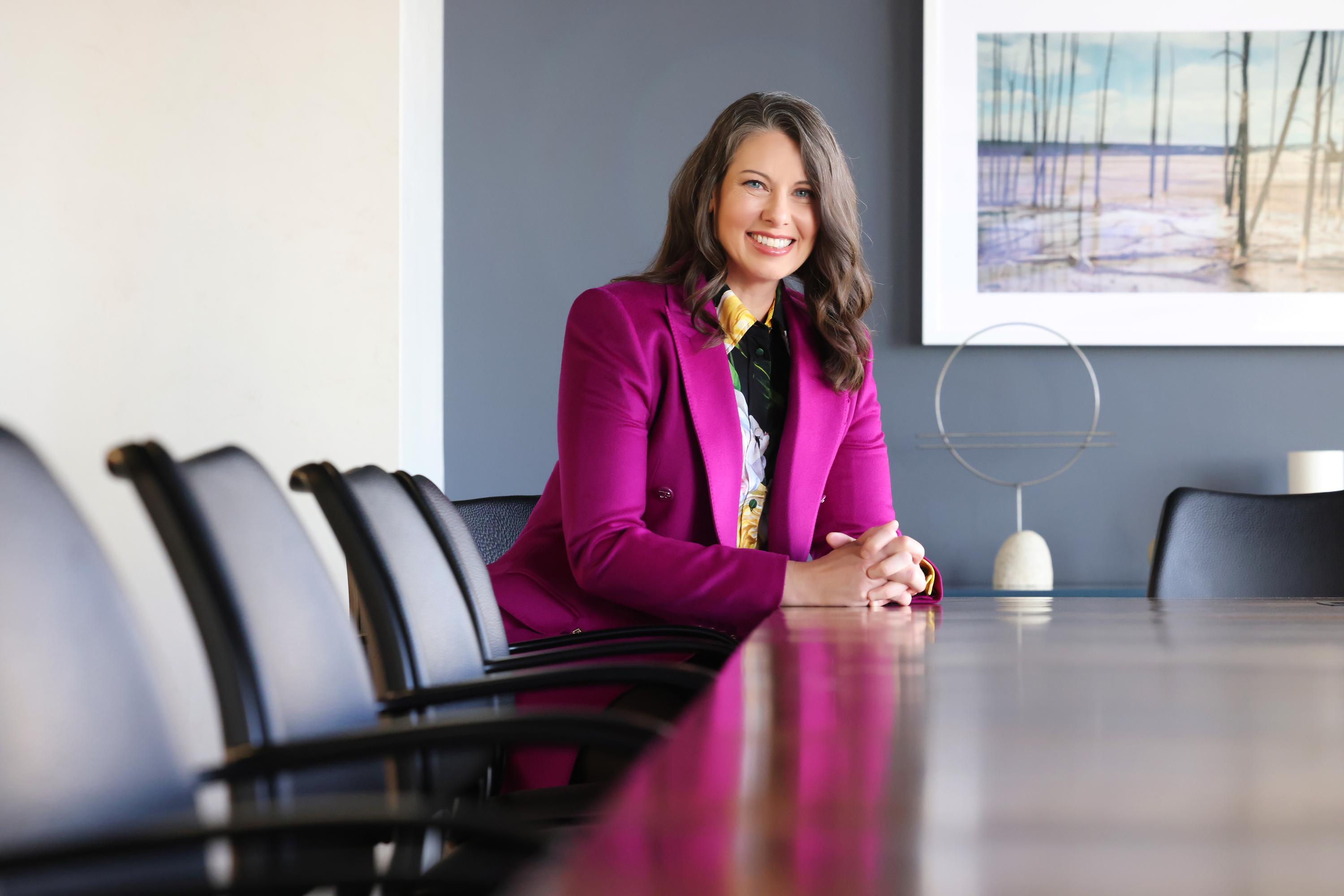
During her tenure, Landmarks Illinois strengthened its statewide reach, helped advance a statewide historic tax credit, elevated preservation on the national stage, expanded the stories and communities represented by the preservation movement and challenged a traditional field to reconsider a fundamental question: What—and who—is preservation for?
Those who worked alongside McDonald describe the answer she gave consistently: preservation is about people.
As McDonald leaves Landmarks Illinois to pursue a 2026 Loeb Fellowship at Harvard University’s Graduate School of Design, the people who experienced her leadership offer perhaps the clearest account of what her tenure meant.
“She Raised the Bar”
Shelley Gorson, emeritus board member, remembers McDonald before there was a 14-year record to evaluate.
As former chair of the Landmarks Illinois board, Gorson helped hire her. She remembers McDonald approaching the opportunity with characteristic preparation—sending the search committee a spreadsheet containing “a couple of dozen” questions, followed by still more questions and eventually a telephone conversation in which Gorson found herself hoping she had convinced McDonald to accept the position.
“I knew then that if she became our CEO, LI would be in very good hands,” Gorson recalled.
She was.
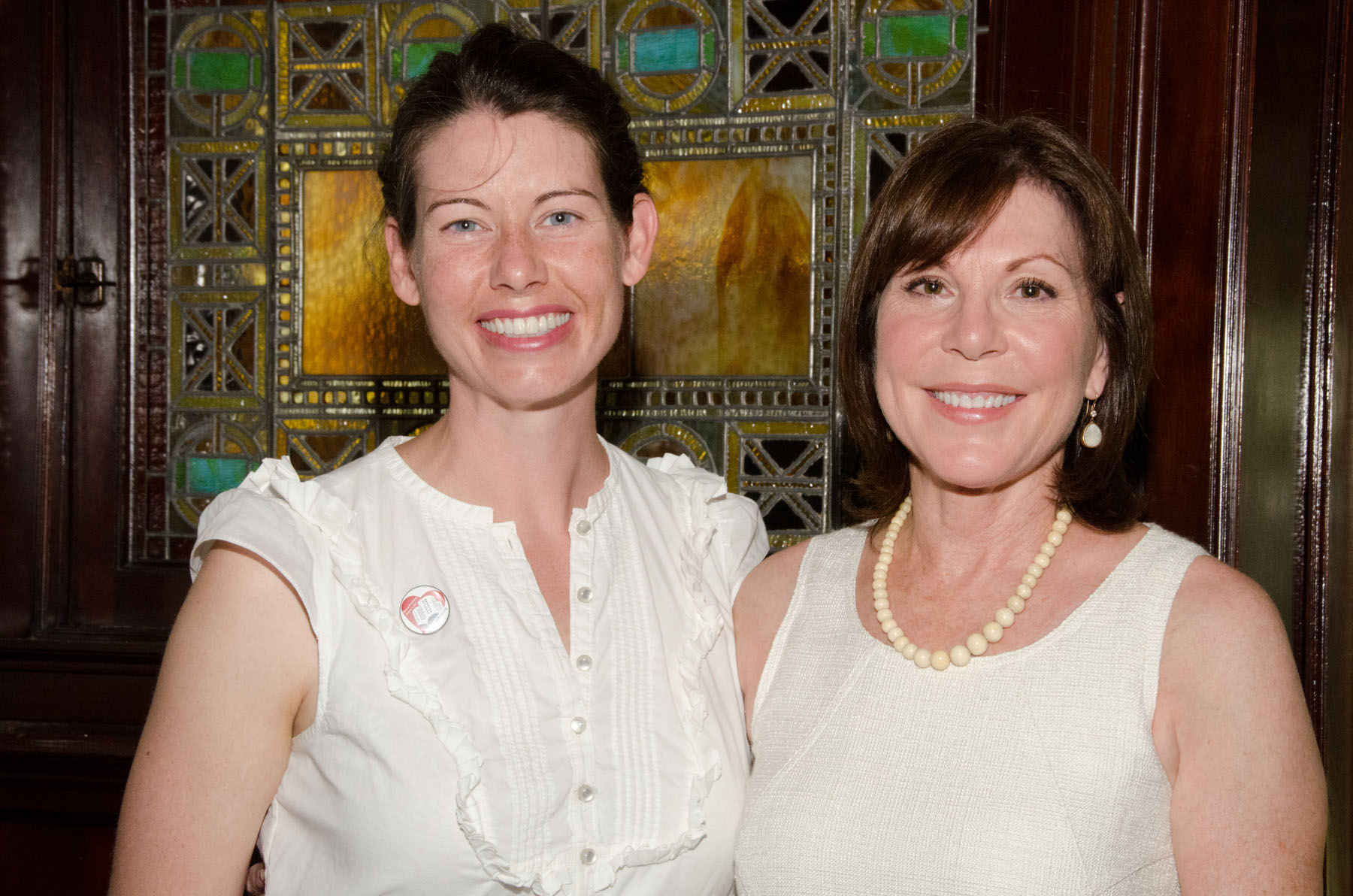
Alicia Berg, Assistant Vice President for Campus Planning + Sustainability at the University of Chicago, watched that transformation unfold as well.
“There are two things about Bonnie that have surprised me,” Berg reflected. “The first is that she actually stayed longer than Joe made her promise to do when we brought her on board. The second is that her success in transforming the organization has far exceeded not only my expectations but wildest dreams.”
A Different Definition of Preservation
Perhaps McDonald’s most enduring contribution is not simply what Landmarks Illinois accomplished during those years. It is how she helped broaden the definition of preservation.
McDonald challenged the idea that historic preservation begins and ends with architecture.
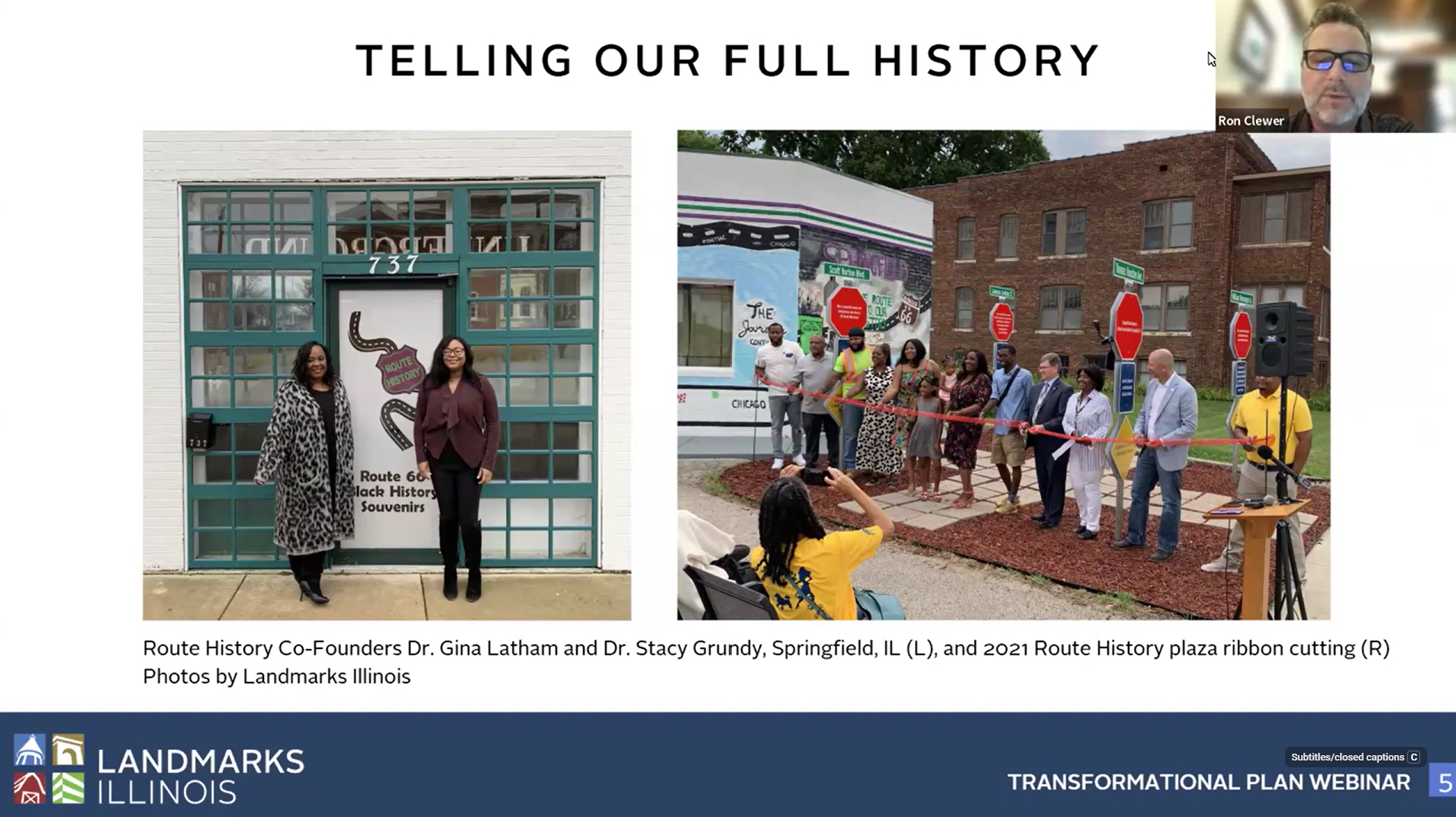
According to Ron Clewer, current chair of Landmarks, “She asked whose history is represented by the places society chooses to protect, whose stories have been overlooked and whether preservation can be a tool not simply for remembering communities, but for strengthening them.”
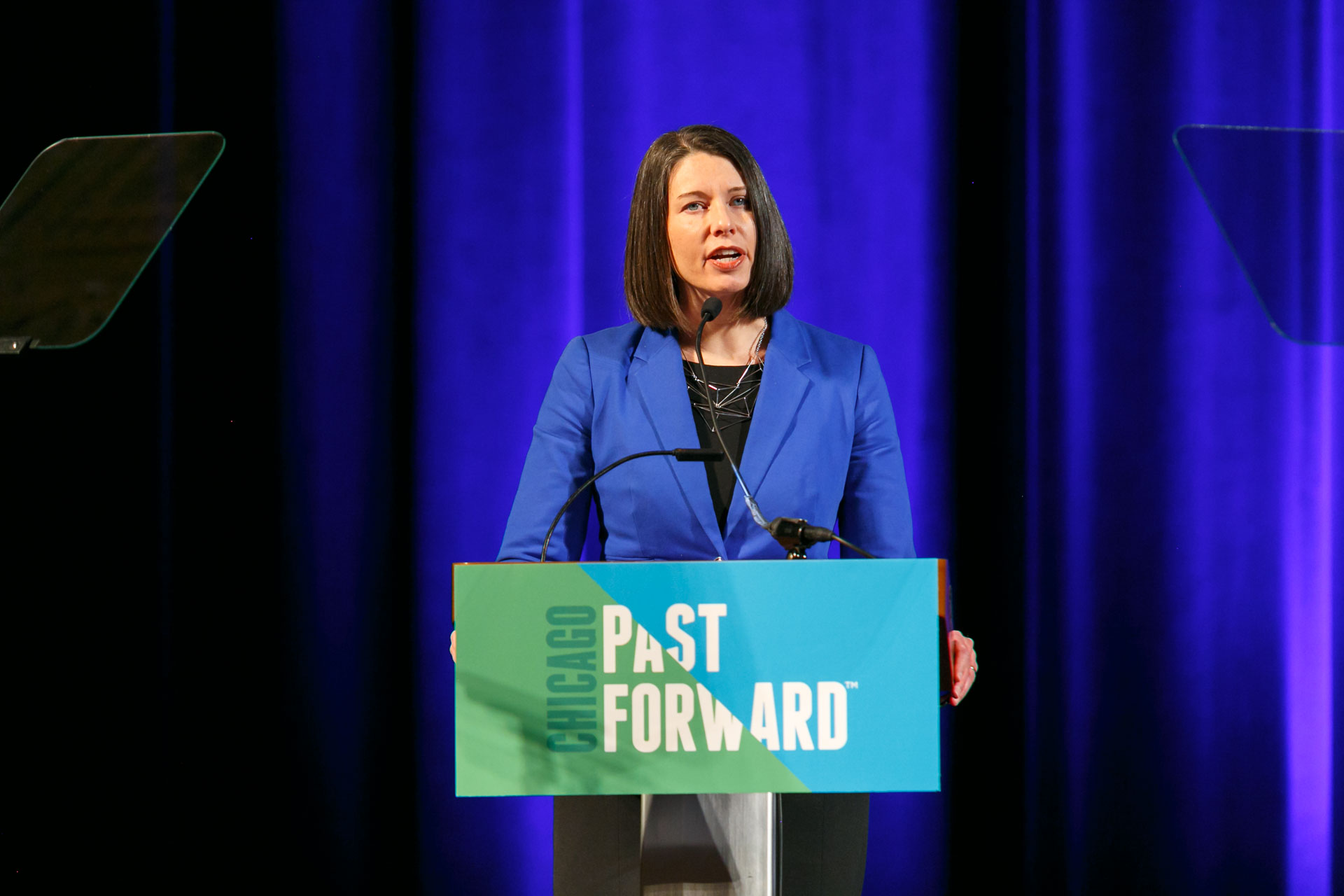
That philosophy became visible in Landmarks Illinois’ growing emphasis on equity and in initiatives such as Preservation Forward.
Clewer stated, “As I reflect on my own time working with Bonnie, that is the quality I most admire. She understood that preservation is ultimately about people—their stories, their cultures and their sense of belonging. She had the courage to ask whose stories were missing and then do something about it. Through Preservation Forward, she intentionally created space for conversations about equity and brought those stories to center stage. She challenged those around her to think differently about what we preserve, why it matters and who gets to participate in that conversation.”
Architect Catherine Baker, current board vice-chair saw that philosophy firsthand through the Dorchester Art + Housing Collaborative on Chicago’s South Side.
The adaptive reuse of an abandoned Chicago Housing Authority townhouse development addressed affordable housing and social justice—important work to Baker, but not something she initially thought of as an award-winning historic preservation project.
McDonald saw it differently.
“Bonnie recognized the transformative power of renovation when used for social good,” Baker recalled. “She celebrated it and championed it. She changed my perception of preservation.”
That experience changed more than Baker’s perception of one project.
“Her beliefs, actions, and open arms to all voices have welcomed so many others,” she continued. “At LI and for all of Illinois, you have centered preservation as a vital component for sustaining just and fair communities.”
That idea—that preservation must ultimately serve people—is echoed by Korinne Smillie, board member.
“Bonnie has consistently demonstrated that preservation is ultimately about people, including the stories they tell, the places they value, and the communities they call home,” Smillie said. “That perspective has made a lasting impression on me.”
Preservation Beyond Chicago
McDonald also understood that an organization called Landmarks Illinois had an obligation to be genuinely statewide.
For preservation advocates outside Chicago, that distinction mattered.
Diane Oestreich of Rock Island remembers McDonald expanding Landmarks Illinois’ outreach to communities beyond the metropolitan area, supported by staff members including Frank Butterfield and later Quinn Adamowski.
“She initiated more outreach for the ‘downstate’ people who, while in the minority, are critical to LI’s ability to promote preservation at all levels,” Oestreich said.
For Judy Tighe of Jacksonville Main Street and board member, that outreach became deeply personal.
Although Tighe had known of Landmarks Illinois and its awards programs for years, she had not necessarily felt connected to the organization from Jacksonville.
Then she met McDonald.
“Bonnie made Landmarks more accessible to me,” Tighe said.
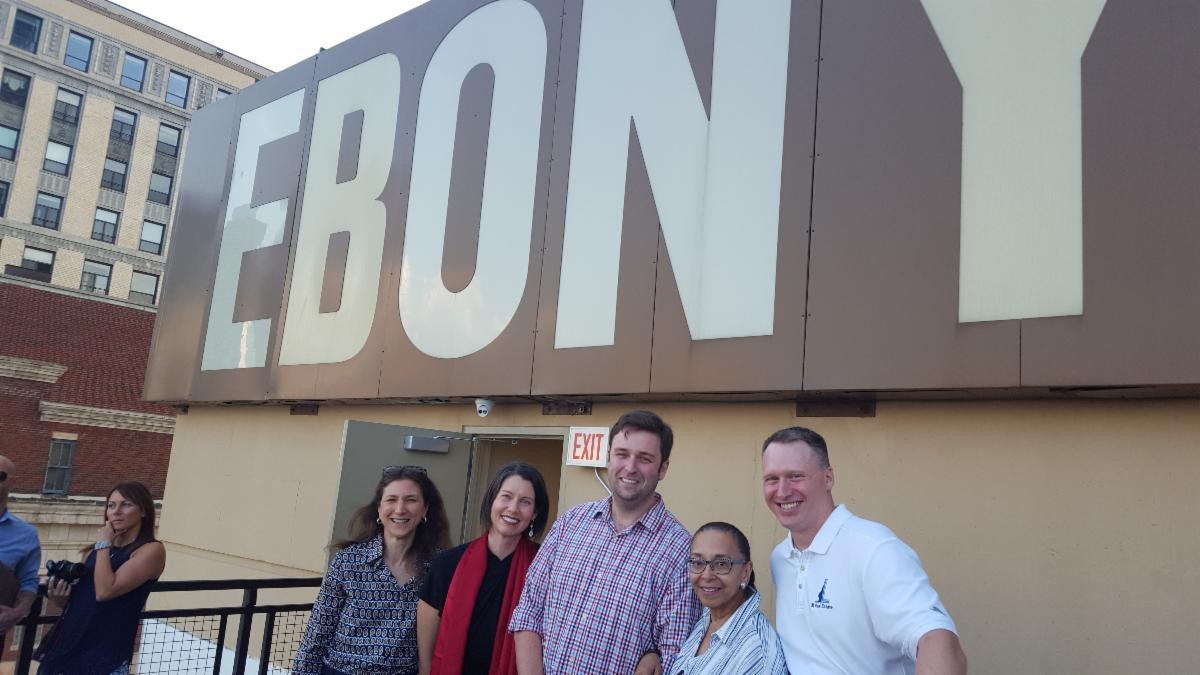
After meeting McDonald in 2014, Tighe began to feel that Landmarks Illinois wanted “not just to reach, but to include more communities around the state.”
McDonald, she said, made the organization “feel like home…like this home was expanding to include more people.”
That may be one of the simplest descriptions of McDonald’s approach to inclusion: expand the home.
Leadership When Things Don’t Go According to Plan
Transformational leadership is often discussed in terms of strategic plans and major initiatives. Sometimes it reveals itself in a broken projector.
Kaitlyn McAvoy, director of communications, remembers one such evening.
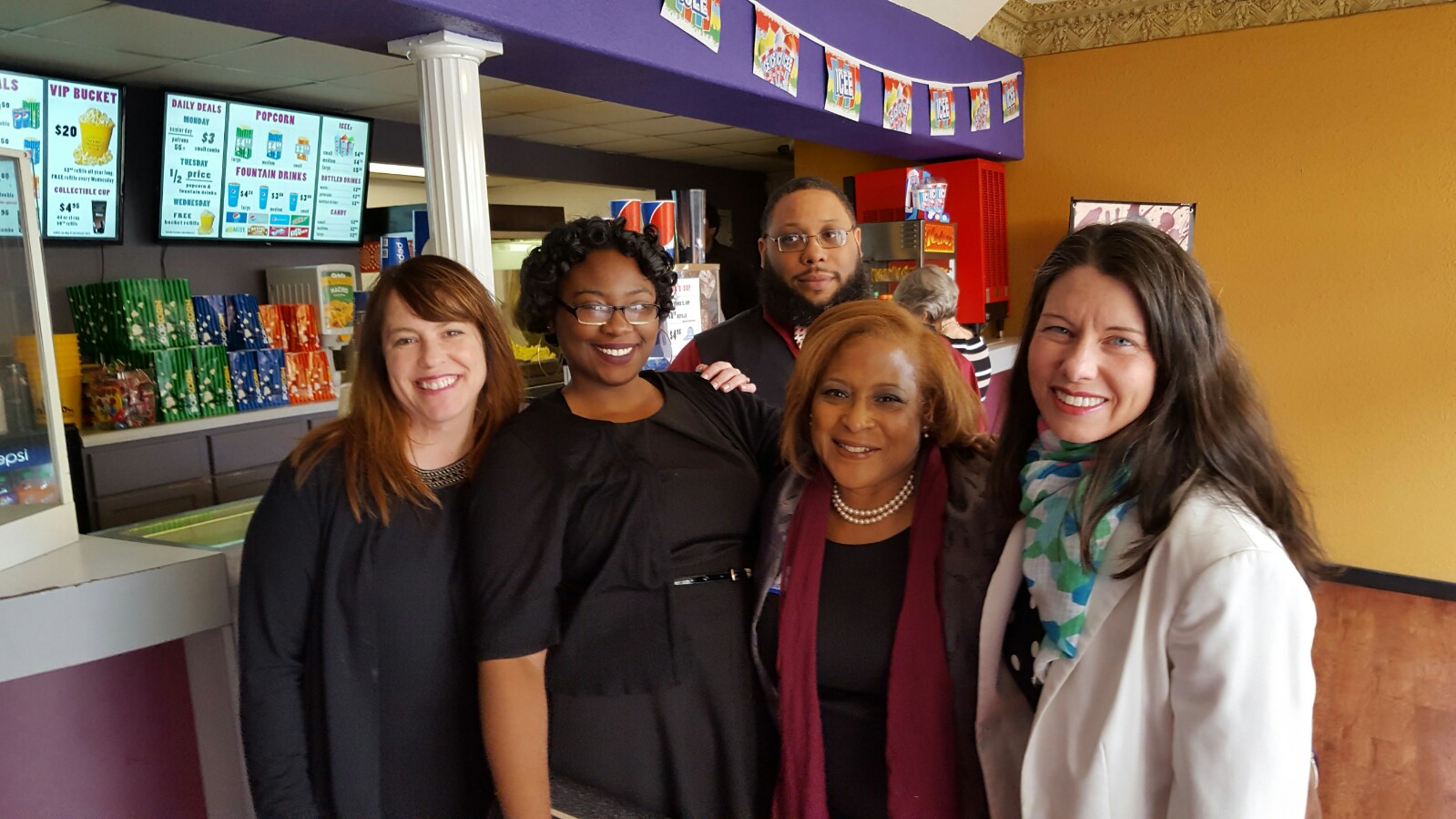
Early in McAvoy’s career at Landmarks Illinois, she spearheaded the “People Saving Places” student video project, engaging Kennedy-King College film and media students to produce eight short films about people preserving places throughout Illinois.
The culminating screening at Ottawa’s historic Roxy Cinemas drew supporters, board members, partners, students, instructors and community members from around the state.
Then the technology failed.
McAvoy panicked and rushed to the projection booth.
McDonald picked up a microphone.
Without missing a beat, she moved a student question-and-answer session forward, kept the audience engaged and gave the staff time to troubleshoot. Eventually, the entire audience moved to another theater and the screening continued.
“Through it all, Bonnie remained calm,” McAvoy remembered. “Ultimately, she saved the program from being a total disaster. Her leadership shined in that moment for me.”
Later, McDonald summarized the episode with considerably less drama.
“This isn’t my first rodeo,” she told McAvoy’s husband.
“For her, what she did that night may have been small potatoes. Second nature. Instinctive,” McAvoy recalled. “But for me, at that moment, it was monumental.”
A Leader Who Made People Feel Seen
Again and again, McDonald’s colleagues return to something less quantifiable than policy victories or organizational growth: the way she treated people.
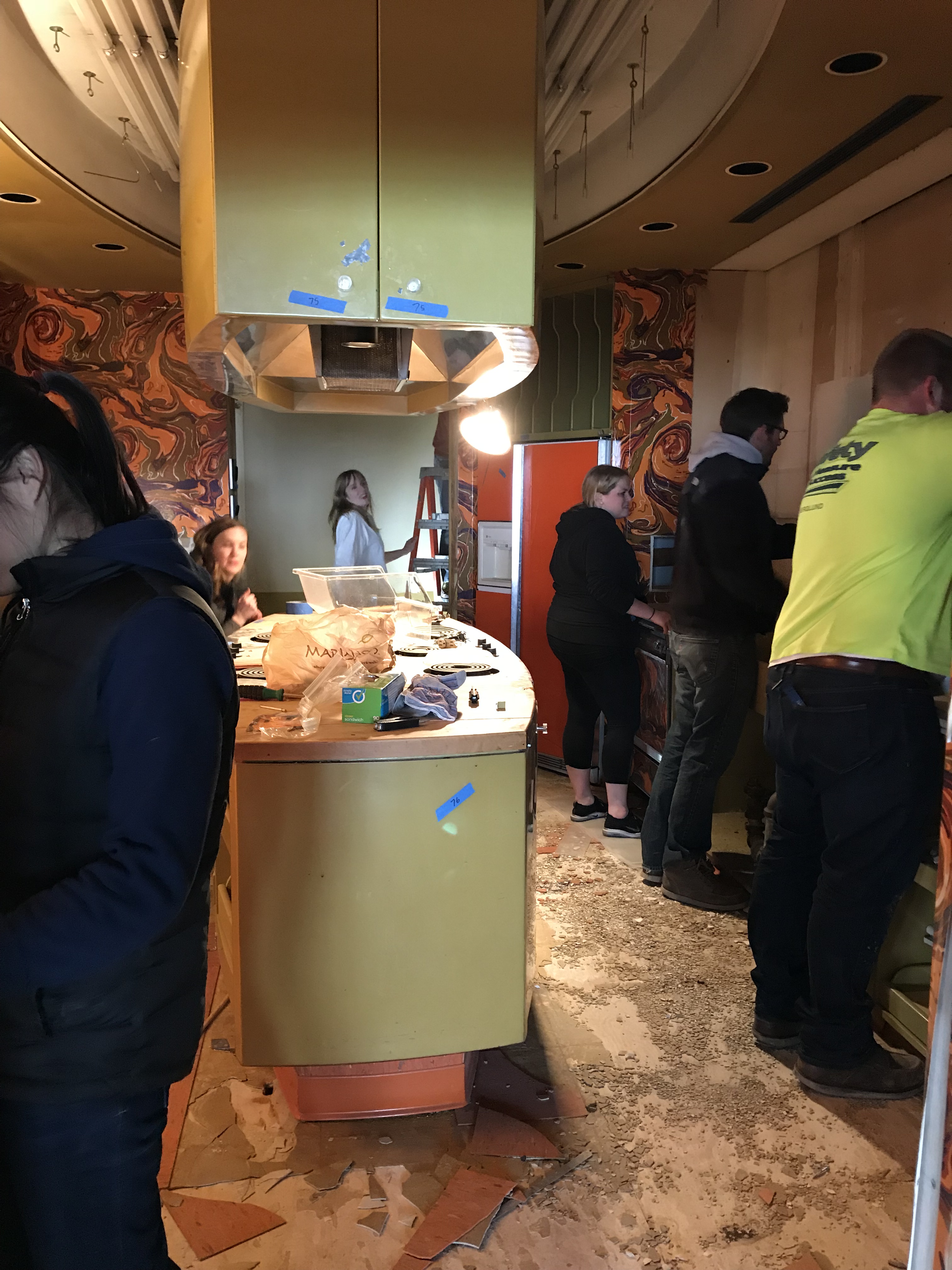
Frank Butterfield COO and interim CEO of Landmarks Illinois remembers the major milestones—the statewide historic tax credit, the National Preservation Conference in Chicago, navigating the virtual 50Forward fundraiser during the pandemic, Landmarks Illinois’ work with the Smithsonian to secure a permanent home for the nationally significant Ebony Test Kitchen, the organization’s Transformational Plan and McDonald’s increasing national profile.
But mixed among those institutional achievements are intensely human memories.
McDonald staying until the very end of events, sometimes having traded her formal shoes for something more comfortable.
McDonald recognizing friends and sponsors individually from the stage.
McDonald making people feel seen.
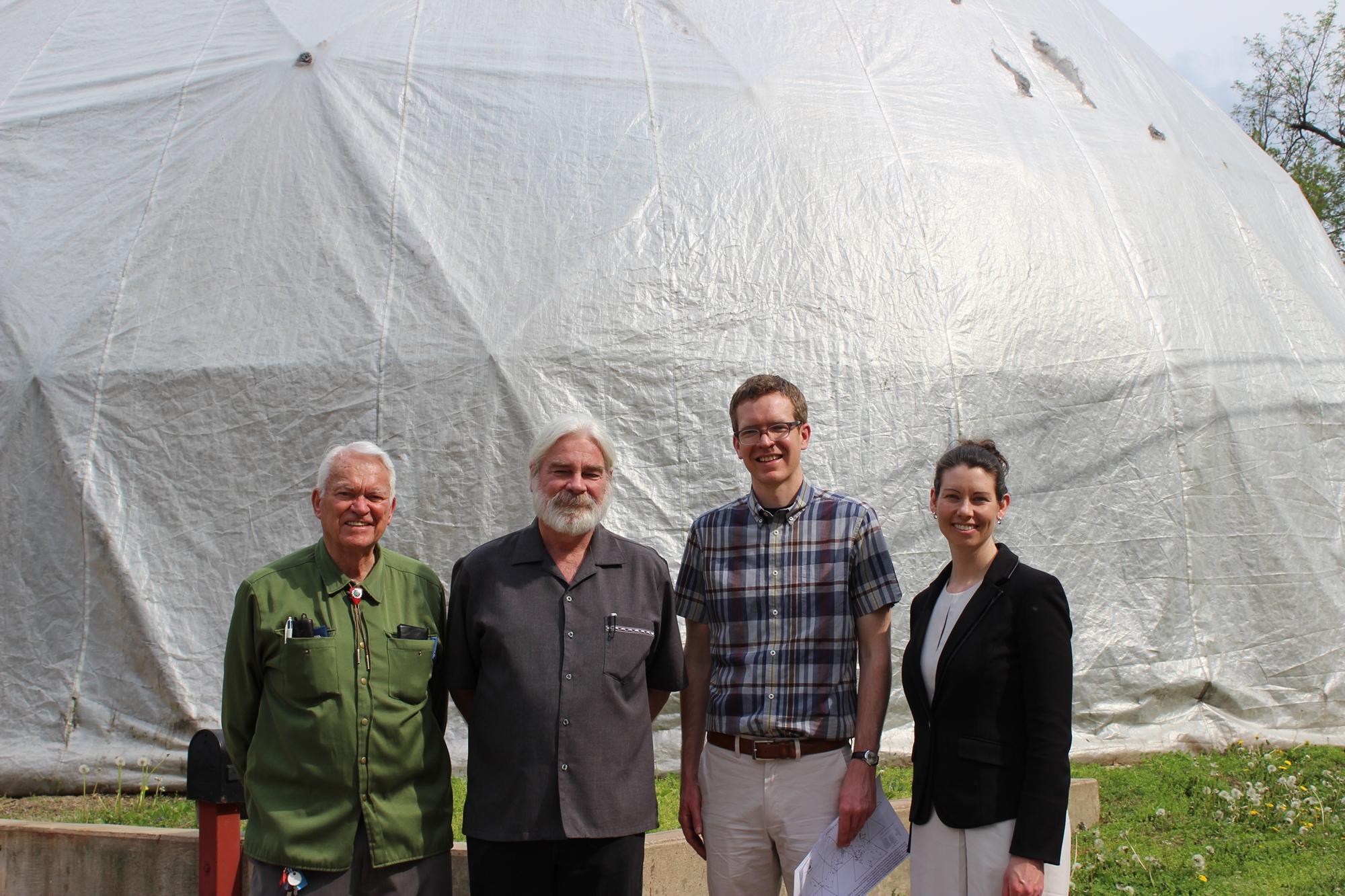
Butterfield remembers her “connection and service to communities” during early road trips to places such as the Bernadotte Bridge and Buckminster Fuller’s Dome Home. And he remembers watching her take Landmarks Illinois onto a national stage.
“I am honored that I can share with others your work, your vision, and the path you are on to shape the future of preservation,” he wrote, “all while calling you a colleague, a mentor, and a friend.”
Will Tippens, former Landmarks Illinois board chair, similarly remembers a leader who combined ambition with grace.
“She inspired and led Landmarks Illinois with great focus and grace into the future,” Tippens said, reflecting on working alongside McDonald as board chair and on the organization’s 50th anniversary committee. “Together, along with many others, I think we may really have started something!”
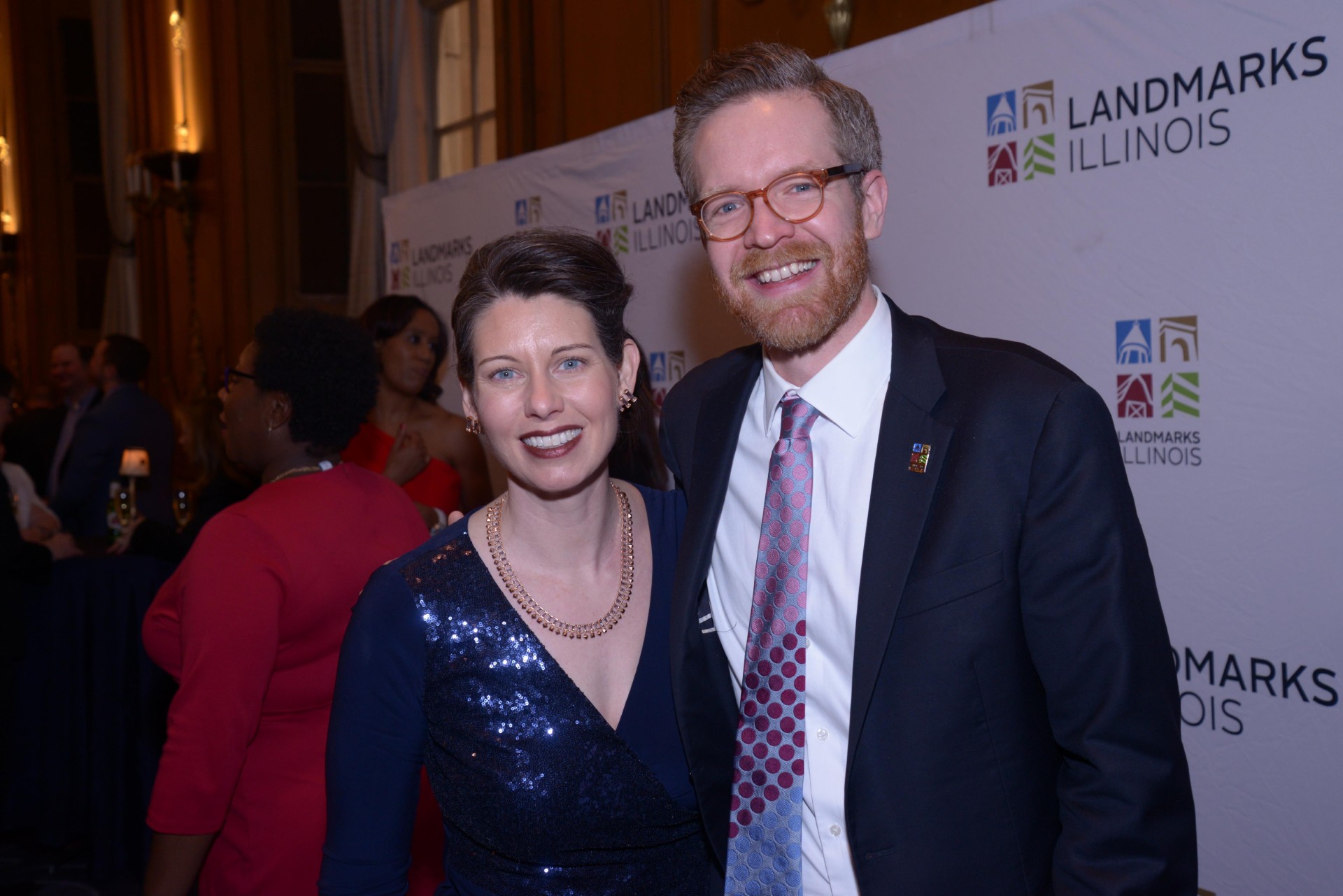
Jean Follett, longtime Landmarks Illinois board member reduces that leadership philosophy to a single lesson.
“Bonnie has shown me that leadership that includes the heart gets the longest-lasting results.”
Building People Along With an Organization
For younger preservation professionals and Landmarks Illinois staff, McDonald’s legacy is also one of mentorship.
Board member Sara Phalen remembers admiring McDonald before she had the opportunity to work closely with her.
“As an emerging preservation professional, I always admired Bonnie and her work,” Phalen said. “She has been a role model to so many.”
What struck Phalen after joining the board was McDonald’s ability to confidently discuss her own accomplishments while simultaneously elevating others.
“It is inspiring to see someone who cares so deeply about this field be such a champion for others while also being able to thoughtfully and confidently speak about the value of her own work, something women often shy away from and we all need to see more of.”
For Landmarks Illinois Director of Events Alma Rebronja, McDonald’s mentorship took another form: trust.
“I keep coming back to one thing: Bonnie gave me autonomy,” Rebronja said. “She let me make my own calls, even when I was still figuring it out, and that trust changed the way I work and honestly, the way I see myself.”
McDonald’s example, she said, encouraged her to continue investing in herself and her career.
“She showed me what that actually looks like day to day.”
Vision With Discipline
McDonald’s warmth did not come at the expense of rigor.
William Tyre, Executive Director and Curator of Glessner House, remembers McDonald serving for six and a half years as an ex-officio member of its board.
She consistently advocated for staff, he said, pushing board members to consider whether expectations were realistic given the organization’s capacity.
Her greatest contribution, Tyre believes, came when she led Glessner House through a year-long strategic planning process in 2017 and 2018.
“She led us through the process step-by-step, encouraged creative thinking outside the box, and pushed each member to consider Glessner House in new ways to ensure a sustainable future,” Tyre recalled.
The resulting plan guided the organization for five years and helped shape the plan that followed.
Gary Anderson, former LI board chair and Principal of Studio GWA saw that strategic ability almost from McDonald’s first day.
He recalls meeting her in Springfield, where he was preparing to testify in support of the State Historic Tax Credit bill.
“Her quick study of what was needed at that hearing showed very clearly her leadership skills,” Anderson said.
Years later, having served alongside her as vice chair, board chair and committee chair, he describes McDonald as a nationally recognized visionary who remained “undaunted in her quest to make preservation inclusive to everyone.”
“Change is never easy,” Anderson reflected, “but from my perspective, it’s been a beautiful ride.”
Becoming a National Voice
Debbie Siegel, LI supporter, coach, and friend, had a particularly unusual vantage point from which to observe McDonald’s development.
She met McDonald 14 years ago during the executive director search and subsequently worked with her as an executive coach over the course of her Landmarks Illinois tenure.
The evolution Siegel witnessed was dramatic.
“Early on I was impressed with Bonnie's knowledge, poise, communications skills and strategic abilities,” she recalled. “Fast forward, she is now a distinguished, thought leader and change agent in the industry.”
McDonald’s curiosity, willingness to learn, self-reflection and resilience, Siegel said, were central to that growth.
And that evolution is important because McDonald’s work increasingly carried ideas developed and tested in Illinois into a larger national conversation.
Barbara Coleman Donnelley, LI supporter and organizational partner, saw the local side of that influence.
“I cannot imagine the city without her,” she wrote, remembering McDonald’s willingness to step in whenever help was needed. “What an imprint she has made on the city.”
The imprint, however, extends far beyond Chicago.
The Next Chapter: From Illinois to the Loeb Fellowship
That makes the Loeb Fellowship feel less like a departure from McDonald’s work and more like its natural expansion.
The fellowship gives McDonald an opportunity to step outside the daily demands of leading an institution and enter a community of thinkers and practitioners considering the future of cities, design, community and the built environment.
For those who know her, the expectation is not simply that McDonald will learn from that community.
She will challenge it.
Gorson, who helped convince McDonald to come to Landmarks Illinois 14 years ago, sees the fellowship as the next carefully considered step in a career defined by intentionality.
“If you were my own daughter, I could not be more proud of your winning the Loeb Fellowship at Harvard,” she wrote, joking that the decision undoubtedly involved “spreadsheets upon spreadsheets and questions.”
Smillie sees the fellowship as an opportunity for McDonald to influence preservation and community development on an even broader scale.
“Trust that the qualities that made you successful at Landmarks Illinois—your vision, authenticity, and ability to inspire others—will continue to create positive change on an even broader scale.”
And Rebronja may have captured the moment most succinctly.
“This isn’t an ending for her,” she said. “It’s her scaling up everything she’s already built.”
Then she offered McDonald three words of advice:
“Go make it bigger!”
The Preservation of Possibility
Fourteen years after McDonald arrived at Landmarks Illinois, the organization she leaves is different.
But so is the conversation around preservation.
Buildings still matter. Architecture matters. Historic integrity matters.
McDonald’s contribution was insisting that the conversation cannot stop there.
Preservation can help tell stories that have been excluded. It can support affordable housing. It can advance social justice. It can strengthen neighborhoods. It can connect people to their culture and history. It can create economic opportunity. It can give communities tools to determine what from their past deserves to become part of their future.
And it can invite people who never thought of themselves as preservationists into the room.
That may explain why the reflections on McDonald so often move seamlessly between major policy accomplishments and human encounters. The two were never separate parts of her leadership.
The legislation, strategic plans, organizational transformation, statewide expansion and national recognition mattered because people mattered.
Bonnie McDonald leaves Landmarks Illinois having helped preserve important places across Illinois.
Her larger legacy may be that she also helped preserve—and expand—the possibility of what the preservation movement itself can become.
The Loeb Fellowship now gives her the opportunity to ask the same questions on a larger stage.
If the past 14 years are any indication, she will arrive with curiosity, a formidable list of questions, probably a spreadsheet—and the conviction that preservation's future belongs to more people than its past ever did.

