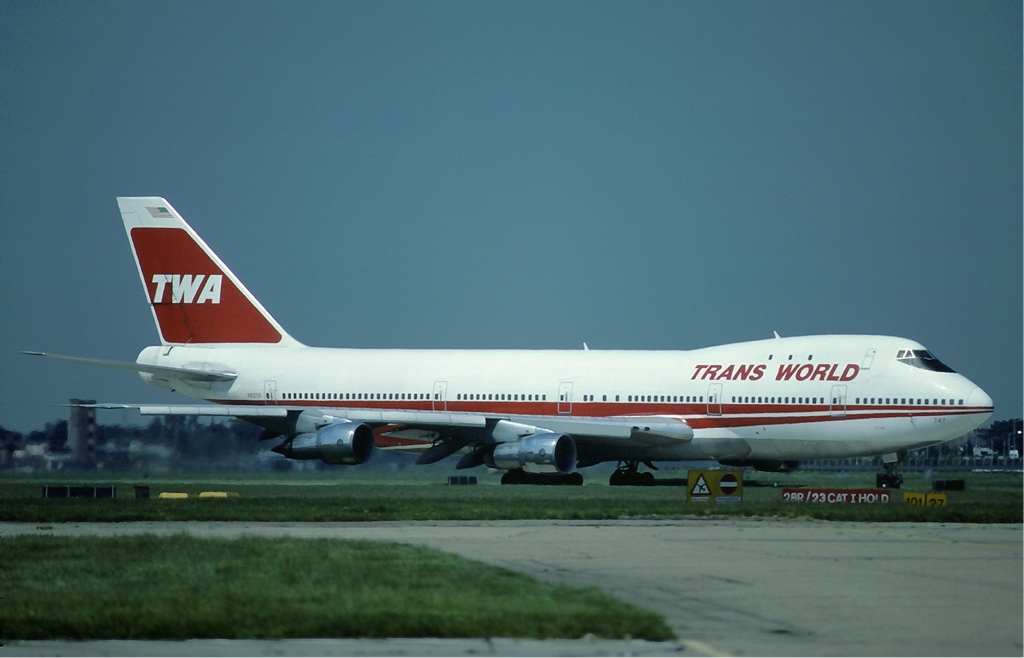
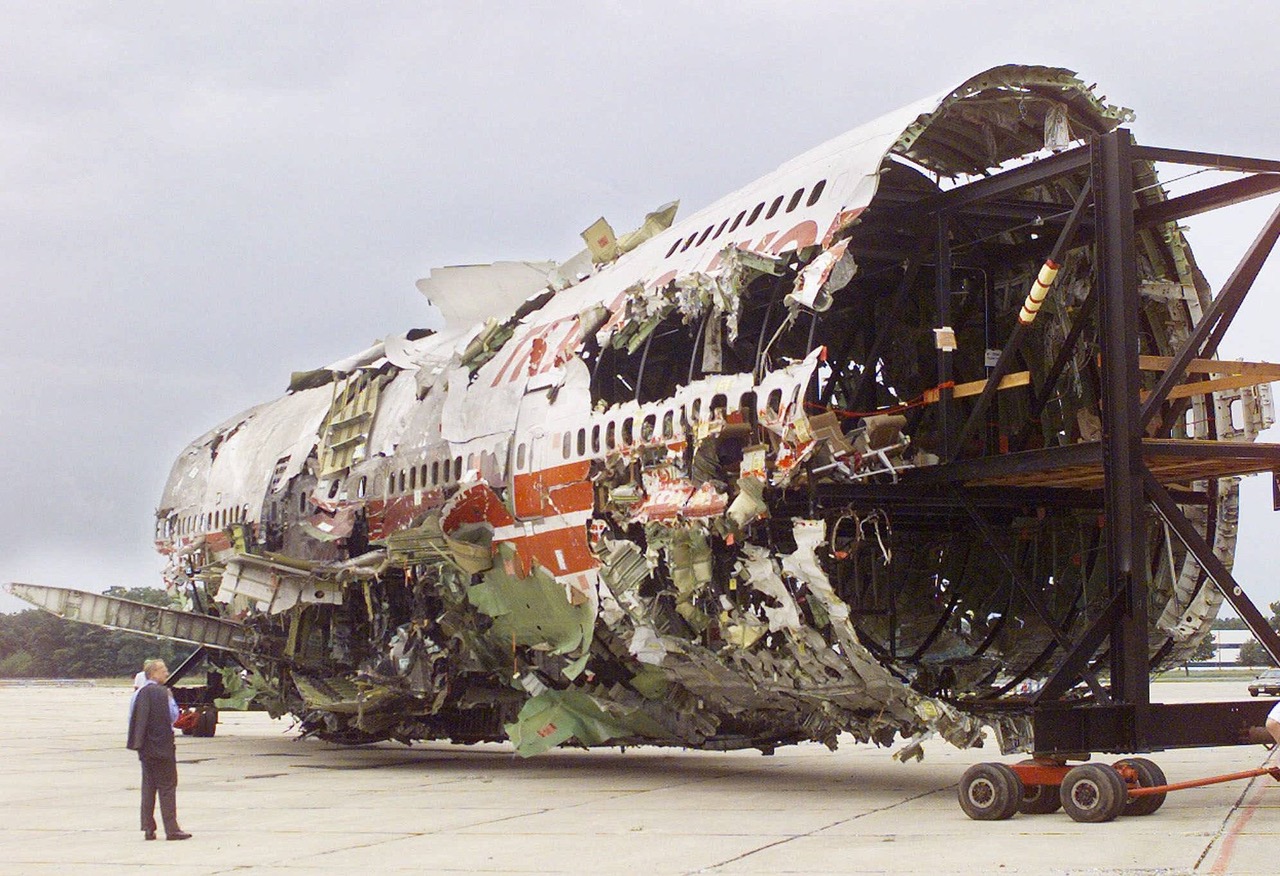
One of America’s worst aviation disasters, the crash of Trans World Airlines (TWA) Flight 800 from New York City to Paris and Rome on July 17, 1996, taught me a vital lesson 30 years ago this week: when the government asserts facts: don’t take them at face value. Doubt. Be curious.
As a young freelance journalist working part-time in talk radio production for The Leonard Peikoff Show and editorial for a health care charity on summer vacation, I was traveling from Los Angeles to rendezvous with Chicago family for my first European tour. At some point, I was scheduled to be on TWA’s flight 800, which exploded after takeoff from an unidentified ignition source. Government investigation concluded a “probable” cause. Whatever caused a passenger jet carrying 230 people to plunge from 13,000 feet into the Atlantic Ocean, killing everyone on board, remains unknown or, at best, equivocal.
When I disembarked my flight from New York City in Rome, an official holding a sign with my name stopped me inside a plastic vestibule and asked in broken English to confirm my identity. Thinking that the hotel or my family had dispatched a courtesy car and driver to pick me up—this was before mobile phones and apps, including mass market private car services such as Lyft and Uber—I smiled and confirmed my name. He smiled, glanced behind me and asked if my parents were traveling with me. I said No. The airport official’s face drained of color. He gasped and put his hand over his mouth, as I recall, and said: “Oh, my God, I’m so sorry—” which sent me reeling in shock because I did not know the nation had suffered its worst aviation disaster in history while my own flight had been in the air for hours over the Atlantic Ocean. I replied: “What are you talking about?” As horrified passengers gawked and maneuvered around us, he told me: “A plane crashed into the ocean. Your parents are gone. The FBI is investigating.”
He kept saying: “The FBI is investigating.” This phrase was repeated again and again as though he had memorized the line or been instructed to stress the fact. In my shock at learning that my parents were dead, according to this uniformed stranger wearing an airport badge, and I could not have known in that moment that he was wrong and my parents were alive, it occurred to me that the FBI investigating a plane crash is unusual.
As a journalist, I knew that plane crashes are investigated by the National Transportation Safety Board (NTSB), not the FBI. That an Italian airport official kept parroting that “the FBI is investigating” struck me as odd. The FBI’s America’s federal police. I thought: why are police involved? My mind was swirling with questions and doubt in a plastic vestibule in Rome.
The encounter, confusion and error dispatched me on an odyssey—an intellectual and procedural quest to detect the truth about TWA 800—which has not reached a satisfactory conclusion. The fact that Italy’s government intervened with my exiting an American aircraft raised disturbing questions. Through independent research, I later learned that my parents were among three confirmed passengers departing O’Hare Airport who missed connections in New York (the third was a teacher from Beloit, Wisconsin) due to Chicago’s bad weather on July 17, 1996.
I've written about the lessons over the years, most prominently in an essay published in the Wall Street Journal. I wrote those articles in an effort to prompt curiosity about what happened to that particular 747. I still remember the faces of passengers with whom I waited at John F. Kennedy International Airport inside TWA’s modern terminal the week before Atlanta’s summer Olympics, especially the children. The New York to Paris to Rome flight 800 was loaded with kids, newlyweds and other innocent Americans. The sun had cast a glow over the terminal’s interior, coating all of us inside those smooth, curved walls and cavernous spaces sheathed in sheets of glass—passengers bound for destinations around the world—with an orange-pink halo that seemed to quiet the whole crowd. I saw faces that were young, old and in between. I remember a group of youths wearing navy blue sportcoats emblazoned with a coat of arms. They were students in a high school French club, I learned, and they were bound for Paris.
At one point, I was scheduled to be on TWA 800. At another point, my parents were slated to be on the flight. According to various versions of the passenger manifest, we were all booked to board the jet. After the crash, one of my relatives told me that TWA had informed him I was on board. My assistant at the time said the same; he had started making my funeral arrangements. Looking out the plane’s window at helicopters a few miles away, my father, a decorated Korean War veteran with traumatic memory of helicopters in combat retrieving the wounded and dead, later told me he immediately sensed that something was wrong as his flight from Chicago arrived in New York. My father was right: military helicopters were surveying TWA 800’s wreckage. My dad, seated beside my unaware mother, excused himself, spoke with discretion to an airline hostess and was informed that there’d been a crash and that I had probably been killed—13 passengers and crew on TWA 800, including the flight’s captain, Ralph Kevorkian, had originated like me in LA—and my dad, too, began contemplating how to tell my mother.
As I stood at the baggage claim after landing in Rome, moments after being told that my “parents are gone” and repeatedly instructed that “the FBI is investigating” (as if that would reassure me), I stopped of accepting the catastrophic claim; something made me question, scrutinize and doubt what the official told me. My denial may have simply been a reaction to shock, one of the stages of grief discovered by scholar Elisabeth Kübler-Ross. If you’ve survived the impact of violent trauma, such as war, mass murder, bombing, crash, explosion, disaster or terrorist siege, and you know who you are, you know the fog of confusion.
Confusion compounds TWA 800’s mystery: multiple sources, including TWA, eventually disclosed to me that the U.S. government abruptly seized the final passenger manifest after the crash. I was also told by credible sources that America’s top business and travel, including commercial aviation industry, CEOs were informed by the U.S. that the plane had been shot or was likely to have been shot down by a missile. Hundreds of credible eyewitnesses reported a “streak of light” rising up to TWA 800. Several credible sources, including ex-military and a former NTSB board member, supported investigating what became known as the missile theory.
Prior to the 1996 crash, there had been numerous threats from Islamic terrorists against America’s commercial aviation, which were routinely ignored by various U.S. administrations. Threats, of course, were realized five years later when Moslem terrorists, who in another operation had planted a bomb on a Pan Am 747 in Germany which detonated over Scotland, besieged America with passenger jets as missiles on a Tuesday morning in September 2001.
Was that barbaric act of war related to the earlier plane crash on a Wednesday evening in July 1996? I do not know or claim to know. I question and doubt the U.S. government’s report on TWA 800. Among the unanswered questions: what or who principally, unequivocally caused the crash? Why was the FBI and CIA (which animated a video aired on national broadcast media to counter the missile theory) involved in a civilian airplane disaster that the NTSB claims was probably downed by sudden electrical sparking in the center fuel tank?
Let me add a question I’ve rarely mentioned or discussed in my 30 years of journalism about TWA 800. After I was finally reunited with my parents at the hotel in Rome, where I had alternately been trying to rest and confirm that my parents were alive, we mutually decided to continue the long-planned voyage to have a marvelous time touring Western Europe and, in fact, we did. During one of our excursions, we were standing in a line outside the Vatican for admittance to the Sistine Chapel. I enthusiastically wanted to view and study the masterpiece by one of my favorite artists, Michelangelo. We had all lost sleep and had been traumatized by news and pictures of the plane crash and this was the first time we were able to relax as we prepared to behold one of the most glorious manmade visions on earth.
As we came closer to entering the Vatican, I looked behind me to examine the long line along the wall of Vatican City. To my amazement, I noticed a familiar face about 30 people behind me. When I did, I caught the person looking at me. He turned his back to conceal himself. I had already seen him. His was the face of the Rome airport official who had insisted that my parents were dead; he was the official who’d told me “the FBI is investigating.” He was not wearing a uniform and badge; he was dressed like a civilian and standing in line observing me and my family waiting to visit the Vatican. I walked over and greeted him. I asked why he was there. He blushed, smiled and shrugged. I want to know: why and was that a coincidence?
Media often perpetuates disaster myths—Chicagoland’s wreck of the Edmund Fitzgerald, the Titanic, the sinking of the Lusitania and aviation mysteries such as Malaysia Airlines 370 in the Indian Ocean, Pan Am 103 over Lockerbie, Scotland, Korean Air 007, which was shot down by Soviet Russia near Sakhalin Island come to mind—and TWA 800’s crash belongs in this league. Its legacy includes regression and loss: TWA ceased to exist. Passenger air travel became subject to a government checkpoint via the newly enacted TSA, which spies on Americans’ bodies and property and arguably violates the Constitutional right to travel unmolested by the state. New York City and Paris were repeatedly attacked by terrorists and irrevocably changed—arguably for the worse. JFK Airport’s historic TWA passenger terminal permanently closed for air travel.
Like ghosts in search of answers, knowledge and justice who visit every July, the exuberant faces and carefree chatter and laughter of fellow passengers lingers in my memory. I know I observed a small part of that last day of their lives, which might’ve been mine, when we shared a unique blend of anticipation, excitement and thrill at the prospect of flying across an ocean to visit a faraway land. Their ghosts impel and propel my inversion of Maya Angelou’s famous wisdom—that, when someone tells you who they are, you ought to believe them—which haunts me; that, when the government gives a version of facts, you ought to doubt them. I’m glad I did because the official—whom I later observed observing me—was wrong in what he claimed.
My parents were alive, not dead, and I know better to study, detect and learn the facts and context for myself. This is the lesson of after 30 years: to strive to gain knowledge independent of the state. Induce your own conclusions. Trust your own judgment and seek to know the truth. Life, possibly yours, is at stake. And living stems not from lists, numbers and government bureaucrats with badges and big budgets but from the wanting to know for yourself.