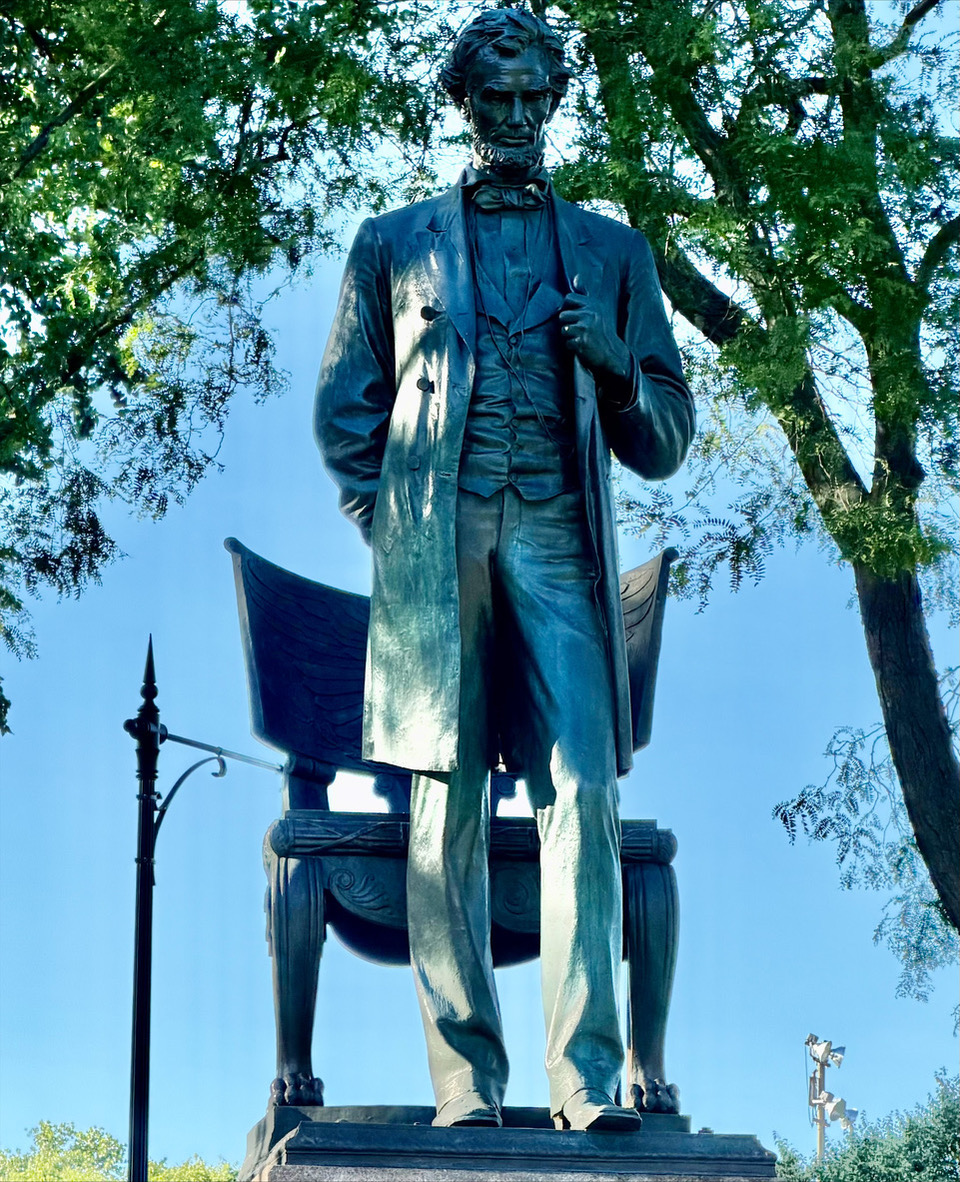
“The Lincoln Park Conservancy is so thankful to be able to partner with the Chicago Park District and Chicago History Museum for the July 4th ribbon-cutting event revealing the restored Lincoln: The Man statue in South Lincoln Park. It will be at 10 am at the statue with remarks from key city officials and project partners and will kick off CHM’s annual July 4th festivities. We are grateful the monument restoration completion aligned with CHM’s event so that we can collaborate in celebrating our shared history and Abraham Lincoln, the 16th President of the United States and the Park’s namesake.” —Lauren Robinson, Executive Director of the Lincoln Park Conservancy.
A ribbon-cutting at the beautifully restored Lincoln statue in Lincoln Park kicks off the July 4th activities for all ages at the Chicago History Museum. A Chicago Park District event, the Museum will partner with the Lincoln Park Conservancy, the Gold Coast Neighbors, and the Park District, a fitting collaboration that helps connect the Museum’s work in bringing Lincoln’s story to life with the historic statue that stands just outside its doors. Saturday’s History Museum activities include patriotic music Americana Concert Band under the direction of Joe Lill at 6 p.m. and the reopening of its “Facing Freedom” exhibition with refreshed content and new Chicago stories.
“The ribbon cutting of the Lincoln statue is a powerful moment to honor Abraham Lincoln’s profound contributions to our nation while also facing the complexities of his legacy,” said Chicago History Museum Interim President & CEO Michael Anderson. “It is especially meaningful to celebrate this during the nation’s 250th anniversary, and we are thrilled that this important statue of Lincoln by the renowned Irish-American artist, Augustus Saint-Gaudens, stands adjacent to the Museum. We hope everyone will enjoy festivities across the Museum grounds throughout the day, there will be something for everyone. We come together to celebrate our shared history and imagine our future.”
When the Augustus St. Gaudens statue was first unveiled in 1887, Robert Todd Lincoln pulled away the American flag that covered it. Newspaper reports of the time from the Park District archives say that the 10,000 people on hand reacted not with applause but with a hush as they observed its beauty. The New York Evening Post described it as “the most important achievement American sculpture has yet produced.” It has been praised as perhaps the most true-to-life of all the statues of Lincoln created and has been reproduced at full size at least six times, publicly installed in London, Mexico City, Hollywood Hills, Cambridge, MA and at the Saint-Gaudens National Park in Cornish, NH. The famed Chicago sculptor Lorado Taft was so moved by the sculpture that he “felt he was in the very presence of America’s greatest soul.”
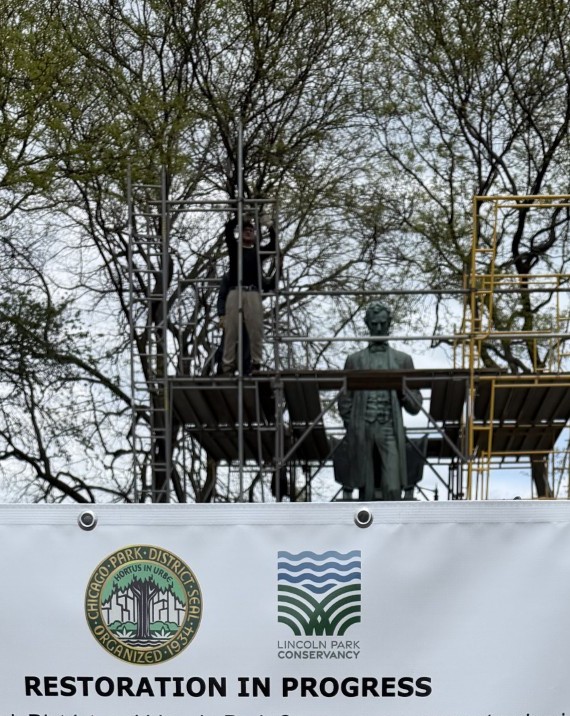
The ribbon-cutting and re-dedication event at the Augustus Saint-Gaudens’ statue, freshly cleaned and refurbished, tells a very moving Chicago story, preserved in the Park District archives. Money for the monument was provided by Chicago businessman Eli Bates, a man who had overcome youthful poverty and a childhood amputation to amass a fortune exceeding $400,000, over $14,000,000 today, most of that in the final decades of his life. In the years leading up to his death, Bates was known to travel to visit old friends and family, inventing past loans or other ways in which he owed debts to them, then paying them back with accrued interest. He also left a gift to fund the creation of the Lincoln Park fountain which today bears his name. Bates wanted the monument and fountain to stand in Lincoln Park because it was where he had spent the final years of his life and had grown to deeply love it.
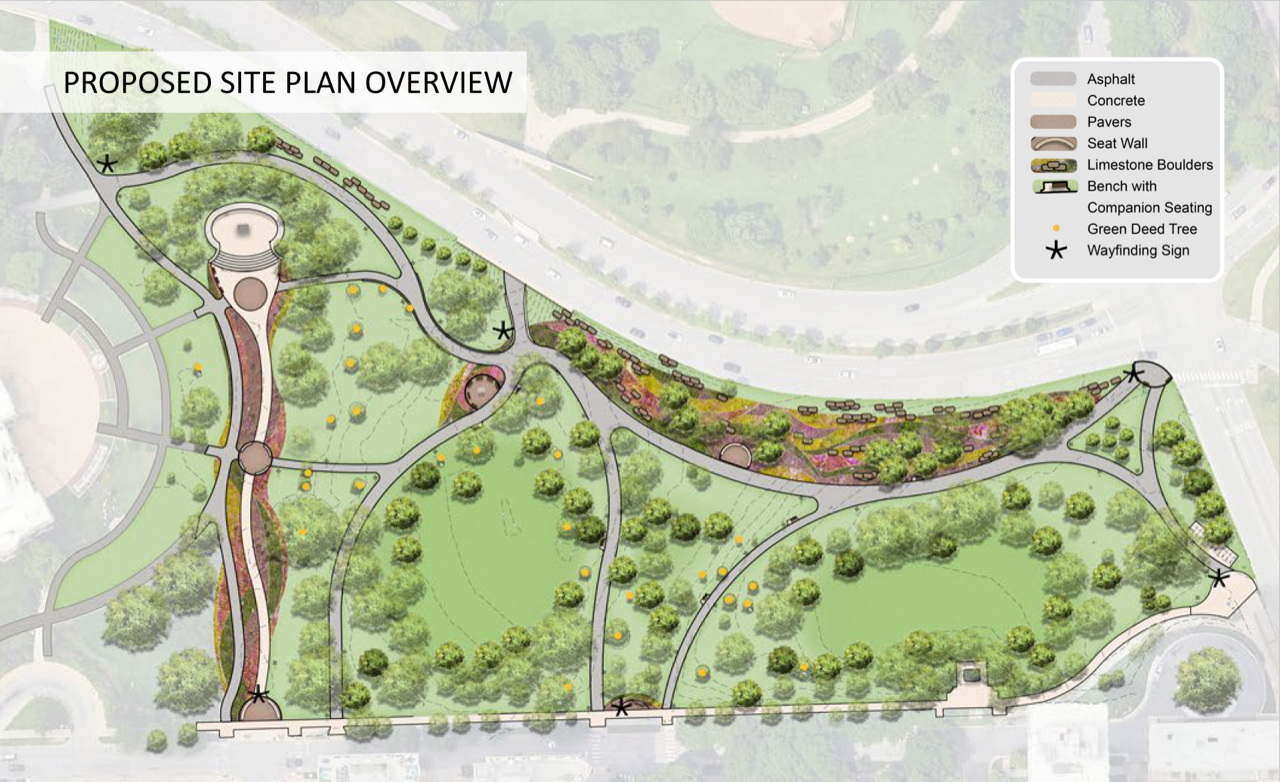
Playing a key role in the statue’s renovation has been the Gold Coast Neighbors Association through the Lincoln Gardens and Meadows project, a three-year $5 million public-private renewal action plan which began with the statue’s refurbishment and continues through the south section of the Park between North Avenue, Clark Street, considered the front yard as well to Old Town and the Lincoln Park neighborhoods and featuring both beautification and safety.
Vern Broders, who co-chairs the Gold Coast Neighbors project with Francee Harrington told us:
“We are so grateful to the many people who have advised and supported this project so generously already. We can’t thank them enough for their investment in our neighborhood park.
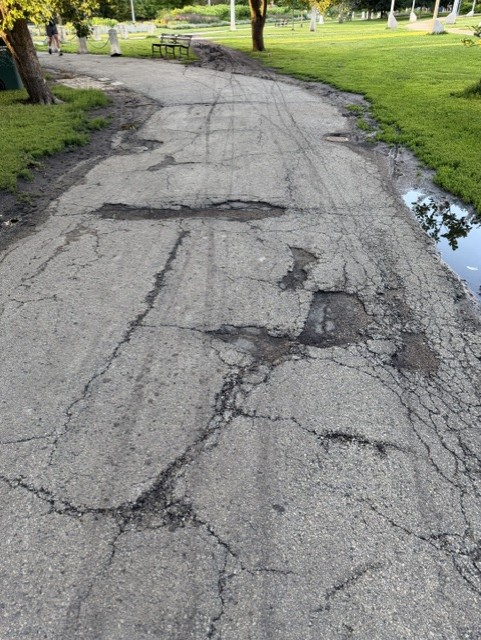
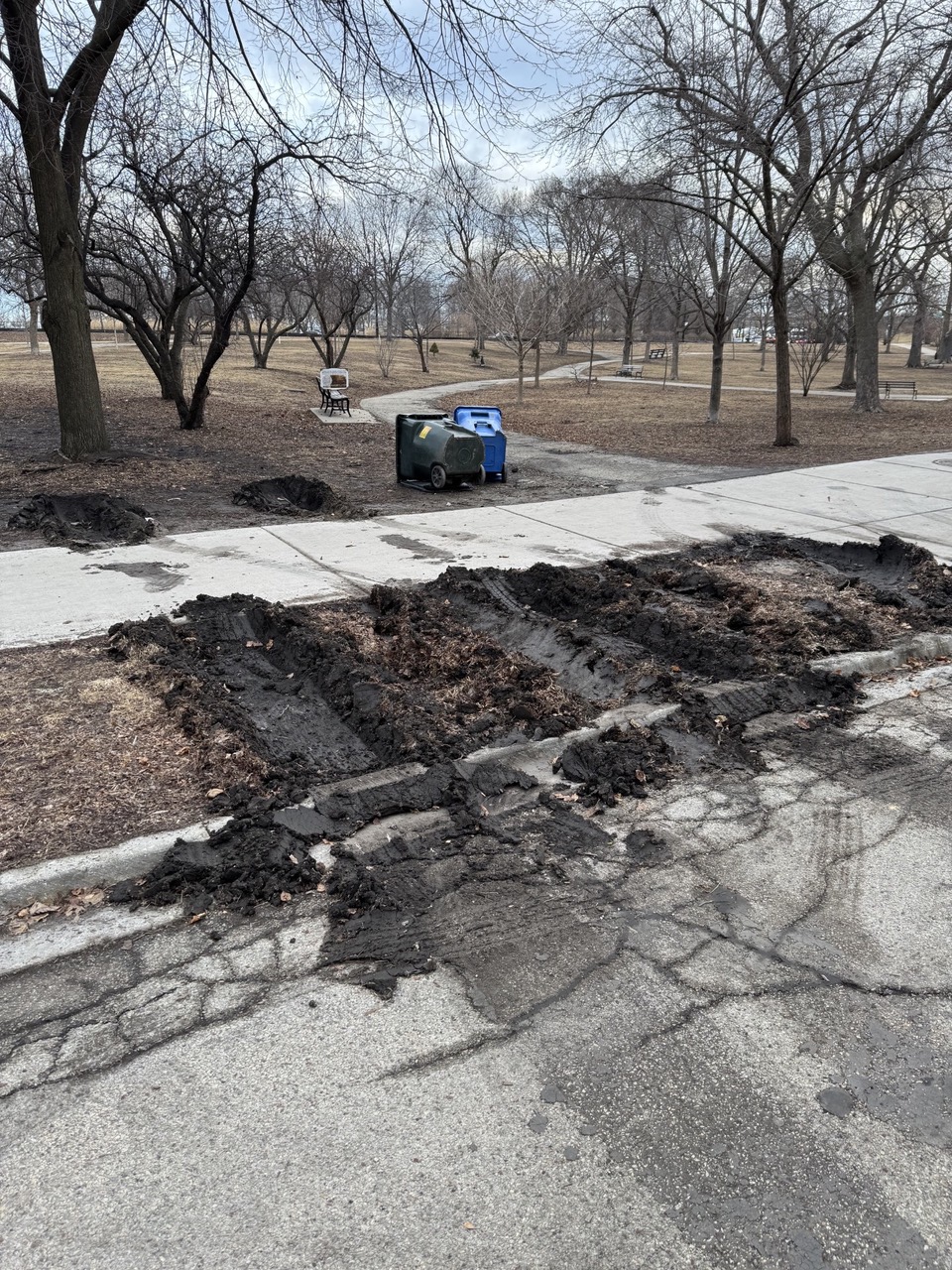
“It has been an honor to work on this project for almost twelve years now. We have heard from more than 900 neighbors in surveys and meetings. Their ideas and preferences have been incorporated into a thoughtful proposal to restore and improve the Lincoln Gardens and Meadows. The project addresses of many of the recurring problems like the pooling water in the meadows, crumbling asphalt walkways, stretches where the grass has worn away and are now just dirt and mud. There are many positive additions with new concrete paths, new safety lighting, new signage and new blooming trees and colorful gardens.”
“Following the Fourth of July celebration, we will continue neighborhood meetings to describe the project fully, take questions and note feedback. We need continuing advice, assistance, and most important, financial contributions from neighbors, particularly in the Gold Coast, Old Town, and Lincoln Park.”
Francee Harrington told us how community members can get involved in the next phases:
“There are many ways to help. We need to arrange many meetings in multi-unit buildings. We would appreciate volunteers to host small, simple gatherings so we can share details and describe donation opportunities.
“We are also asking neighbors who live in single family homes to gather friends on their streets to host a group of neighbors to hear about the proposed project and learn how they can offer provide input and invest financially in these important improvements.
“We need introductions to leaders in the neighborhood businesses, schools, clubs, churches, foundations, and institutions. We would like to meet over the summer to offer opportunities for sponsorship and support of the project. There are many opportunities for recognition.
“We have had stellar support for this public private partnership from government leaders. We are now asking individuals, families, and entities to renew and refresh this important green space we share with people of all ages and stages of life. The project is an investment in the quality of life for everyone who uses and enjoys the park in every season of the year.
“We are enormously appreciative of all the advisors, partners and neighbors who are generously contributing in so many ways. We look forward to hearing from and welcoming others to consider how they can invest in the Lincoln Gardens and Meadows and create their own legacy for the next several decades.”
It seems particularly significant that on the day observing America 250 that the Museum’s important Lincoln connection is highlighted by the ribbon cutting at the statue.
The Chicago History Museum displays pieces of Abraham Lincoln’s life and legacy in its permanent “Abraham Lincoln” exhibition, which highlights Lincoln’s election in 1860, his leadership during the Civil War, and his tragic assassination. Artifacts on display are from the John and Jeanne Rowe Abraham and Mary Todd Lincoln Collection and include a torch and ceremonial ax carried in parades during Lincoln’s 1860 presidential campaign, Lincoln’s life mask created by sculptor Clark Mills months before his assassination, and the bed on which President Lincoln died on April 15, 1865, at the house of William Peterson in Washington, D.C.
At the time of the statue’s unveiling in 1887, Chicago Mayor E.A. Roche and Leonard Swett, a civil and criminal lawyer who has a lifelong confidant on Lincoln, also delivered lengthy remarks, concluding with:
“We see him in this image of bronze above us; and recall his real presence. All we know is that in the hereafter, wherever the slave shall groan under the lash, or the poor shall sigh for something better than they have known, there his name will be honored and his example imitated.”
After all the speeches the crowd called out for Robert Todd Lincoln to address them but he declined, standing silently with his own son. The statue seems though to portray Lincoln about to speak, 12-feet tall in front of a chair mounted on a monumental semicircular exedra designed by architect Stanford White and now restored in time for July 4, with thanks to all of those who demonstrated their love of one of the finest sculptures in all of Chicago’s Park District collections.
For more information about July 4th at the Chicago History Museum visit: chicagohistory.org.
For more about the Lincoln Gardens and Meadows renewal project visit: lincolnparkconservancy.org.