Fairfax M. Cone, businessman for Foote, Cone and Belding
Died: June 20, 1977 in Carmel, California
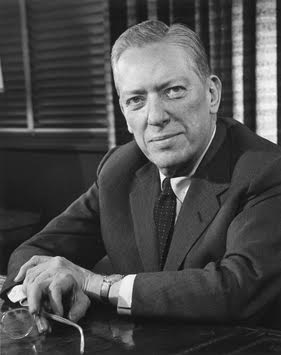
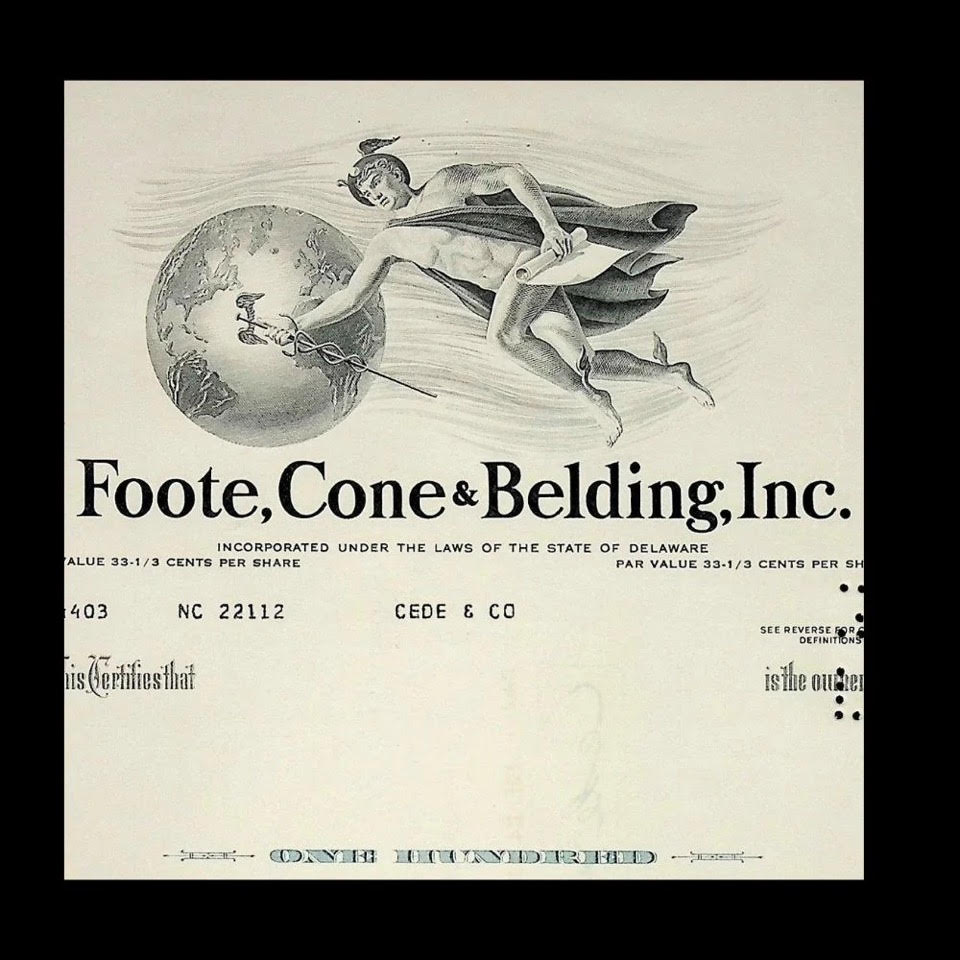
Fairfax Mastick Cone co-founded the company Foote Cone and Belding in 1942. His advertising philosophy: “Coherent and clear messages without the gimmicks…advertising should be thoughtful and honest, with no exceptions…no other kind of advertising should ever play part in the affairs of Foote, Cone and Belding.”
Born in San Francisco, the son of William H. Cone, a mining engineer and prospector, and Isabelle Williams a teacher, who home schooled Cone until the sixth grade, Fairfax Cone served as a teenager for eight months on the S.S. Haxton a transatlantic freighter, After enrolling in 1921 at the University of California at Berkeley—at his father’s insistence—Cone edited school magazines and “enjoyed cartooning and was hired as a summer copy boy at the San Francisco Bulletin,” working at the San Francisco Examiner for three years as an advertising salesman, writer and illustrator. In 1929 Cone joined the San Francisco office of Lord and Thomas as a copywriter.
After working directly with the owner Albert D. Lasker, he moved to Chicago in 1942 and became Lord and Thomas’ executive vice president. When Lasker retired the same year, Cone joined two colleagues, Emerson Foote in New York and Dan Belding in Los Angeles, forming the advertising agency Foote Cone and Belding in 1942 “acting as chairman of the executive committee from 1942 to 1948, Chairman of the Board from 1948 to 1951 and President from 1951 to 1957. Under his leadership it became one of the largest advertising agencies in the world.”
He engineered the agency as a public service during the war and took advantage of television by hiring cowboy Roy Rogers to sell Post Toasties and comedian Sid Caesar to promote Libby’s canned pineapple. Clients included Sunkist Growers, Dole Pineapple, Kraft Foods, the Paper Mate Company the Ralston-Purina Company, Sara Lee, Hill Brothers Coffee and Trans World Airlines (TWA).
Company campaigns included Raid’s “Kills bugs dead,” “Aren’t you glad you use Dial. Don’t you wish everybody did?” Clairol’s “Does she or doesn’t she? Hair color so natural only her hairdresser knows for sure.” Hallmark’s “when you care enough to send the very best,” Pepsodent’s “you’ll wonder where the yellow went.”
The firm’s tag line for Zenith: “The quality goes in before the name goes on.” Cone worked 60 hours a week and read five to seven books per week. He was also a member of the Board of Trustees at the University of Chicago and acted as its chairman from 1963 to 1970. Cone served as director of the Chicago Better Business Bureau and general chairman of the Chicago Crusade of Mercy.
Fairfax Cone believed advertising was a respectable and noble profession and outspoken critic of billboards: “The peace and beauty of the landscape is interrupted and in effect violated by jungles of unsightly advertisements.” He rejected the use of advertising to sell political candidates—the ad agency refused to accept political advertisements well into the late 20th century—and, in 1975, he was elected into the advertising Hall of Fame.
He wrote two autobiographical books With All Its Faults and The Blue Streak. “Advertising always follows, it never leads,” he wrote in With All Its Faults.
“Nevertheless,” he went on, “it should be used in the best traditions of our society, and not the very questionable postures that evolve from time to time…Advertising should never stoop to conquer.” Cone retired to Carmel, California in 1970 and he died at his home there in June 1977. He was 74 years old. Foote Cone and Belding became the second largest advertising agency in Chicago (after the Leo Burnett agency), the fourth largest in North America and the seventh largest ad agency in the world, at one point operating in 153 offices and 40 countries.
Before Royko Made Grobnik, Chicago’s Pete Dunne Created Martin Dooley
Dunne: born July 10, 1867
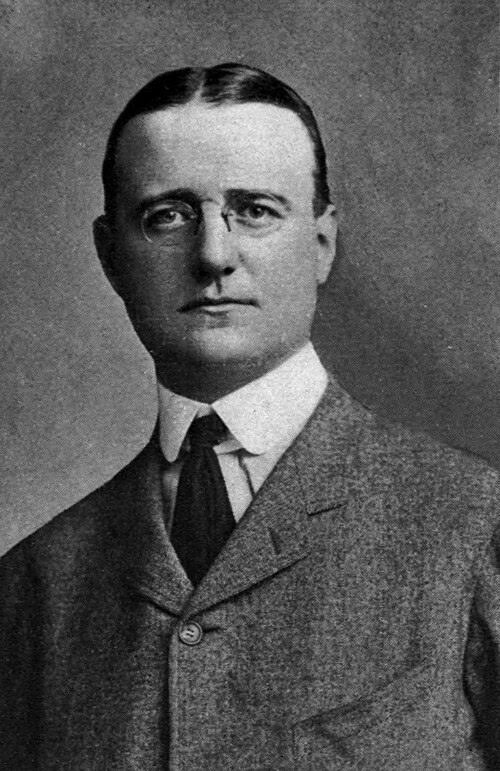
Before Mike Royko and Slats Grobnik, there was this Chicago native. His father owned a lumberyard and most of his family were politically active in Chicago’s Democratic Party and also in the priesthood of Chicago’s Catholic Church. After graduating from West Division High School young Pete, who added the Finley, his mother’s maiden name, after she died, became a copy boy in the newspaper industry, where he went from police reporter to general assignment reporter.
Dunne also covered sports. Indeed, he’s credited with creating the term southpaw to refer to a left-handed baseball pitcher. Dunne found his way to political coverage and was promoted to city editor—the city’s youngest at the age of 22—and eventually became an editorial page editor for a Chicago newspaper. A year later, he began writing in Irish dialect for the Chicago Evening Post, where he created a character based on a bartender, which he named Martin Dooley, a fictitious bartender from Bridgeport.
For five years in weekly columns, Dunne romanticized Irish blue collar urban life with his bartender character Martin Dooley. Readers took to Dooley’s quick wit and common sense. Through Dooley, Pete Dunne examined Chicago’s labor scene, depicting Ireland’s 1840s potato famine and immigrant problems as he advocated for Ireland’s independence and focused on the problems of assimilating in America. Dunne also agitated on behalf of social reform and wrote about the Pullman strike and Chicago politics. He moved to New York City in 1900 when his columns became nationally syndicated by the Great War (the first world war) and, at that point, Dunne was America’s most famous newspaper columnist with nearly 700 Martin Dooley columns. He died at his apartment in New York at the Delmonico Hotel in 1936 and he fell into obscurity.
Chicago’s Brothel Sister-Madams
Minna Everleigh born July 13, 1878
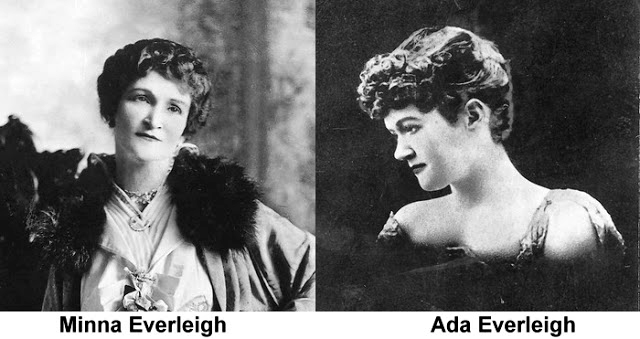
They were sisters before they were Chicago’s high society madams. Ada and Minna Everleigh—Minna was born near Louisville, Kentucky and died in New York City in 1948—ruled a notorious Chicago brothel for over a decade. The sisters were proprietors of “the most celebrated brothel in America, a 50-room mansion on South Dearborn Street.” The Everleigh sisters—the original family name was reported to be Lester—were born to a wealthy Kentucky lawyer father who sent his daughters to finishing school. They acted together in repertory companies in Washington, DC and opened their first brothel in Omaha, Nebraska for an extended exhibition. When it closed, they headed for Chicago. The Everleigh Club opened for business on February 1, 1900.
They designed the club to be as elegant as any five-star hotel. A library stocked rare books. The place included an art gallery, dining room, oil paintings, silk curtains, mahogany staircases and gold-plated spittoons for men’s chewing tobacco. Those who wanted to work at the Everleigh Club were added to a waiting list. According to historian Charles Washburn, in order to be hired, a woman needed to be “in perfect health, possess a pretty face and figure and look good in evening clothes…[and] the girls were also given lessons in proper behavior.”
Minna Everleigh instructed the brothel’s prostitutes to “be polite, patient, and forget what you are here for. Remember, the Everleigh Club has no time for the rough element, the clerk on a holiday, or a man without a checkbook.”
“Your youth and beauty are all you have,” Minna went on. “Preserve it. Stay respectable by all means.” In 14 soundproof rooms—dubbed parlors—with names ranging from red, gold and copper to Oriental, Japanese and Egyptian, according to Washburn, the prospective guest had to produce a letter of recommendation, an engraved card or a formal introduction to gain admittance. Prices were $12 for a bottle of Champagne and $50 for “an evening with dinner.”
In October 1909 an evangelist led a parade into the heart of Chicago’s red light district directly outside the infamous Everleigh Club. Believers “prayed and prayed” while the Everleigh sisters closed the blinds and dimmed the lights—“not even the sound of a tinkling piano could be heard”—until the marchers finally disbanded and departed. As they left, doors to the Everleigh re-opened as the lights went up and music spilled into Chicago’s streets in what was reportedly the busiest night the district ever had.
Mayor Fred Busse was not amused. Busse appointed a vice commission in 1910 that concluded the problem would remain as long as “the public conscience is dead.” Later, Chicago’s Mayor Carter Harrison II issued an order to close the sisters’ brothel on October 24, 1911. The bejeweled Minna Everleigh told the men of the press: “Well, boys, we’ve had good times, haven’t we.”
Minna said: “You have all been darlings. You’ve played square. And we thank you sincerely.” At one o’clock in the morning on October 25, 1911, the government order came down. Within a week the Everleigh sisters boarded the 20th Century Limited at Union Station and left the Windy City with their $1 million savings for Italy. Six months later, the Kentucky natives returned to Chicago with hopes of reopening the club. It never happened. Minna died in 1948 in New York Park West Hospital. Older sister Ada died in Roanoke, Virginia in 1960.
Sources: Historian Charles Washburn; Chicago Portraits: Biographies of 250 Famous Chicagoans (Loyola University Press 1991) by June Skinner Sawyer; foreword by Bill Kurtis.