An Ancient Sport Aims to Court Players Where Mammoths Once Roamed
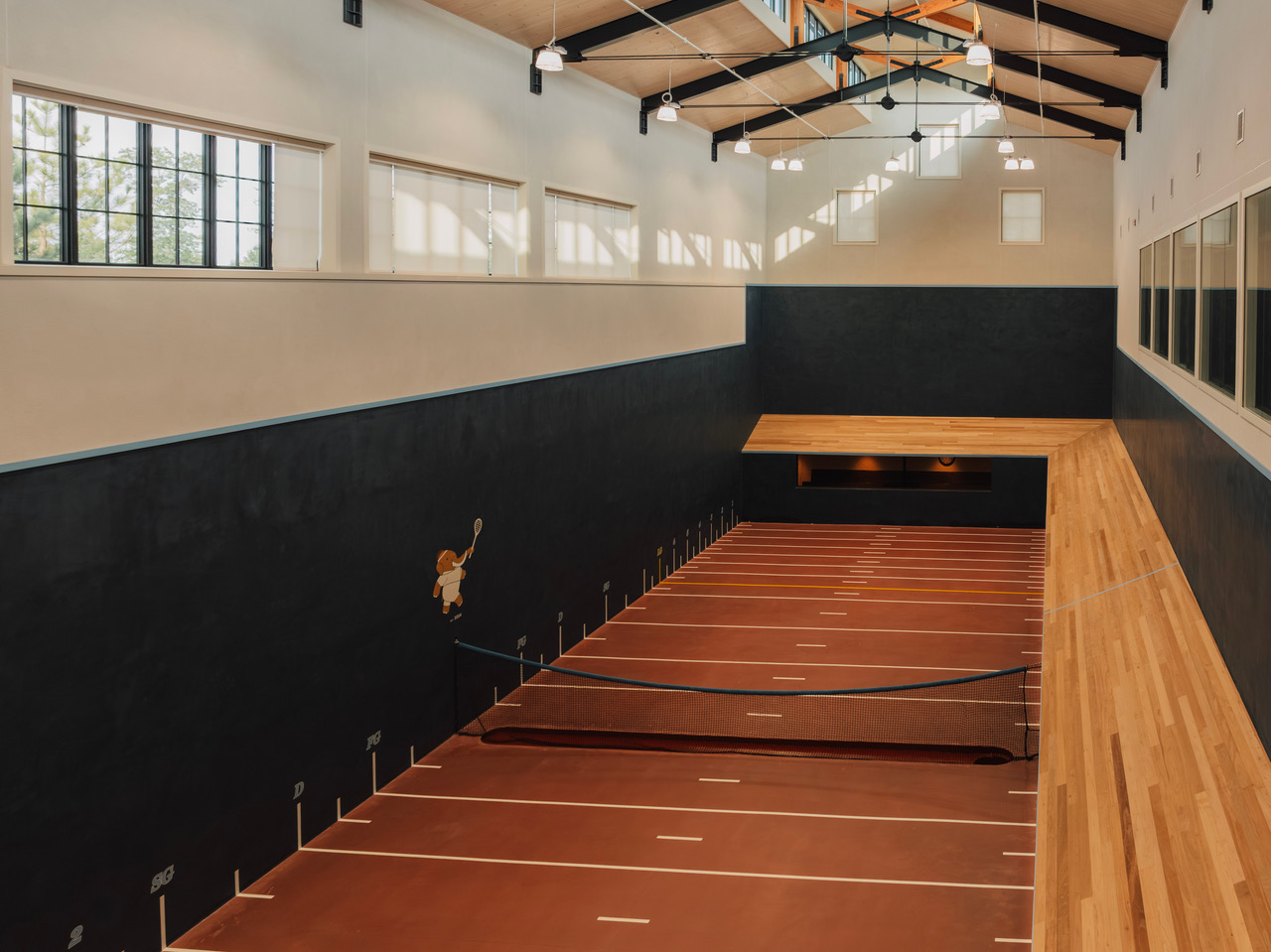
Amid extensive sand dunes and immaculate fairways is a structure that, at first, seems somewhat out of place. Situated in Nekoosa, in the middle of Wisconsin, is a symmetrical brick building unlike others at the Sand Valley Golf Resort. Inside, down in the basement, rests a decidedly asymmetrical court that hosts a 900-year-old sport – far older than the game of golf itself that stretches across hundreds of acres around it.
Opened in 2024, the court tennis court replaced The Racquet Club of Chicago as the westernmost facility in the United States. It is the rare venue open to the public, and one of a few of the dozen or so in the United States not situated in or near a big city.
Which might explain why on a recent morning the court sat empty while a stream of foursomes strode to the first tee at nearby Sedge Valley. But Jack Stuart, the court’s pro since its opening, is hoping to spread the joys of the ancient game (which I can attest is a fantastic one to play) to many.
“We want to get the community to come out and see this game. They haven’t actually watched people play it,” said Stuart, who noted Racquet Club pro Steve Virgona and Ben Taylor-Matthews – two of the top five professionals in the world — will play an exhibition at Sand Valley on Aug. 1.
“It’s a long winter here, and we’d like to see more play,” added Stuart, chatting while sitting in the dedans. “In the summer there are about a dozen Chicagoans who have houses here who will book some court time. I’ll hit with their little kids.”
The price is right to play. Stuart said the previously mentioned homeowners, resort guests and members of The Lido golf course can hit balls for free, while others are charged $60 an hour. Racquets and balls are complimentary for all.
But learning the game – whose origins hearken to monasteries in France and was played by monarchs such as Henry VIII — is a challenge. Unlike the play on Sand Valley’s 16 rectangular lawn tennis courts, the asymmetrical design can baffle newcomers, and the heavy, crooked racquets can seem ill-suited to strike not-so-bouncy balls. True, the scoring resembles tennis (love-15, for example), but a ball that bounces twice is not always a point. It can be a chase or hazard chase, depending on which of the many lines that cross the court it lands by or the netted gallery it flies into. That means the winner of the point will occur later, when the players switch sides.
When giving a lesson, Stuart forgoes mentioning chases to simplify learning.
“I have to change my mind set to teach court tennis,” said Stuart, who also offers lessons on the grass courts. “There’s not enough time to teach them all the proper steps. I’ll show them what’s the easiest way to hit the ball over the net. I only have one hour, and most likely they’re going home to a place that doesn’t have one of these courts.”
How did Stuart come across the game? He first heard about it while conducting research on a high-school paper about tennis history. After earning a degree in Ferris State’s Professional Tennis Management program, he took a tennis job at Sand Valley during the pandemic. While living in Denver in 2024, he heard about the head tennis professional role at Sand Valley.
“I saw this as a great opportunity where I still get to coach but I also get to work the business side of things,” said Stuart, adding that, unsurprisingly, no one who interviewed for the job had any experience with court tennis.
Fortunately, Sand Valley had hired Colin Lumley, a pro from England, for the summer. Stuart wandered onto the court to hit with him for the first time.
“It was back and forth – no walls. And I thought it wasn’t so bad,” Stuart said. “Then he cut a ball into the corner at maximum revolutions per minute. My brain couldn’t handle what was going on.”
Though Stuart’s first question on the court was, “What are the lines for?” he soon mastered the game that same summer while hitting with Lumley’s wife Penny – a six-time world champion.
“All of a sudden I understood the chases and the galleries — it was like an ‘aha’ moment,” he said.
That same year, the 13,000-square-foot facility – which includes a restaurant called The Gallery with views of the court below along with locker rooms – hosted the U.S. National Open tournament.
“It was cool to see the court tennis community show up, and the top players of the game showed me how it’s really played,” Stuart said.
At this point, one might ask: Why does Sand Valley have a building dedicated to court tennis, an esoteric sport which counts a 1,000 or so players in the United States? Though the Keiser family is renowned for its golf courses — including Sand Valley’s five, with more to come there — Michael Keiser Jr. is also a court tennis aficionado.
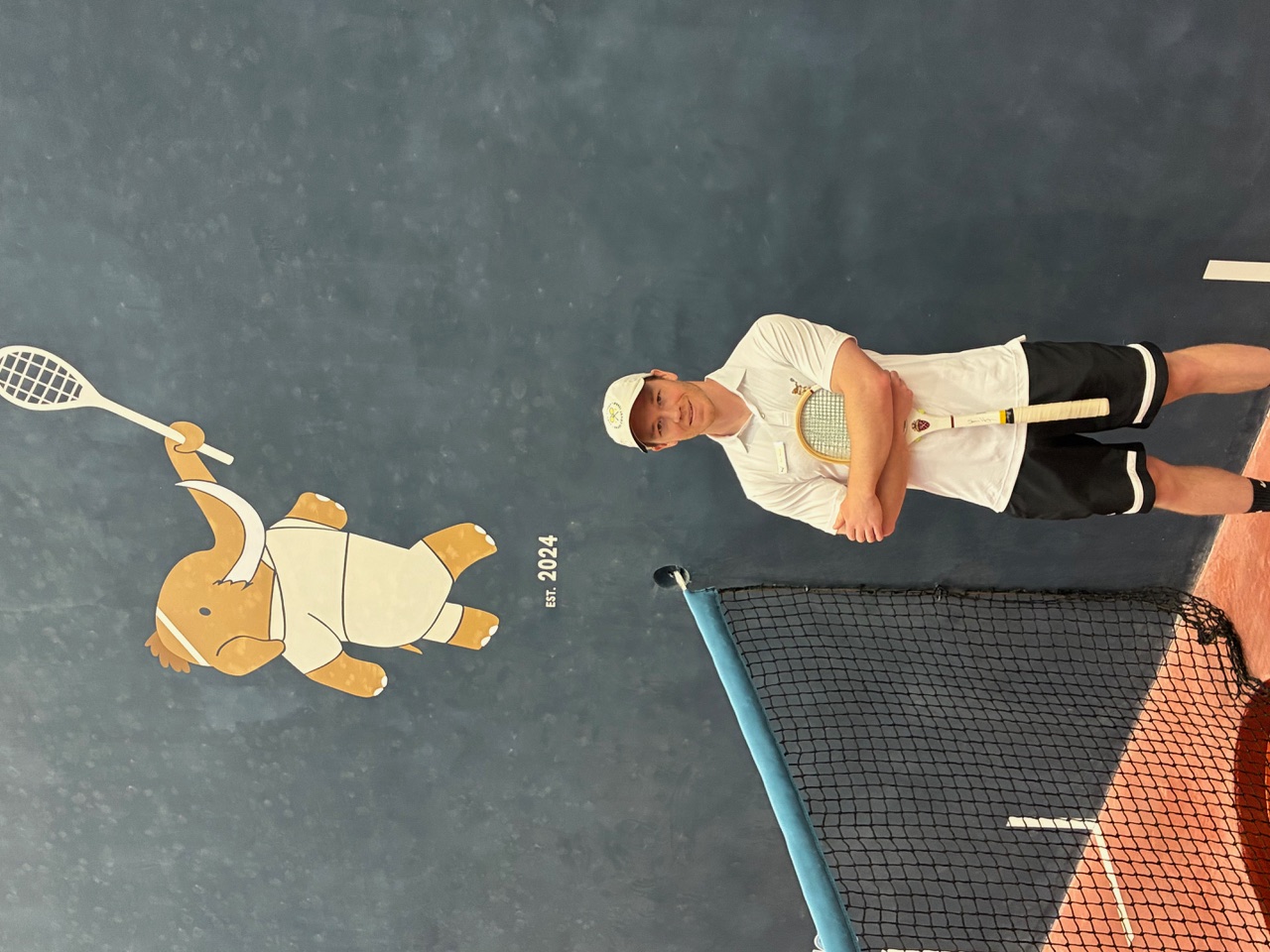
In fact, as a kid, Keiser had a picture of Babar the Elephant holding a tennis racquet, Stuart said. The Sand Valley court tennis logo is an updated version – Babar with a tusk, in a nod to the mammoths who used to roam the area, gripping a court tennis racquet with his trunk.