We set aside the end of September for one last trip from Paris before heading to Florida for the winter. After our trips to Scotland and Sweden, which both involved a lot of driving and too many one-night stands in hotels, the criteria for this trip were: 1) easy to get to from Paris; 2) a relaxing destination away from the madding crowd; 3) where we could easily spend four or five days without a car. Lausanne – and in particular its lakeside district of Ouchy – filled the bill perfectly.
The TGV Lyria high-speed train should normally go directly from the Gare de Lyon in Paris to Lausanne in 3 hours 41 minutes. Work in progress on the line, however, obliged us to change trains in Geneva to reach Lausanne, which added an hour to the journey.
Lausanne, the capital of the Vaud canton of Switzerland, is a bustling small city of around 150,000 souls, but its Ouchy district only has around 10,000 residents spread out along the lakefront.
And there is plenty to see and do that is easily reachable on foot, by boat, by métro or by train.
AI Overview
Lausanne evolved from a small Roman lakeside camp into a powerful medieval bishopric and modern-day global Olympic Capital.
Antiquity and Roman Roots
· Lousonna (15 B.C.): Romans established a civilian port and trading post on the shores of Lake Geneva near modern-day Vidy.
· Relocation to the Hill (4th Century): Invasions by the Alemanni forced residents to abandon the open lakeshore and retreat to the high, defensible Cité hill, laying out the distinct multi-level geography of the old town.
Middle Ages and Bishop Rule
· The Bishop's Seat (6th Century): Bishop Marius moved his diocese to the fortified Cité.
· Holy Roman Empire (12th Century): Bishops gained temporal prince-empire status, ruling the region and overseeing the construction of the magnificent Lausanne Cathedral, which was consecrated in 1275.
· Unification: Separate settlements across local streams (like the Flon and Louve) merged into the unified medieval city.
Bernese Rule and the Reformation
· Conquest (1536): Bernese troops captured the Pays de Vaud, ending the temporal power of the bishops and introducing the Protestant Reformation.
· Cultural Shift: The former theological academy was founded in 1537, later becoming the University of Lausanne. Bernese rule lasted over two and a half centuries.
Modern Era and Capital Status
· Canton of Vaud (1803): Following Napoleon's invasion and the collapse of the Bernese administration, Lausanne became the capital of the newly formed Canton of Vaud within the Swiss Confederation.
· Literary Haven: During the 18th and 19th centuries, intellectuals and writers such as Voltaire, Jean-Jacques Rousseau, and Edward Gibbon resided and wrote in the city.
· Treaty of Lausanne (1923): The city hosted the international conference that signed the Treaty of Lausanne, fixing the borders of modern Turkey.
· Olympic Capital (1994): Following the relocation of the International Olympic Committee (IOC) by Pierre de Coubertin in 1915, Lausanne was officially named the Olympic Capital in 1994.
RK Overview
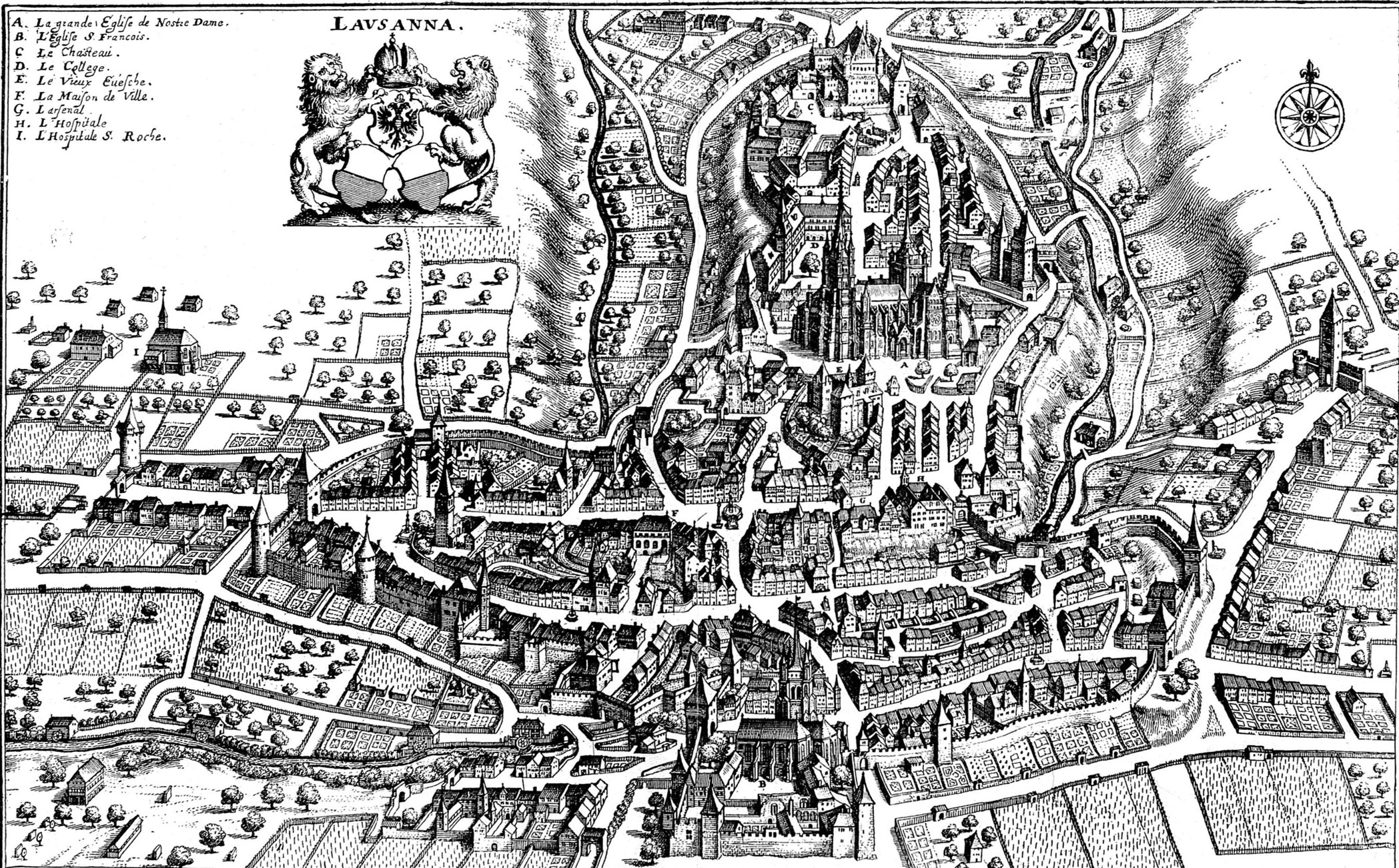
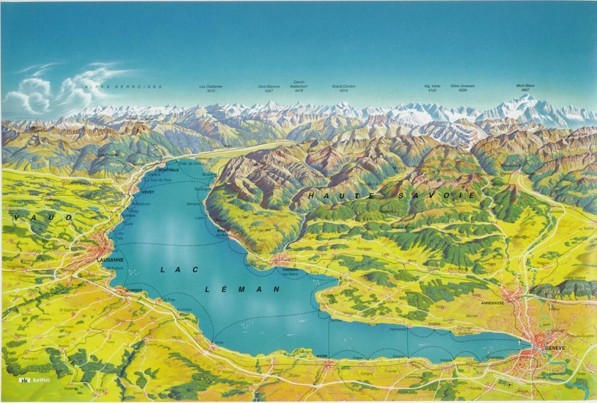
Lausanne is built on a steep slope on the north shore of Lake Geneva (Lac Léman in France), which climbs 3.5 miles/5.5 km up to the Swiss plateau. The Old Town (la Cité) was established on an easily defendable rocky promontory next to the Flon and Louve rivers with a 13th century Gothic cathedral on top, overlooking the lower city and the Place de la Palud, which was the political and commercial center. The medieval city was located about one mile/1.6 km up the slope from the fishing village of Ouchy on the lake. During the Middle Ages, Lausanne was surrounded by a wall built for defensive purposes. In 1536, Lausanne Cathedral became a Swiss Reformed church, following the invasion and occupation of Vaud by Bernese troops who introduced the Protestant Reformation to the region.
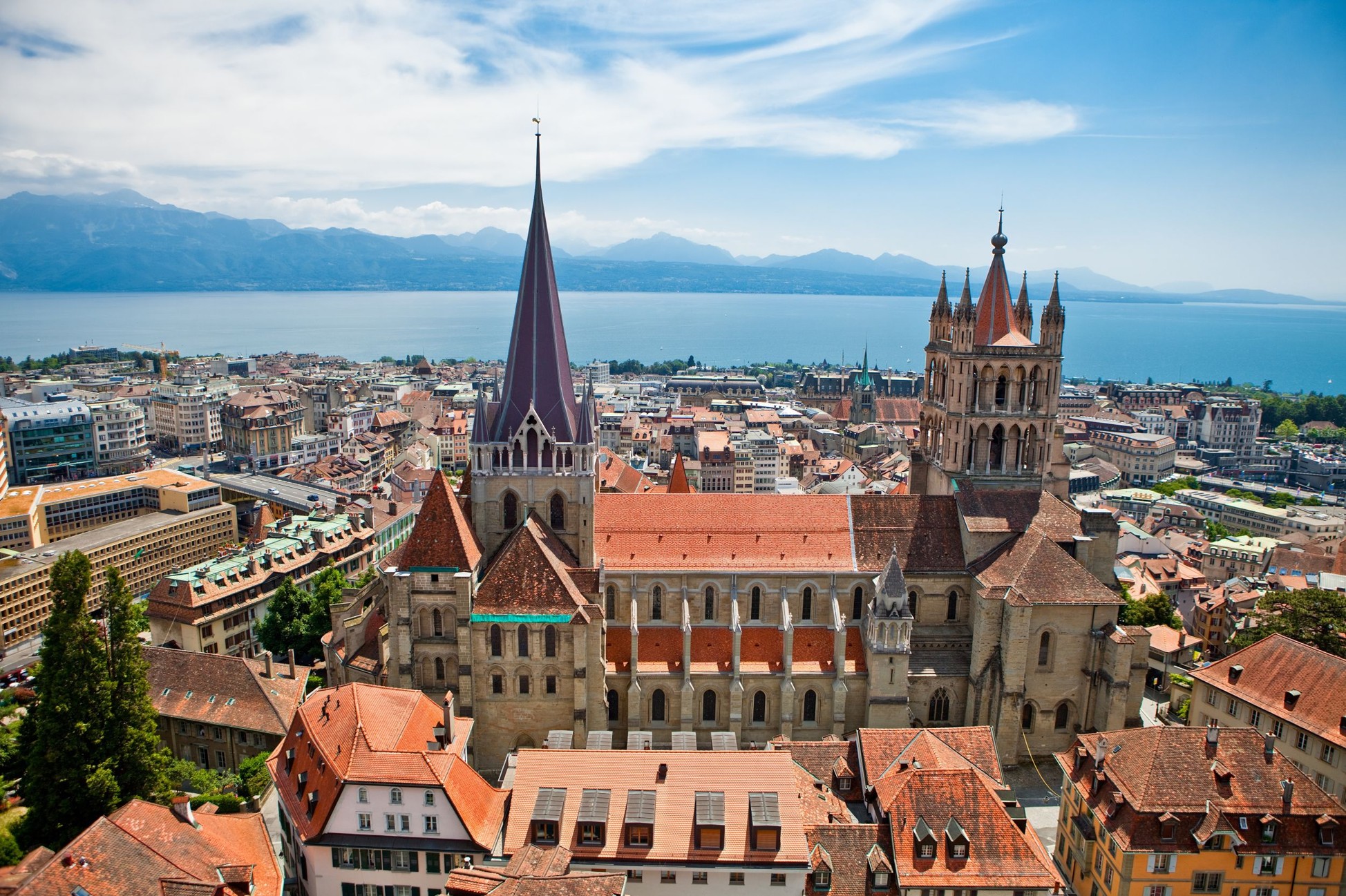
Lausanne was transformed during the 19th century. In 1803, Lausanne became the capital of the new canton of Vaud. The medieval wall was demolished, allowing the city to spread out. The Flon river was covered, and the wide Rue Centrale was laid out above it. Bridges were constructed over the new road to connect the lower city with the Old Town. Between 1850 and 1905, Lausanne’s population grew from 16,000 to 54,000 inhabitants.
The Old Town remains significantly higher than the neighborhoods below, which can be reached most directly on foot via steep stairways (escaliers) built between buildings. The most famous is the Escaliers du Marché, covered stairways with 177 steps that originally led to the medieval market (hence its name), near today’s Place de la Palud.
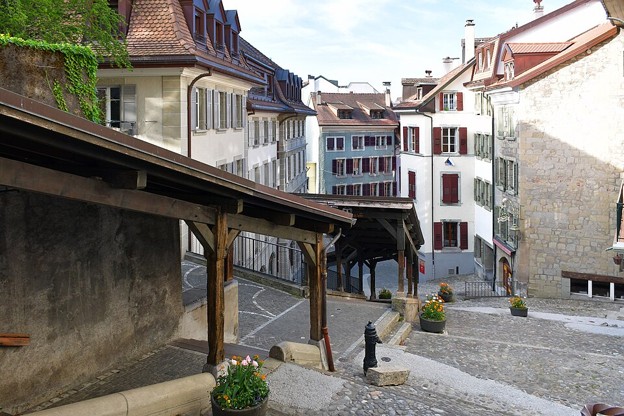
One day we wandered around the Old Town, visiting the Cathedral (the largest in Switzerland) and the Musée Historique de Lausanne (directly across from the Cathedral), which had wonderful displays showing the history of the city. (We only made it to two of the 23 museums in Lausanne; the other one was the Olympic Museum in Ouchy – see below.)
Part II of Russell Kelley’s Letter from Lausanne, on Ouchy and the Beau-Rivage Palace, appears in the October 25 issue.
 ← Previous: The Village Chicago Celebrates with a Sellout Crowd!