
Imagine sports agent Jerry McGuire switching roles to negotiate on behalf of teams, not players. That’s one way to look at the career of Andrew Brandt, who has written Smarter About Sports: My Life Navigating Athletes, Agents, Media, and the Business of the NFL.
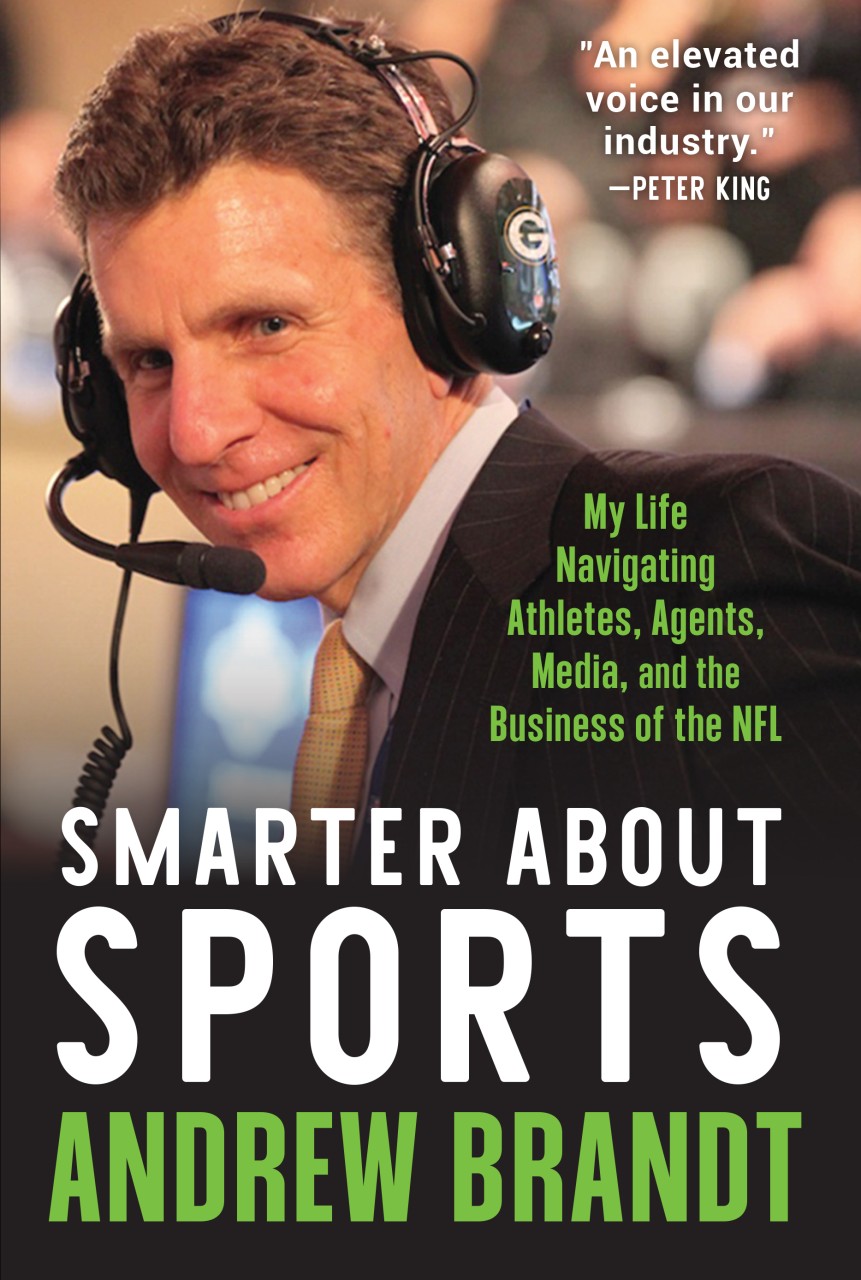
Published by Chicago-based Triumph Books this summer, Brandt – a graduate of Georgetown Law School -- talks about his “meandering path” that, above all, always involved sports.
Starting low on the corporate ladder at sports-management firm ProServ, Brandt crafted cease-and-desist letters for companies not authorized to use Chicago Bulls Michael Jordan’s image in the 1980s. He also drafted a Chicago Chevyland contract for the young star.
“Though it might surprise you to read this now, it was difficult to secure marketing opportunities for Michael in those early years, especially on a national scale,” Brandt writes. “David (Falk) and our ProServ marketing team faced repeated rejections when inquiring about national endorsement deals.”
When Falk, Jordan’s agent, ran meetings with ProServ clients, Brandt observed and learned; finally, he was given the chance to conduct a meeting solo.
An Italian basketball team was sending a representative to try to get Danny Ferry – the second overall pick in the 1989 NBA draft – to play overseas. Falk let Brandt take the meeting because he thought there was no chance Ferry would play second-rate basketball for less money -- probably $500,000 a year compared to $2 million annually in the NBA.
In walked a bizarrely dressed man who asked, “Andrew, what will it take to sign Dan Ferry…today!”
“I was a bit taken aback, but David and I had prepared a response: we were going to ask for an absurd number (for the overseas market, at least) to end the meeting and move on from this distraction,” Brandt writes. “According to script, I said, ‘Enzo, we would need $10 million over five years, $2 million a year. And Danny can get out [come back to the NBA] after every year.’
“Enzo then said the words I will never forget. ‘Andrew, what is your routing number?’”
“I said, ‘Excuse me?’”
“We will deposit $1 million today and $1 million when Danny arrives in Rome next week.”
Ferry joined Il Messagero. No top draft pick has abandoned the NBA for Europe before or since. Ferry only lasted one year in Italy, as unheated practice facilities and teammates smoking cigarettes did not appeal to the Duke graduate.
Brandt worked with a number of NBA clients, from 5-foot-3 Muggsy Bogues (who often conducted photo shoots with 7-foot-7 Washington Bullets teammate Manute Bol) to Patrick Ewing. He also represented NFL ones such as Boomer Esiason.
At age 29, he was offered a chance to be the first general manager of the Barcelona Dragons.
“What is that?” Brandt responded.
It was part of the World League of American Football, started by the NFL in 1991 to gain fans in Europe and beyond. In 10 days, with much help, he hired a coach, put together a 40-man roster and flew to Spain.
“I had no idea what I was getting into,” Brandt notes. “I was the only general manager going to a place that—as I was soon to find out—had little to no understanding of the sport we were playing, American football.”
The discovery occurred during the team’s opener, broadcast by ABC to the United States because a New York team was Barcelona’s opponent. A Dragons’ receiver scored a touchdown, and Brandt jumped up and down to celebrate. At the same time, he noticed the crowd was quite subdued.
“There was some polite applause—like golf claps—but it sounded nothing like a home crowd at an NFL game,” Brandt writes. “And then our kicker, Massimo Manca—Italian heritage, not Spanish (but close enough)—kicked the extra point, and the crowd went nuts! That would be an ‘aha’ moment that would define the interest in our product.”
That may have been the high point. Fans complained there were too many meetings – known in the United States as huddles. Behemoth players overwhelmed the short hotel beds, and food was never plentiful enough for the hefty eaters.
“Nothing I would face from that point on, including everything I worked on with the Green Bay Packers, was more challenging than creating and running the Barcelona Dragons,” Brandt notes.
But before the Packers came a stint as a University of Illinois professor and another tour as an agent, this time with Woolf Associates. Though he missed a meeting with Tim Duncan to see the birth of his son, he picked up some well-known clients, such as future Hall of Fame kicker Adam Vinatieri and Texas running back Ricky Williams (before Williams dropped Brandt to be represented by a rap star). Fortunately, around the time Brandt lost his biggest client, the Packers called.
General manager Ron Wolf had decided he wanted someone on the team side with experience as an agent to deal with players. Tapped as a vice president, Brandt navigated the salary cap, contract negotiations, trades (including one he executed on a park ranger’s phone when his cellphone died) and more for nine years in perhaps the most passionate town in pro sports.
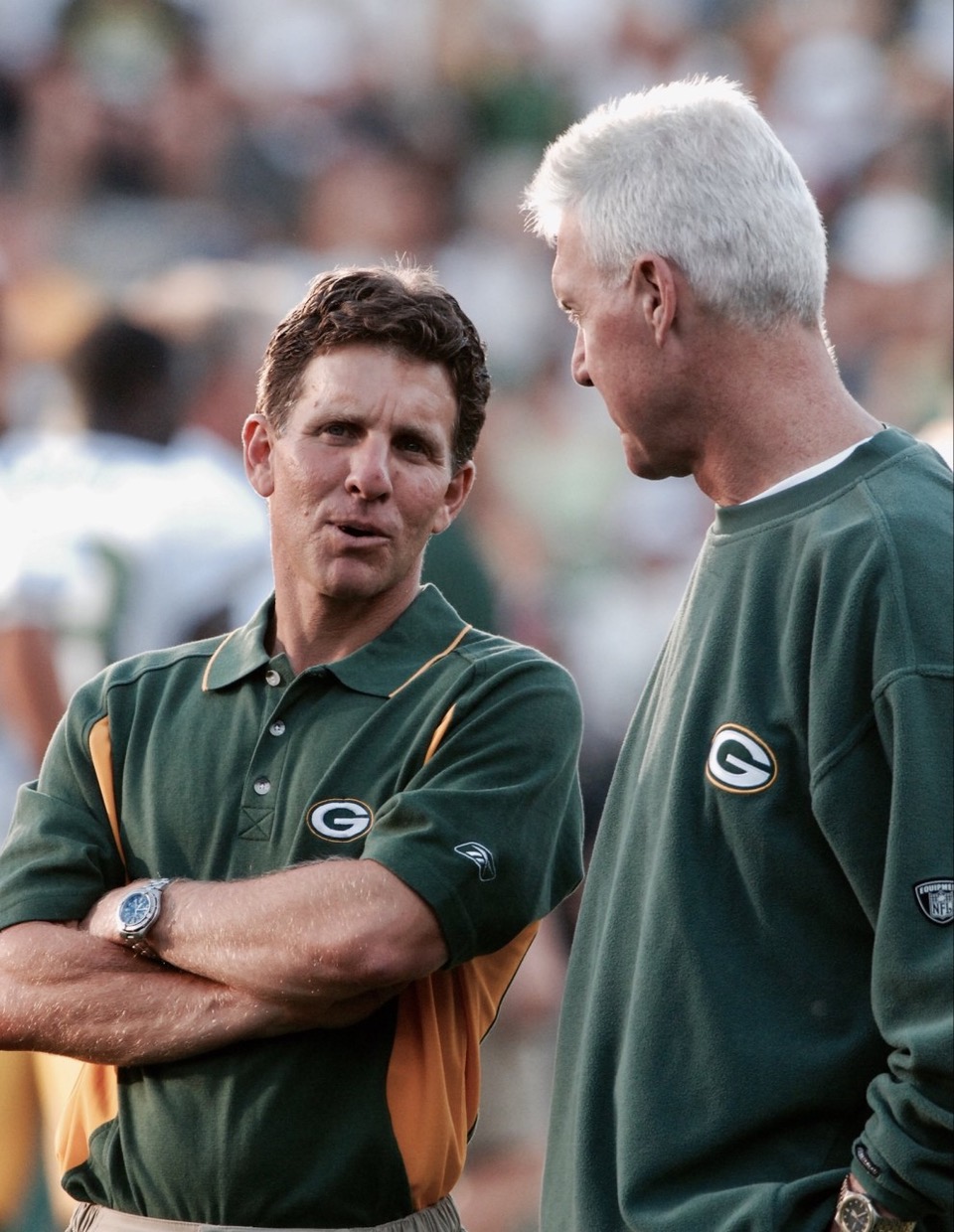
“I have never seen a community wrap itself around a sports franchise like it does there: not high school, not college, not pro,” opines Brandt. “The fans are ‘owners’—I used to say I worked for tens of thousands of Cheeseheads—and talked to me about the team everywhere: on the street, in the grocery store, in restaurants, in bars, while pumping gas, while eating lunch, while waiting in line.”
Perhaps his biggest challenge was contract negotiations with quarterback Brett Favre, a god in Green Bay. He knew that letting the star leave for free agency was unacceptable. Favre signed the first $100 million player contract in NFL history across a decade.
A few times Brandt negotiated directly with players. Though he thought he would welcome that setup, he did not.
“I was not negotiating about a widget or some product unit cost; I was negotiating about the value of the person sitting in front of me,” he writes. “Without the filter and extra layer of insulation that an agent would have provided, these negotiations became, well, raw.”
The iron-clad dedication expected by the Packers caused problems. Brandt was disconsolate missing one of his son’s 10th-birthday parties because he had to take a three-hour call with an agent – and still lost the free agent player to another team. As he negotiating contracts became more frustrating, he also realized he had hit a ceiling professionally. His contract with the Packers was not renewed, which hurt but opened the third part of his career.
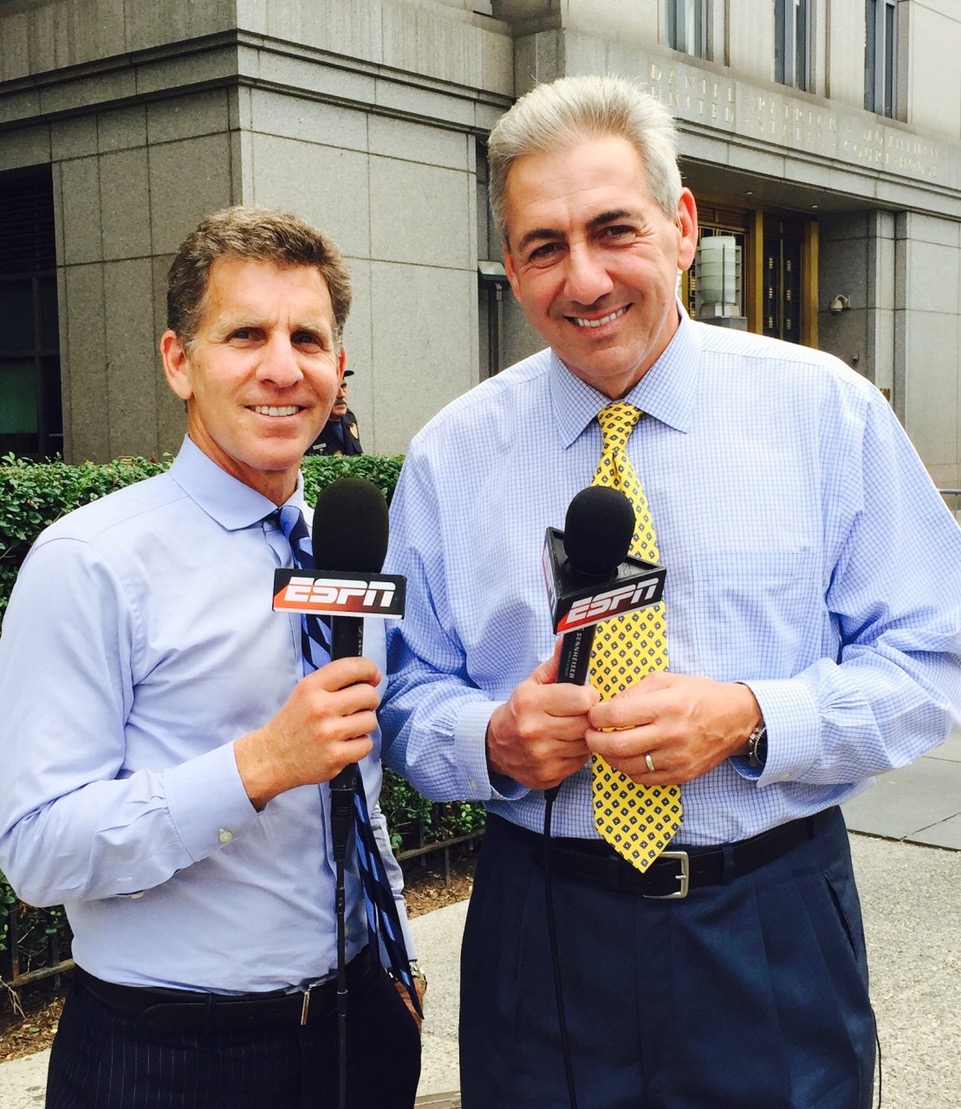
Brandt has achieved success in media. He became a contributor on ESPN’s SportsCenter and Outside the Lines as well as a columnist for Sports Illustrated. Today, he hosts a podcast about the business of sports and publishes a newsletter.
How do you sum all of this up? Said Brandt, “It has been a fortunate life on all sides of sports, something I never really planned for, but I took the leaps I needed and, as the book shows, allowed for serendipity in my life.”