In Paris, from October 2022 to January 2023, on the occasion of one hundred years of novelist Marcel Proust’s passing (1871-1922,) the French National Library (BnF) organized a comprehensive exhibition entitled “Marcel Proust: La fabrique de l’oeuvre”. The exhibition followed Proust’s literary style’s development, focusing on his seven-volume masterpiece entitled “In Search of Lost Time, (Remembrance of Things Past,)” and in the original French “À la recherche du temps perdu”. Visitors viewed Proust’s notebooks, drafts, manuscripts, proofs, autographed editions, special printed copies, and more. Moreover, the exhibition displayed artworks, photographs, costumes, and Proust’s “Paperoles,” that were long, accordion-folded paper bands, where he penned his writing pieces, then folded the bands and placed them inside notebooks. Through Proust’s drafts, the exhibition showed how his famous cookie, the madeleine (that evoked childhood moments,) began as stale bread (draft from 1907,) turned into a toast, and became a cookie by 1908. The objects that were on view came from the BnF's “Marcel Proust collection,” and from loans that included the Louvre, Musée d'Orsay, the Jacques Doucet Literary Library, the Cinémathèque française, the Bodmer Foundation in Switzerland, and various private collections. Viewers of the exhibition moved through seven rooms, each dedicated to a different volume in Proust’s series, from "Swann’s Way” (volume one, published in 1913,) to “Time Regained” (volume seven,) that was published in 1927, about five years after Proust’s passing.
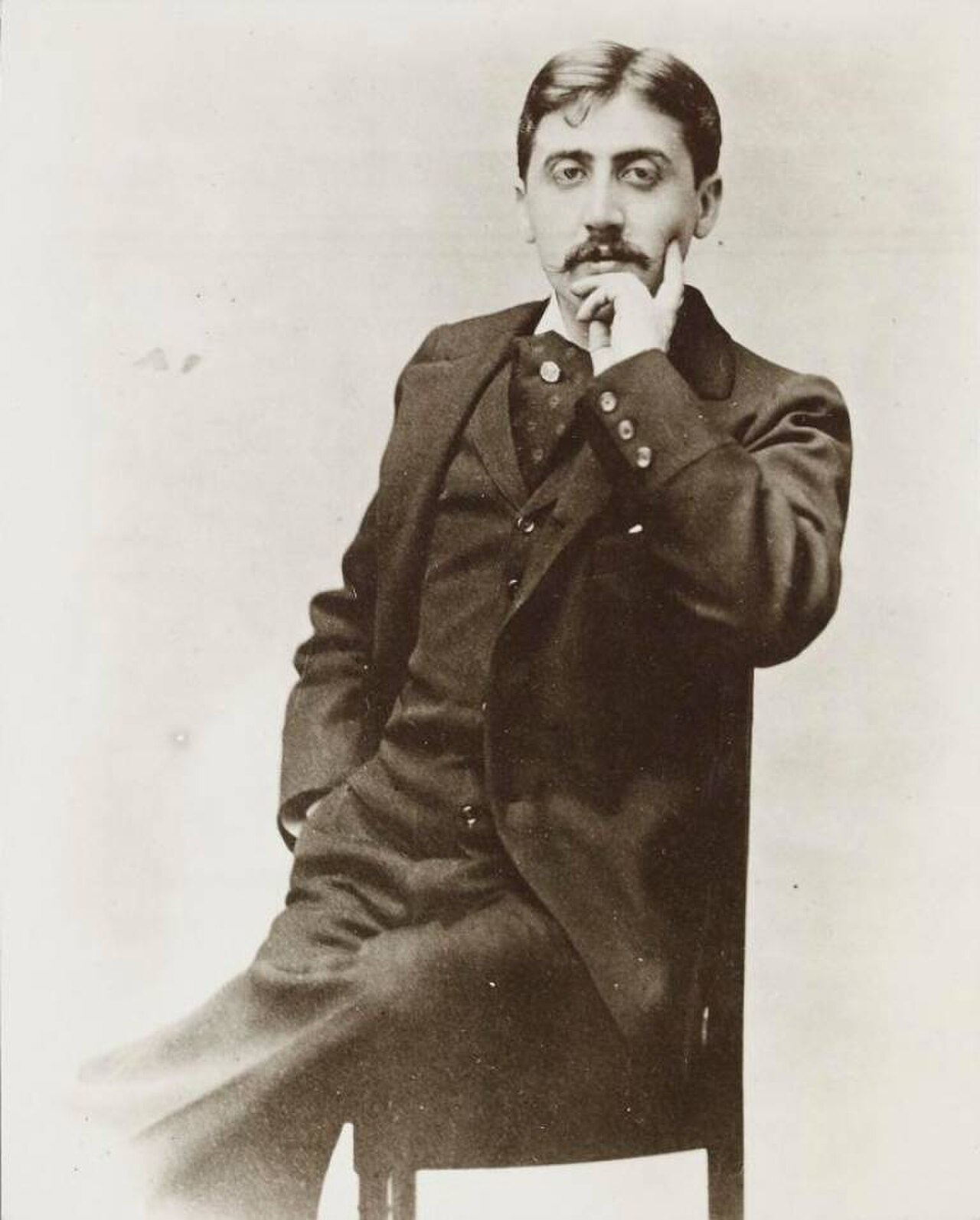
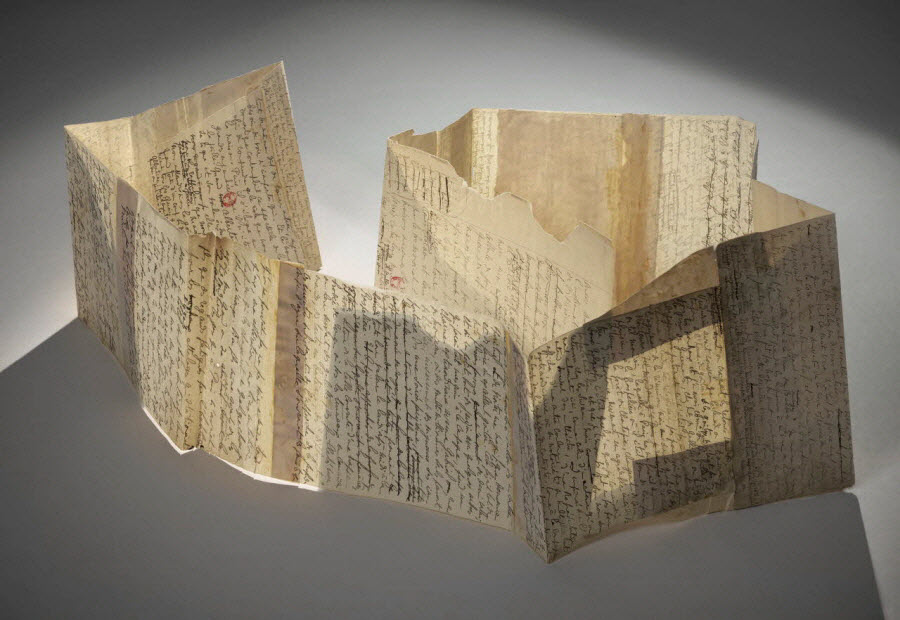
In volume one, the narrator (who was named Marcel and was probably Proust’s alter-ego,) tasted a madeleine cookie and the flavor triggered an array of involuntary memories from childhood. The narrator recalled how on Sunday mornings his aunt Léonie served the madeleine cookie dipped in tea. Proust wrote, “And once I had recognized the taste of the crumb of madeleine soaked in her decoction of lime-flowers which my aunt used to give me (although I did not yet know and must long postpone the discovery of why this memory made me so happy) immediately the old grey house upon the street, where her room was, rose up like the scenery of a theatre to attach itself to the little pavilion, opening on to the garden, which had been built out behind it for my parents (the isolated panel which until that moment had been all that I could see); and with the house the town, from morning to night and in all weathers, the Square where I was sent before luncheon, the streets along which I used to run errands, the country roads we took when it was fine. And just as the Japanese amuse themselves by filling a porcelain bowl with water and steeping in it little crumbs of paper which until then are without character or form, but, the moment they become wet, stretch themselves and bend, take on colour and distinctive shape, become flowers or houses or people, permanent and recognisable, so in that moment all the flowers in our garden and in M. Swann's park, and the water-lilies on the Vivonne and the good folk of the village and their little dwellings and the parish church and the whole of Combray and of its surroundings, taking their proper shapes and growing solid, sprang into being, town and gardens alike, from my cup of tea.” (Proust M., “Swann’s Way,” translated from the French by C.K. Scott Moncrieff, New York, Henry Holt And Company, 1922).
In 2022 in Paris, “Musée d’art et d’histoire du Judaïsme” (mahJ) showed an exhibition entitled “Marcel Proust. On his mother's side”. The exhibition focused on Proust’s Jewish influence. In the footsteps of his father’s religion, Proust was baptised and raised Catholic, and on the maternal side, Proust was close to his mother’s family, the Weils, who were Jewish. Proust was fascinated by the aristocrats of Faubourg Saint-Germain, and was also quite attached to his mother’s family. Proust’s mother, Jeanne, deemed the heroine of the old testament’s Book of Esther, Queen Esther, as an example of grace, and intelligence. For centuries, the Book of Esther, has served as the text for the late winter Jewish Festival of Lots (Purim in Hebrew). In 1905, French actress Sarah Bernhardt played author Jean Racine’s “Esther,” and one night, the play was performed at the Proust residenece. In addition, the Proust family had a 17th-century Flemish masterpiece painting portraying Esther. Through his mother, Proust was affected by the story in the Book of Esther.
The Jewish Festival of Lots (Purim) is a late winter, joyous holiday, that celebrates the salvation of the Jewish people in ancient Persia. The ancient story is written in the Book of Esther, read during the holiday, and tells of Esther who risks her life to reveal the evil plot of Haman who plans to annihilate the Jewish people. Through courage and faith the story overturns, and the Jewish people are saved. Celebrations of the holiday include wearing costumes, feasting, sharing generosity, and giving gifts to the poor.
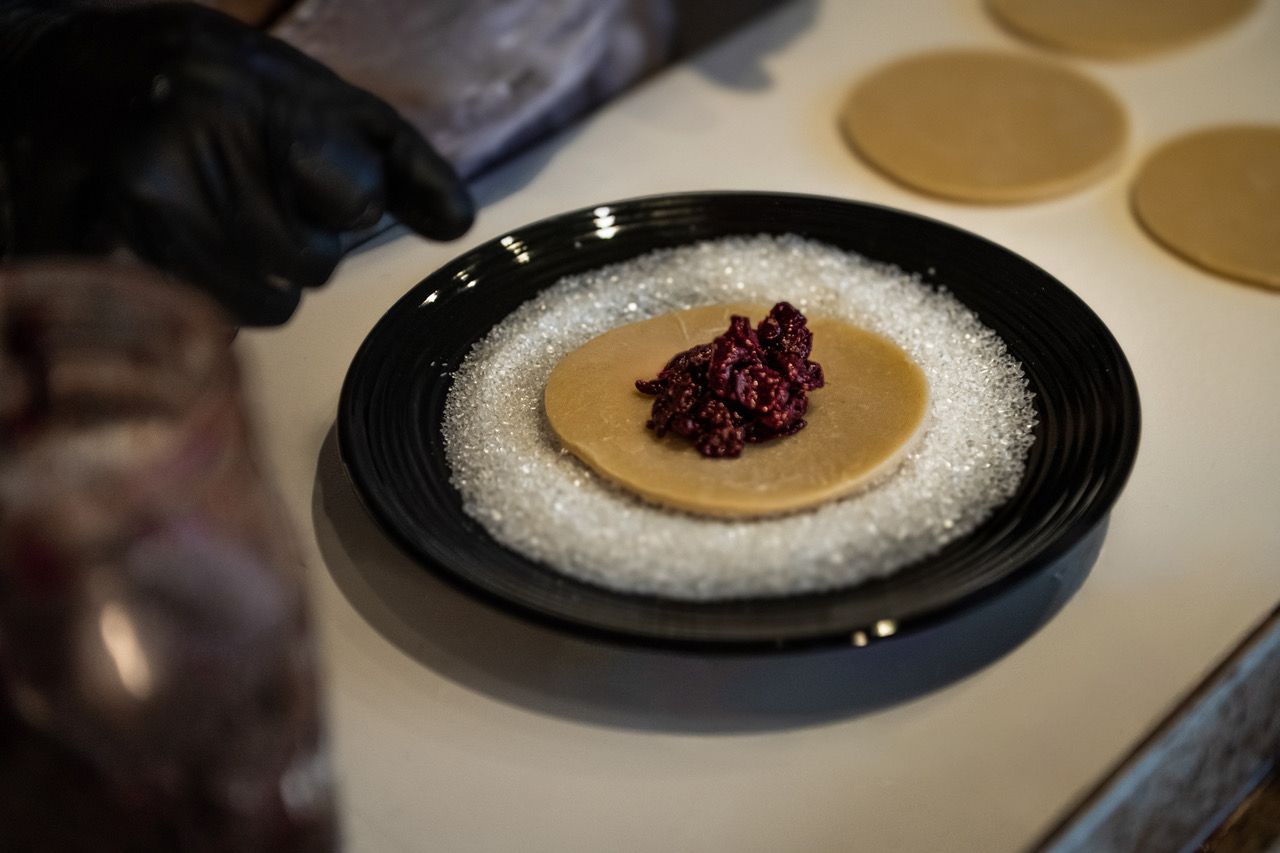
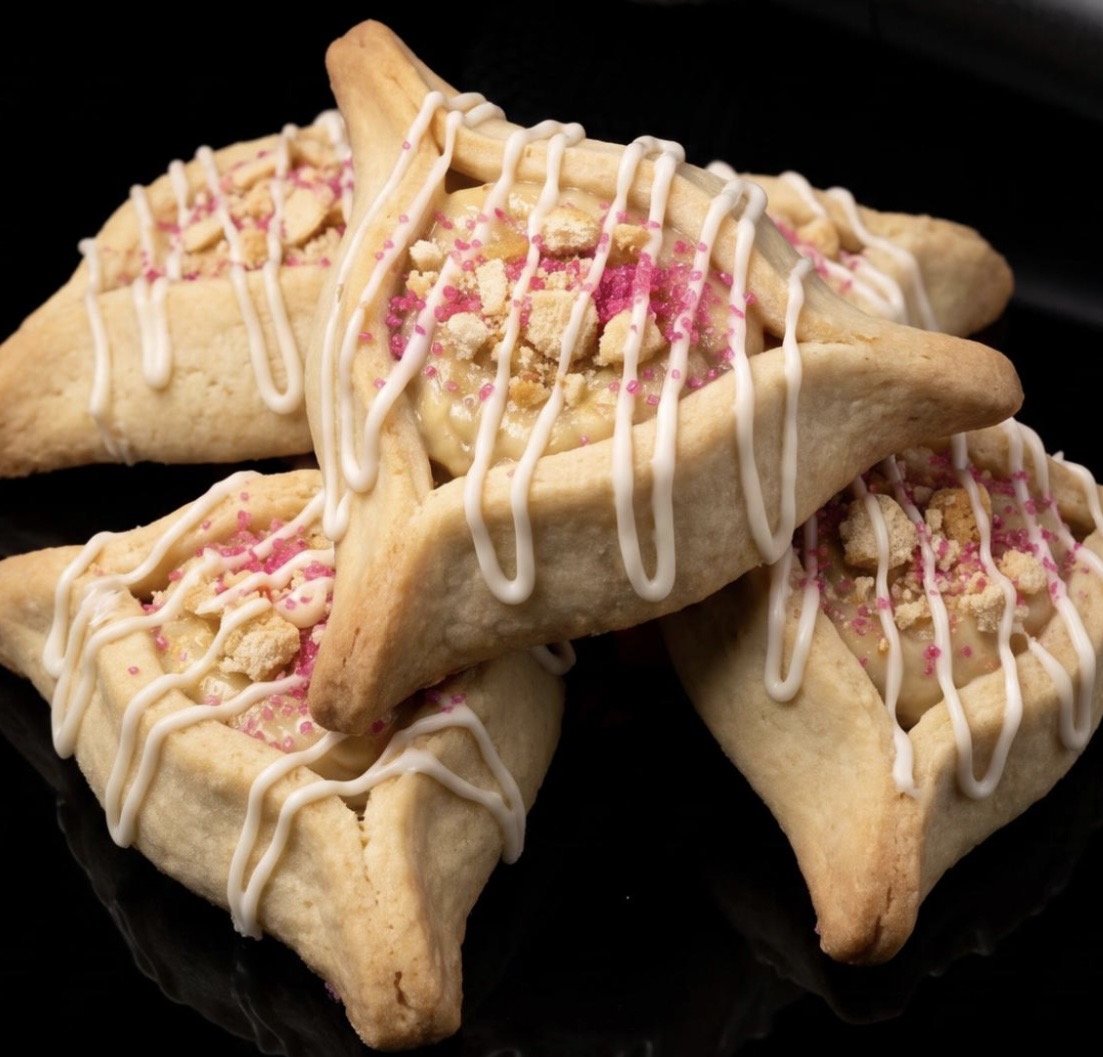
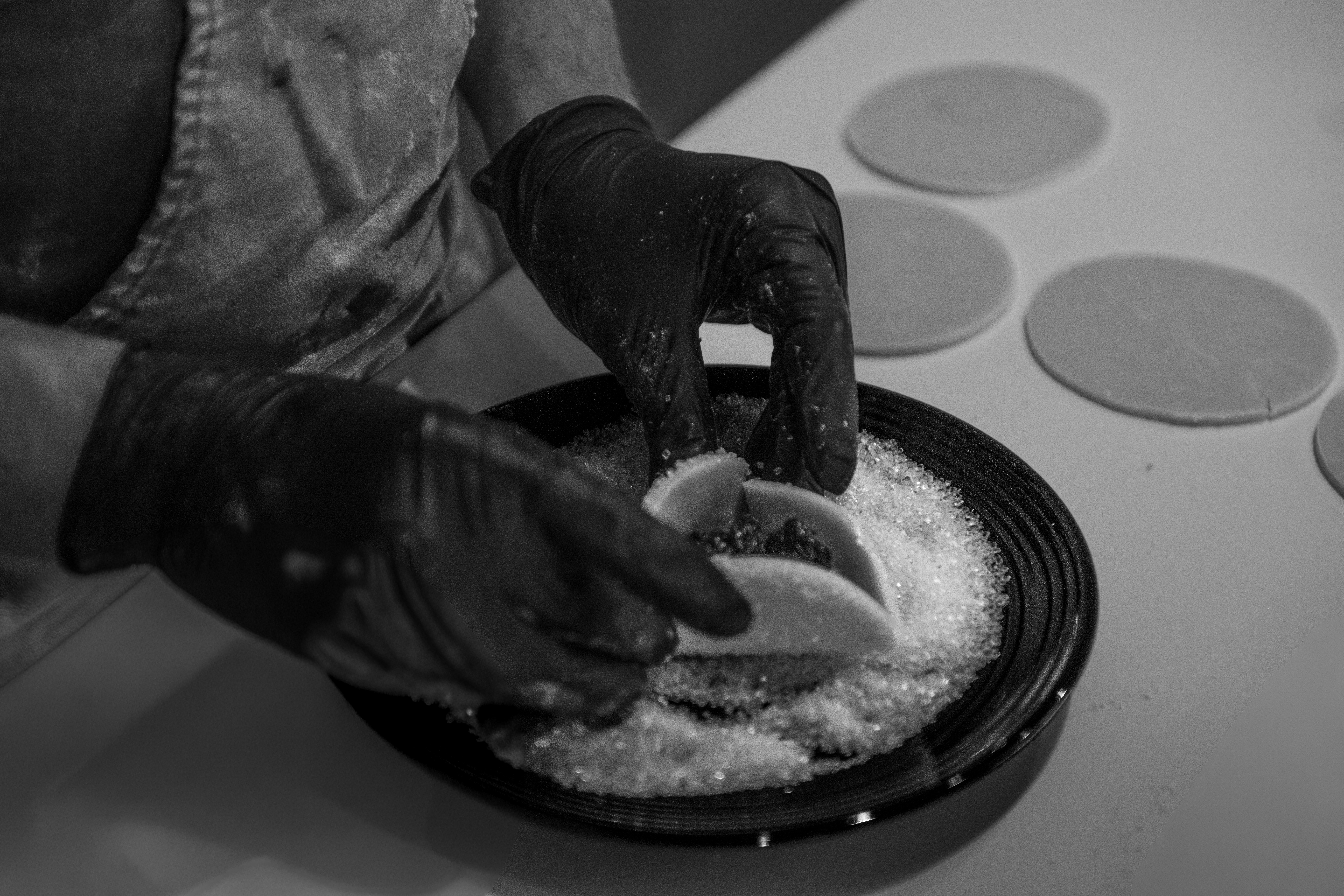
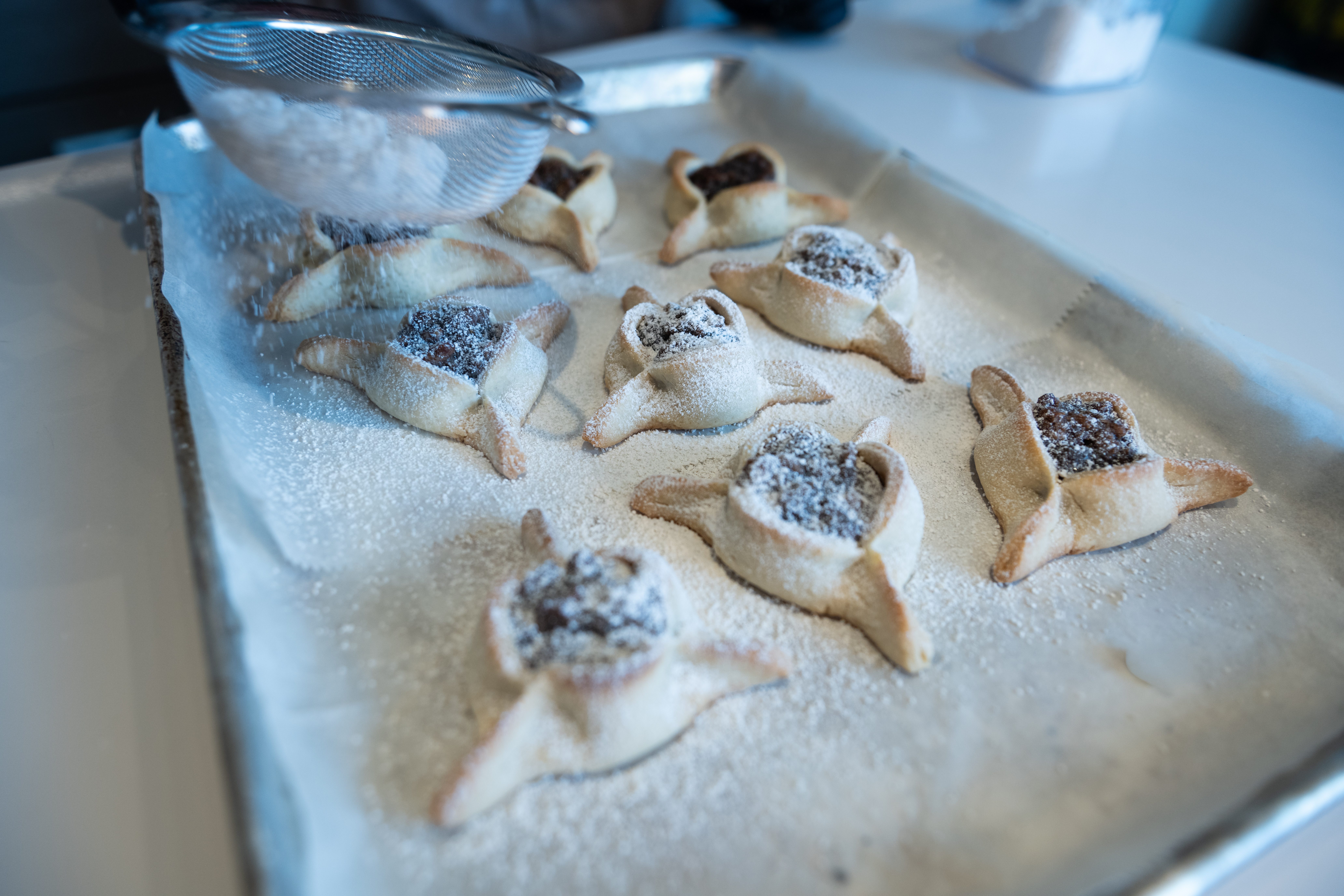
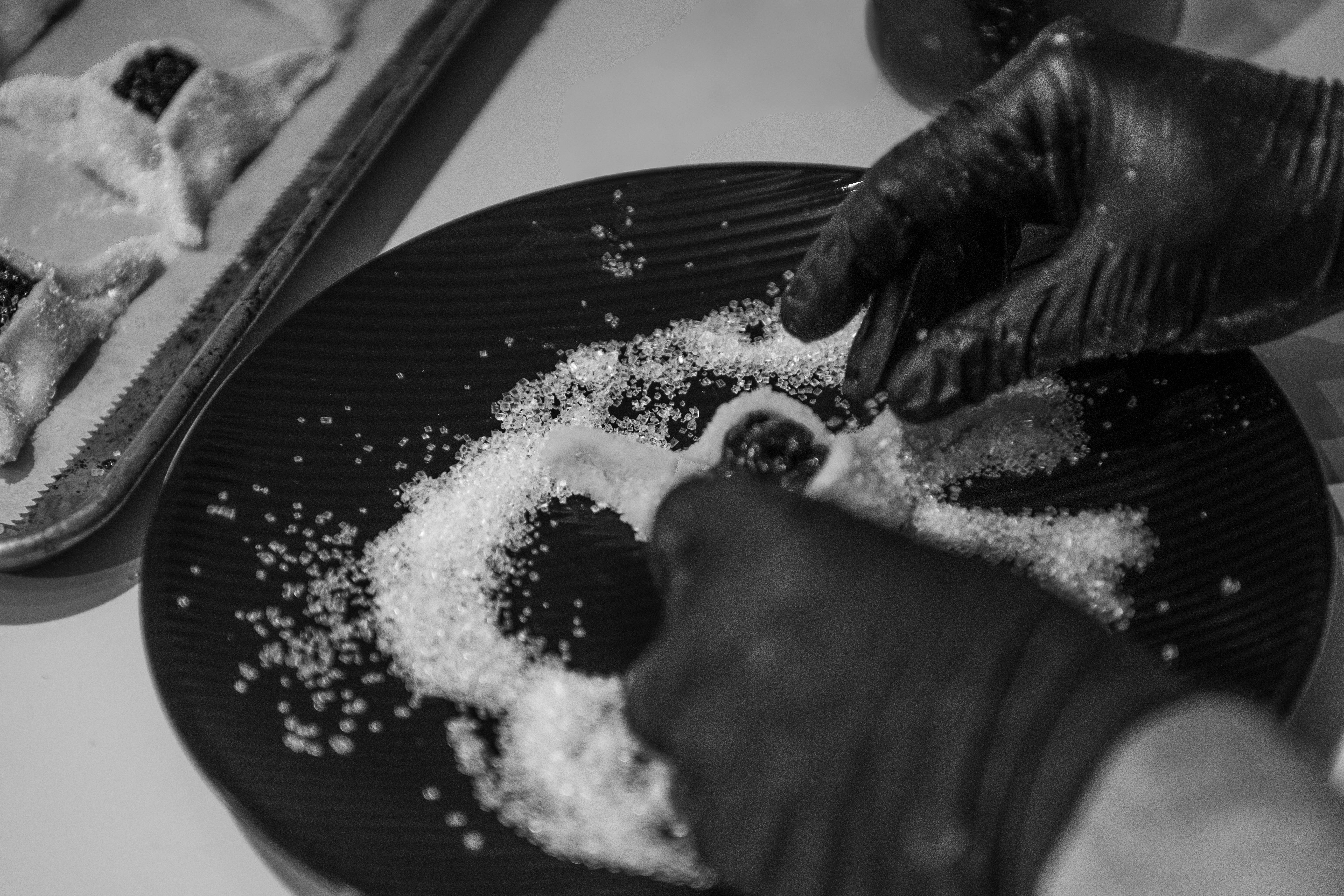
Hamantaschen cookies have been traditionally baked for Purim. The triangular treats have been filled with poppy seeds for centuries. Delightfully in contemporary Chicago, heavenly hamantaschen cookies are reinvented by “Not Your Bubbe’s Hamantaschen” (NYB,) where the pastries are baked to order (online) throughout the year. NYB cookies are buttery, slightly crisp on the outside, filled with fresh ingredients, outstanding semisweet chocolate, and globally sourced spices. Moreover, a portion of all proceeds go to charity. NYB’s remarkable flavors are colorful and majestic. There are eighteen signature flavors and each month new ones are created. The Dolly, for example, is baked as a love letter to banana pudding, with banana filling draped in white chocolate, finished with Nilla cookie crumbs. The Dolly is a creamy and crunchy tribute that would get us through 9-to-5.
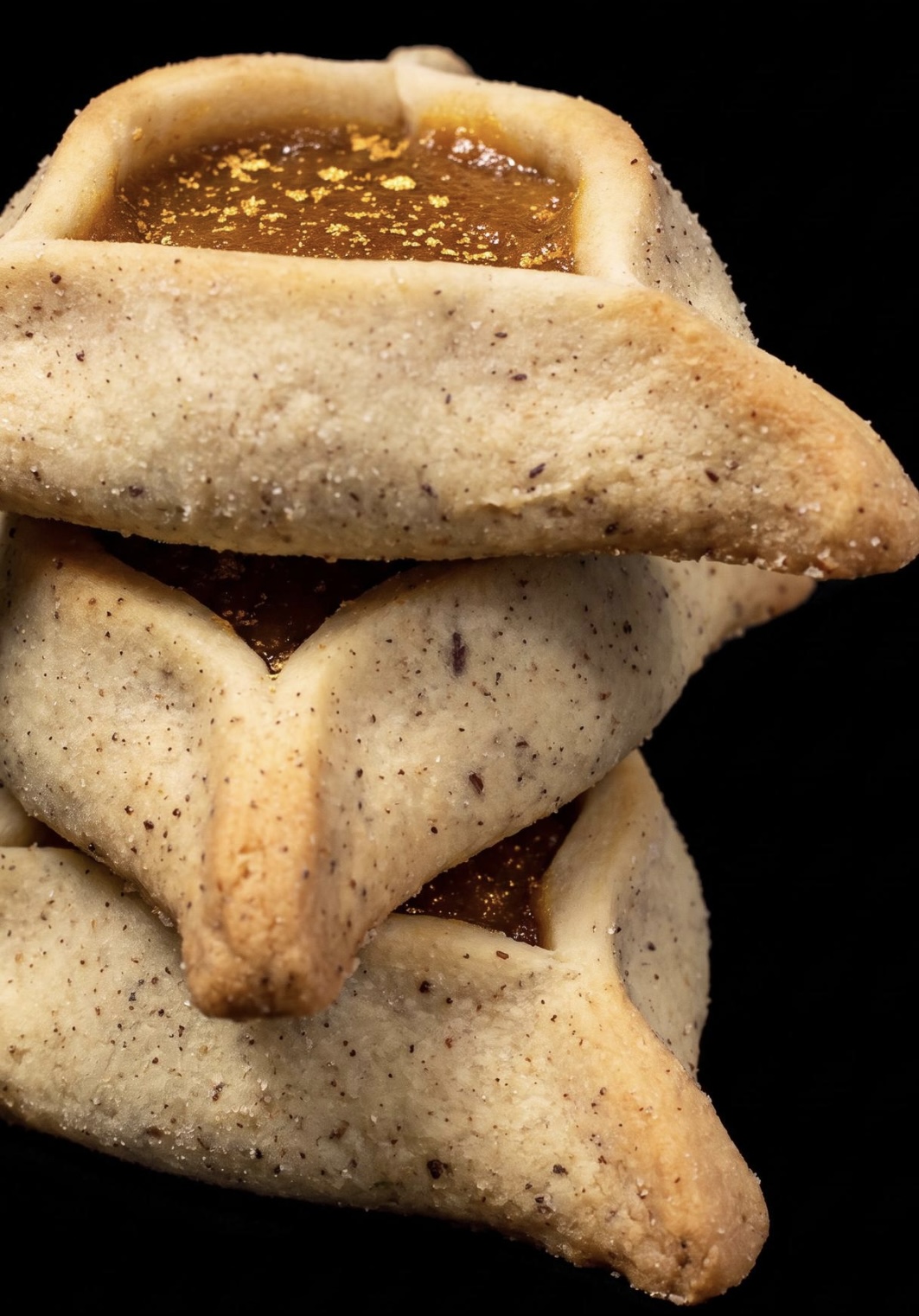
NYB’s stories are charming, and one amusing story is about looking for chai. In 2020 NYB launched Pumpkin Chai hamantachen and, at that time, the company blended cinnamon, nutmeg, clove, and a touch of ginger. NYB believed that the taste was good but a volunteer who came to the U.S. from India explained that this was cinnamon candle and not chai masala. Thus NYB cut down the cinnamon, and added anise and allspice. A year later NYB was told again that this was American girl fall pumpkin spice latte and not chai masala. Hence NYB conducted further research and several rounds of test kitchen panels. The outcome, NYB thought, was a winning chai spice blend. Unanticipately, NYB received a message from a person whose husband was from India and grinded his own chai masala from a family recipe. NYB met the person in a dark alley for the handoff of goods. The taste was absolutely heavenly! Punchy green cardamom, black pepper, and ginger layered with sweeter aromatics. NYB folded the mix into its pumpkin cheesecake base. The creation was perfect and NYB found its chai.
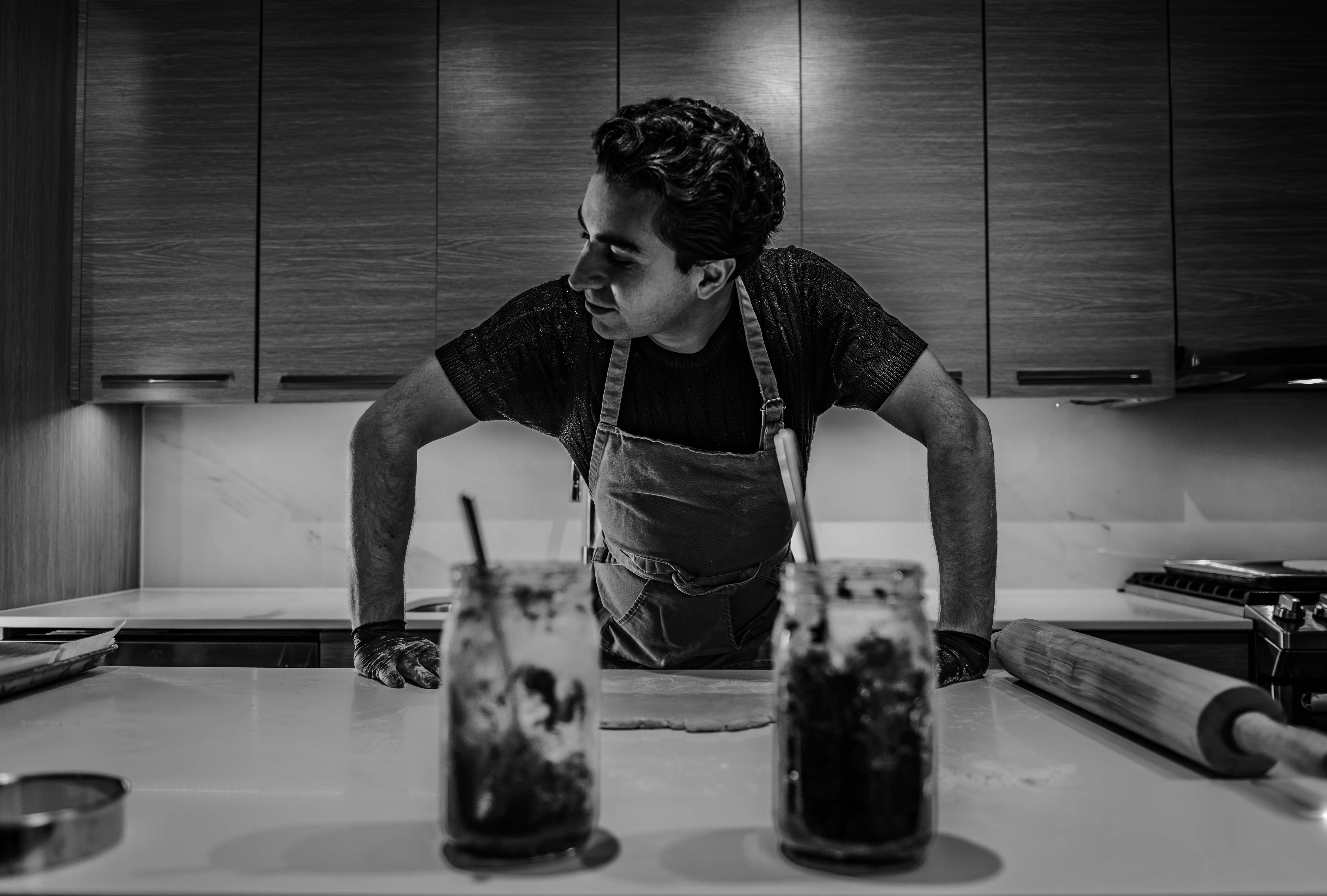
NYB offers incredible workshops where they arrive at your kitchen, demonstrate and teach the art of baking. To inquire about the workshops one could email info@notyourbubbes.com and for more information about NYB and how to order enticing Hamantaschen please go to https://notyourbubbes.com/
Now go indulge!