
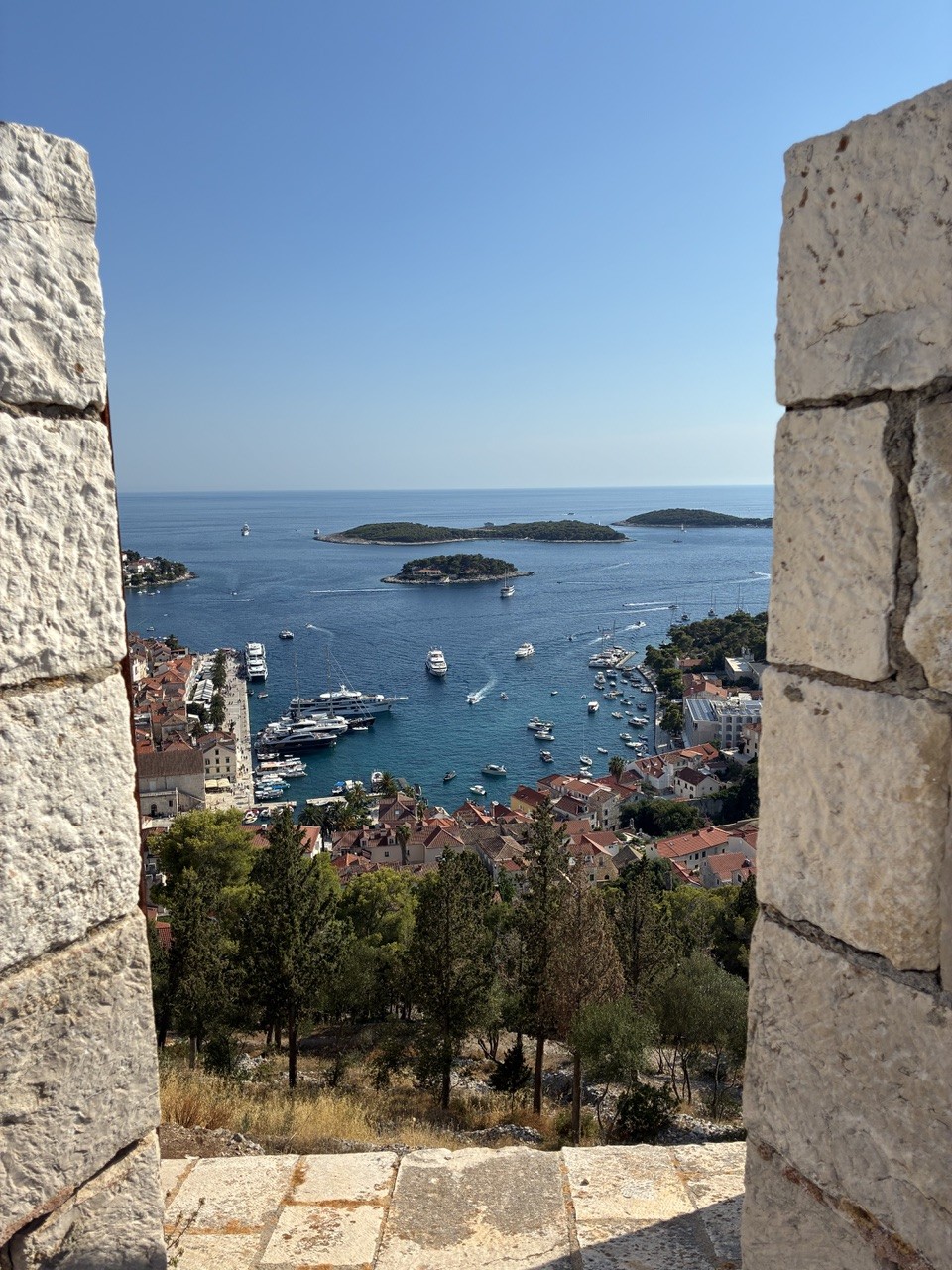
In a pleasant surprise, our family of five were all tremendously impressed by the trio of coastal towns we visited in the country of 3.8 million that achieved its independence from Yugoslavia 35 years ago.
Zadar
We didn’t sign up for any excursions on our first day on the cruise, but three of us embarked on our own tour of this fabulous ancient city hugging the Adriatic Sea.
The modern town has uninspiring architecture so it’s best to go straight to the old town via shuttle bus. You will be welcomed by the beautiful sounds created by a contraption called a sea organ that makes music from the waves.
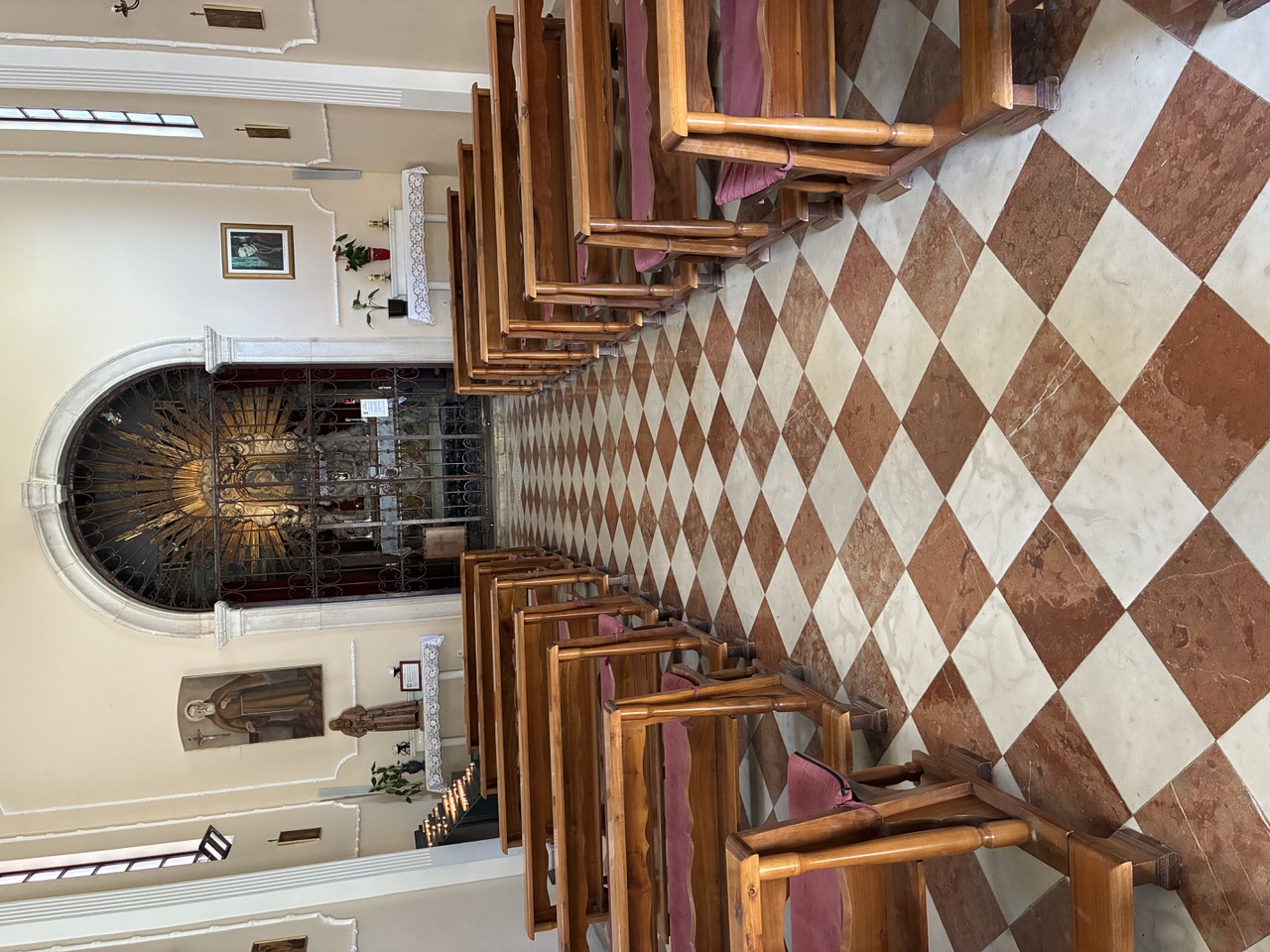
I peeked inside The Cathedral of St. Anastasia, an historic Romanesque structure. It was only a glimpse because the church charges three euros to walk around and only accepts cash, and aside from credit cards, my wallet was empty. Another centuries-old Catholic church, though, allowed visitors for free, and its handful of wooden pews bedecked with purple cushions evinced a quiet charm.
Hvar
Buildings crafted from limestone dominate the island because the rock is nearly everywhere; only 25 percent of the land is soil. Some houses have cisterns to collect rainwater due to the lack of precipitation, which was quite different from what was happening in Chicago at the beginning of August.
“There were days when there was more wine on the island than water!” announced our tour guide, who added that today water is delivered from the mainland via pipes stretching across the bottom of the sea.
Speaking of wine, there are about 100 producers among the 11,000 or so residents (“Everybody knows everybody. There are no secrets if you can live with that,” our tour guide noted).
There are nearly a dozen indigenous grape varieties. We visited a charming winery in Vrisnik, an inland town, where we sat at a long wooden table and chatted with an English couple from Liverpool while eating bread with olive oil.
Fortified by a few glasses of wine, we then toured a fortress perched high on a hill. Built in 1555 by Venice to provide defense against the Ottoman Empire, during Austrian rule it was turned into a prison — and eventually became a discotheque in the 20th century. Today it hosts weddings, mainly because of the spectacular backdrop of the deep-blue Adriatic Sea.
A small museum in the old town features dozens of amphoras from an ancient Roman shipwreck. Beyond that, the museum offers little to see, though walking through narrow alleyways covered in cobblestone nearby gives a great sense of how residents have lived over the centuries.
Dubrovnik
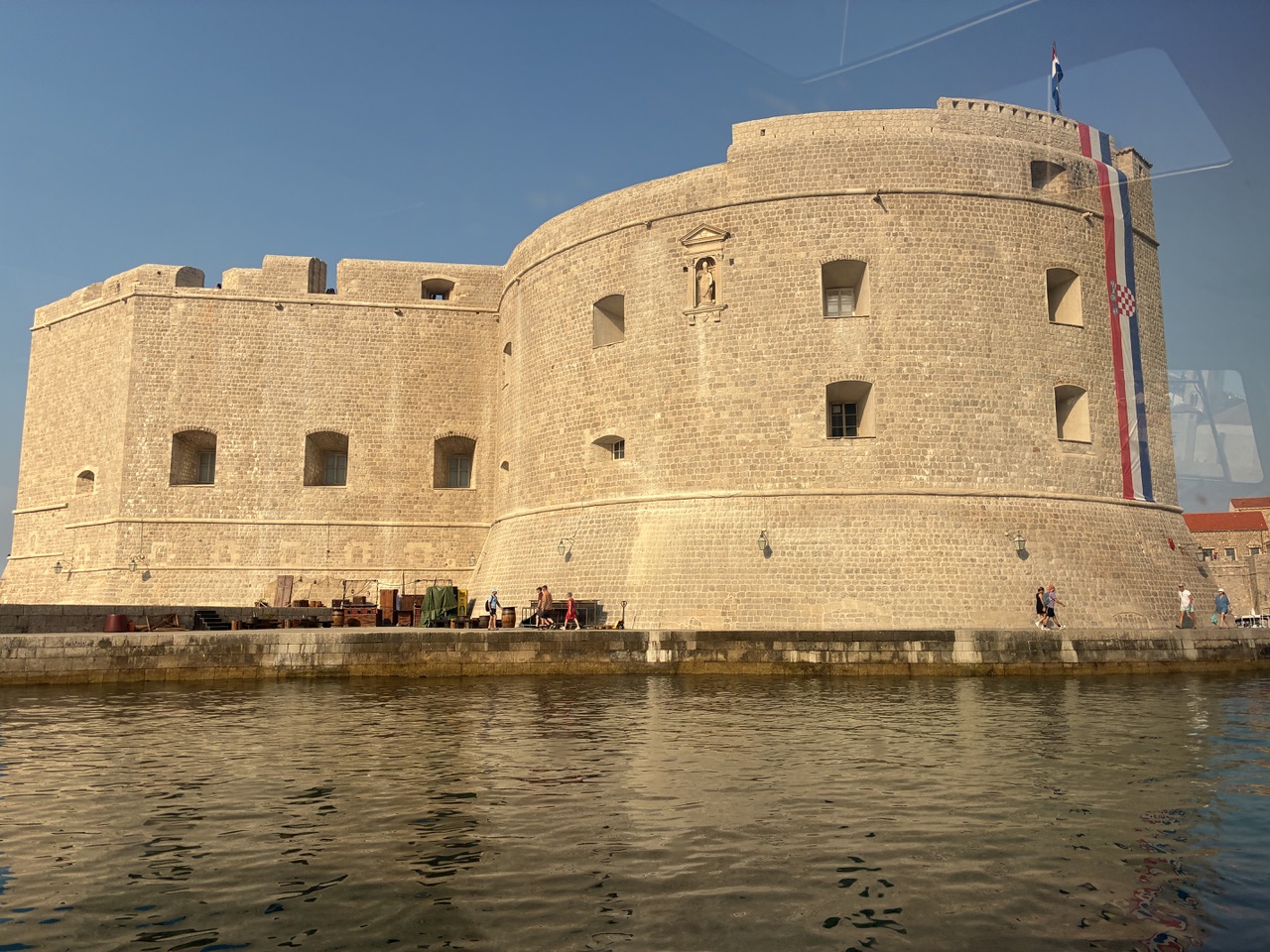
Though the other two cities were endearing, Dubrovnik was the best. Its stunning coastline is highlighted by jagged cliffs with trees emerging from their sides while also flourishing on the tops.
We boarded a boat to a beach club. Once there, my daughter said, “Being on the beach with a view of the mountains is my dream.” The waveless water was clean and a comfortable temperature. Visiting during Victory Day – when Croatia became independent of Yugoslavia – was an added joy, and we watched celebratory fireworks from the cruise at night.
In fact, during all our shore excursions, we also welcomed returning to the boat, because there was so much to do on board. We played bingo games, performed poorly in trivia contests, and pushed the puck in shuffleboard. As long as you have a family that loves to compete – we created our own croquet tournament on an irregularly sized Astroturf court – all of these activities are engaging.
