CCM: What is the role of the Smart in Chicago and how are you re-imagining its role in the campus environment?
I see the Smart as a site of interdisciplinary inquiry on campus, a place where art can bring different disciplines together and push research in new directions. We want art and visual literacy to be part of the experience of students across the University, regardless of what they study, and to create opportunities for students and faculty to encounter ideas and questions outside of their own fields.
But that work extends well beyond campus. The exhibitions and projects that emerge from this kind of interdisciplinary inquiry can push what is possible within the museum field and create richer, more unexpected experiences for our visitors. The Smart can be a place where the particular strengths of the University of Chicago generate new ways of thinking about and experiencing art, with relevance both in Chicago and beyond.
CCM: You have worked at museums at several universities including Syracuse, Amherst and now the University of Chicago. What can you best accomplish at a museum in a university setting?
University museums are very special places. They engage students at a formative time in their lives, when they are full of curiosity, wonder, and an openness to learning. They bring these students into conversation with art collections, professors, scholars, artists, and the public, creating an environment with a particularly unusual capacity for ambitious inquiry.
There is an energy around pursuing knowledge- asking new questions, considering different viewpoints, and finding new ways to answer them- that is infectious. University museums are especially receptive to experimentation and to approaches that cross traditional disciplinary boundaries. That openness is something I greatly admire, and it allows us to take risks, pursue questions whose answers aren’t yet known, and expand our understanding of what a museum can do.
CCM: We have talked about bringing a younger audience into museums, how are you going about doing this?
We are thinking about our exhibitions and programs through an interdisciplinary lens, with the goal of expanding who we reach and bringing a wider range of audiences into the museum. Artists are inherently interdisciplinary, and their work naturally engages with many of the questions that are particularly relevant to younger generations today, from climate change and technology to identity, community, and our rapidly changing world.
Our public programs draw out these connections, often putting artists in conversation with scholars and practitioners from other fields. I think this creates multiple points of entry into an exhibition. You don’t necessarily have to come to the museum with a background in art or art history; you might come because you’re interested in technology, science, the environment, or another question the artist is exploring. By creating those different points of connection, we hope younger audiences can see the museum as a place that speaks to the issues and ideas they are already thinking about.
CCM: What are the ways that you are working with students in all disciplines across the University?
The Smart’s Feitler Center for Academic Inquiry partners with faculty from across the University to teach from the museum’s permanent collection. Each year, several hundred classes are taught at the museum across an extraordinary range of disciplines; art history and history, but also English, chemistry, biology, physics, and many others. For these visits, our staff develops customized object lists, pulling works from storage and providing students with direct access to them in our study rooms. These active-learning experiences encourage students to look closely at objects, consider what kinds of questions they can ask of them, and think creatively about how they might find answers.
Beyond the classroom, our exhibitions and programs provide rich opportunities for co-curricular engagement. Perhaps our most beloved student program is Art to Live With, through which students can select an original work of art from our student collection to hang in their dorm room for the academic year. At the beginning of each year, students line up to choose their works, and we’ve made the selection day an event in itself, with food and music.
What I love about the program is that it creates a very personal relationship with art. Students don’t have to be studying art history or even think of themselves as particularly interested in art to participate. It also helps them see the museum as a place for them, somewhere to gather, build community, and encounter art on their own terms. And living with an artwork for an entire year can expand the kinds of art students are interested in and how they understand what it means to have a relationship with a work of art.
CCM: What should visitors be watching for when they enter the Smart?
I hope visitors watch for the interdisciplinary connections that run through our exhibitions. Sometimes that is visible in the subject of the exhibition itself; other times it comes through in who contributes to the interpretation and labels, or in the scholars, artists, and practitioners we bring together through our public programs. It may take a different form with each exhibition, but that interdisciplinary approach is always present and has become a distinct part of the Smart’s identity. It allows us to open up an artwork or an exhibition from multiple perspectives and, hopefully, gives visitors new ways to connect with what they encounter here.
CCM: What do you think will bring them back?
Ultimately, I think what brings people back are excellent exhibitions and programs. We want every visit to offer something compelling, such as, an artist they may not know, an unexpected connection, or a new way of thinking about a subject that already interests them. Our exhibitions change throughout the year, and the programs surrounding them continually introduce new voices and perspectives. My hope is that visitors come to see the Smart as a place where there is always something new to discover, and a place worth returning to again and again.
CCM: What is the role in a diverse community that a museum director can play?
I think museums have an important role to play in bringing people together, that is, people with different backgrounds, experiences, areas of expertise, and ways of seeing the world. A museum director can help create the conditions for those different perspectives to be part of the conversation.
For me, that is also fundamentally connected to inquiry. The more perspectives we bring to an artwork or an idea, the richer the questions we can ask of it and the more expansive our understanding can become. At the Smart, we want to create opportunities for artists, scholars, students, and members of our broader community to come together around art, not necessarily to arrive at the same conclusions, but to learn from the different questions and perspectives each person brings.
CCM: Tell us about the upcoming shows for the fall.
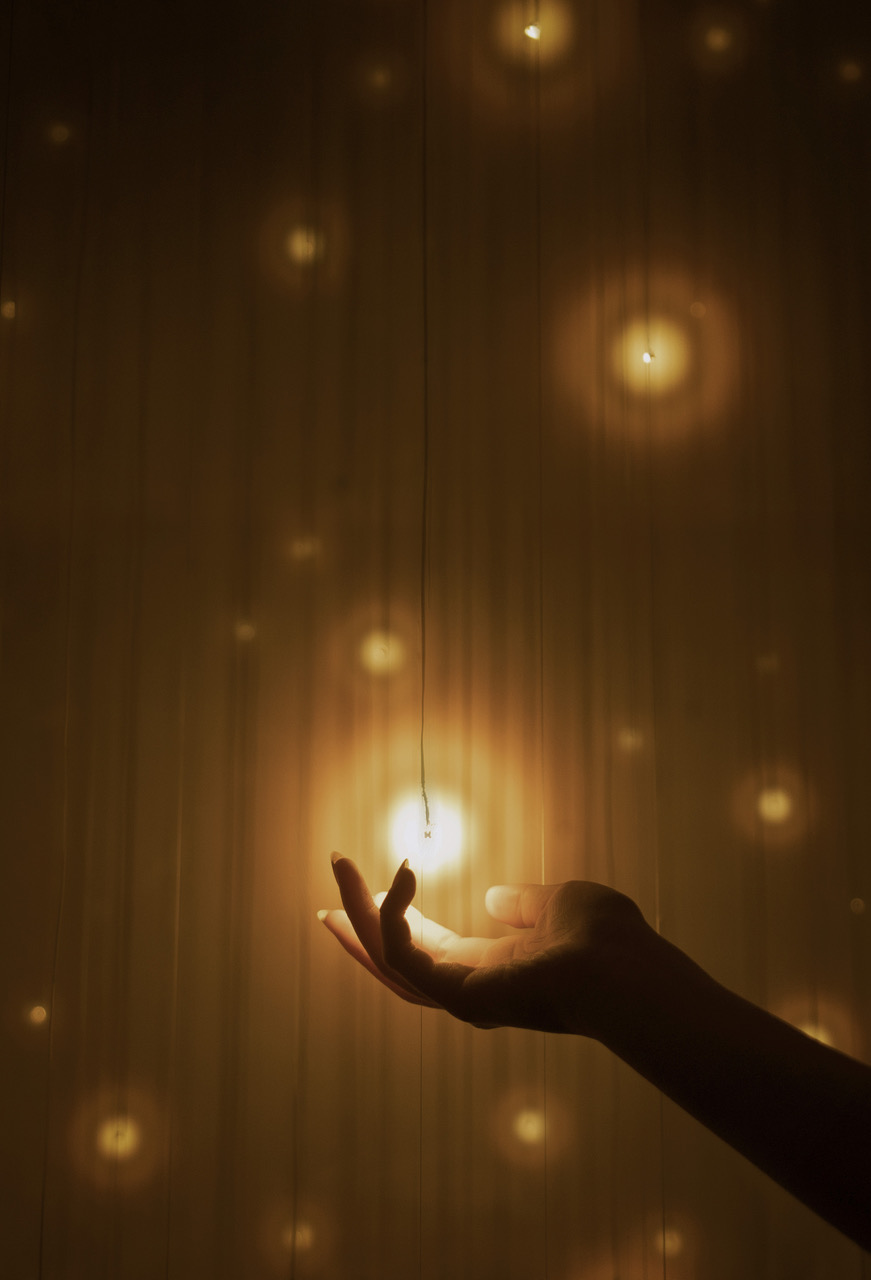
We have a really exciting fall ahead. In September, we open an exhibition with teamLab, the international art collective known for creating immersive works that bring together art, technology, science, and the natural world. On view from September 22 through February 21, it will be teamLab’s first presentation in Chicago and is a wonderful example of the kind of interdisciplinary work we are interested in bringing to the Smart.
We’ll also have How to Heal, a thematic exhibition drawn from the Smart’s permanent collection that will be on view throughout the year. The exhibition brings together works from across the collection to consider different ideas of healing and repair, and the ways artists have responded to individual and collective experiences of trauma, loss, and recovery.
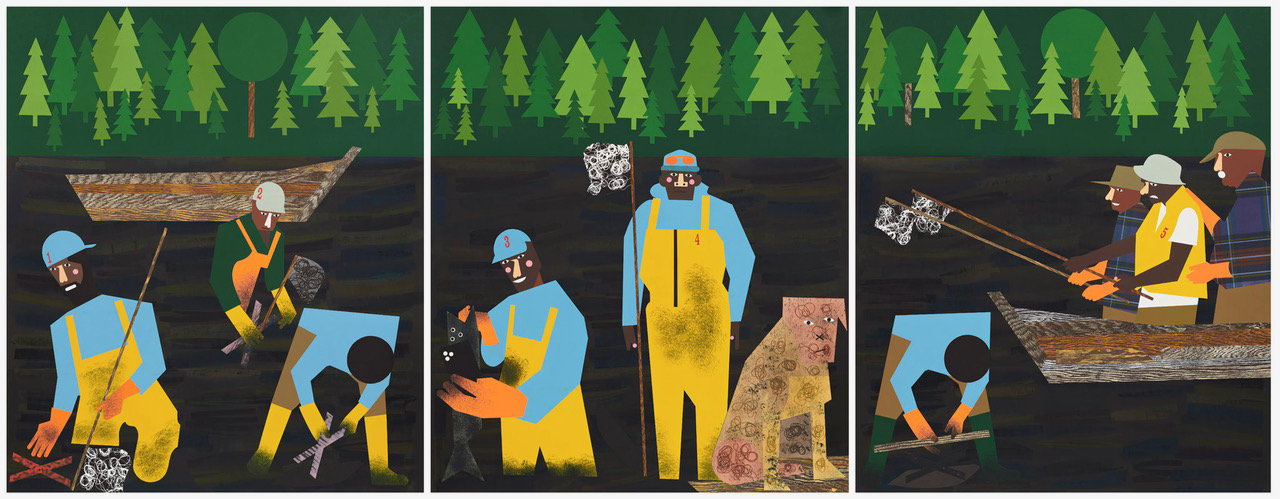
Black People (BP), 2022
Signed on the verso
Triptych collage on panel
Paper size: 72 x 84 inches, each panel
Framed Dimensions: 73 1/4 x 85 1/4 x 1 3/8 inches, each
© Nina Chanel Abney. Courtesy of the artist and Pace Prints
And in our lobby, visitors will encounter Between Us, a new installation by Nina Chanel Abney created as part of Threshold, our annual commission series. Each year, we invite a contemporary artist to create an ambitious, site-specific work for the museum’s lobby, one that greets visitors as they enter and sets the tone for the kind of inquiry and exchange that happens throughout the Smart.
Together, the three projects give visitors very different ways to encounter art ranging from an immersive digital environment, to new conversations across our collection, to a major contemporary artist responding directly to the architecture of the museum.
