Artist Frank Stella (1936–2024) was born in Massachusetts, studied history in college at Princeton University, and afterwards moved to NYC where he met artists who were focused on abstract expressions. Stella experimented with multiple ideas, and in 1959 was the youngest artist at MoMA’s exhibition entitled “Sixteen Americans,” that included Jasper Johns, Ellsworth Kelly, Louise Nevelson, Robert Rauschenberg, and more. The work that Stella presented was a series of four black paintings that he had created using a housepainter’s brush and commercial black enamel paint. “Sixteen Americans” contributed to American art becoming seminal during the decade that followed.
In the 1970s Stella shifted from flat, monochromatic paintings to colorful, three-dimensional works, projecting from walls. Constantly curious, he learned the method of printmaking with uniquely mixed inks and specifically dyed papers. Later, Stella, who visited several international auto-racing tracks, produced a printmaking series that was entitled “Circuits” (1982–84), composed of 16 prints, each of a different printmaking technique, and each was named after a different racetrack.
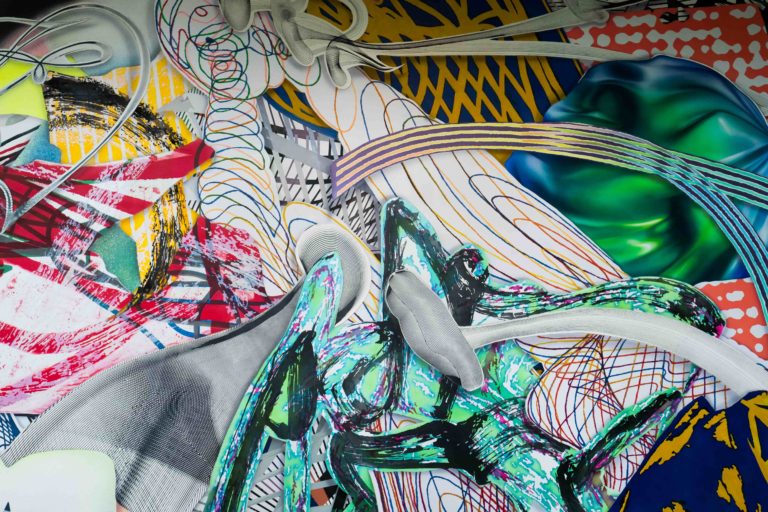
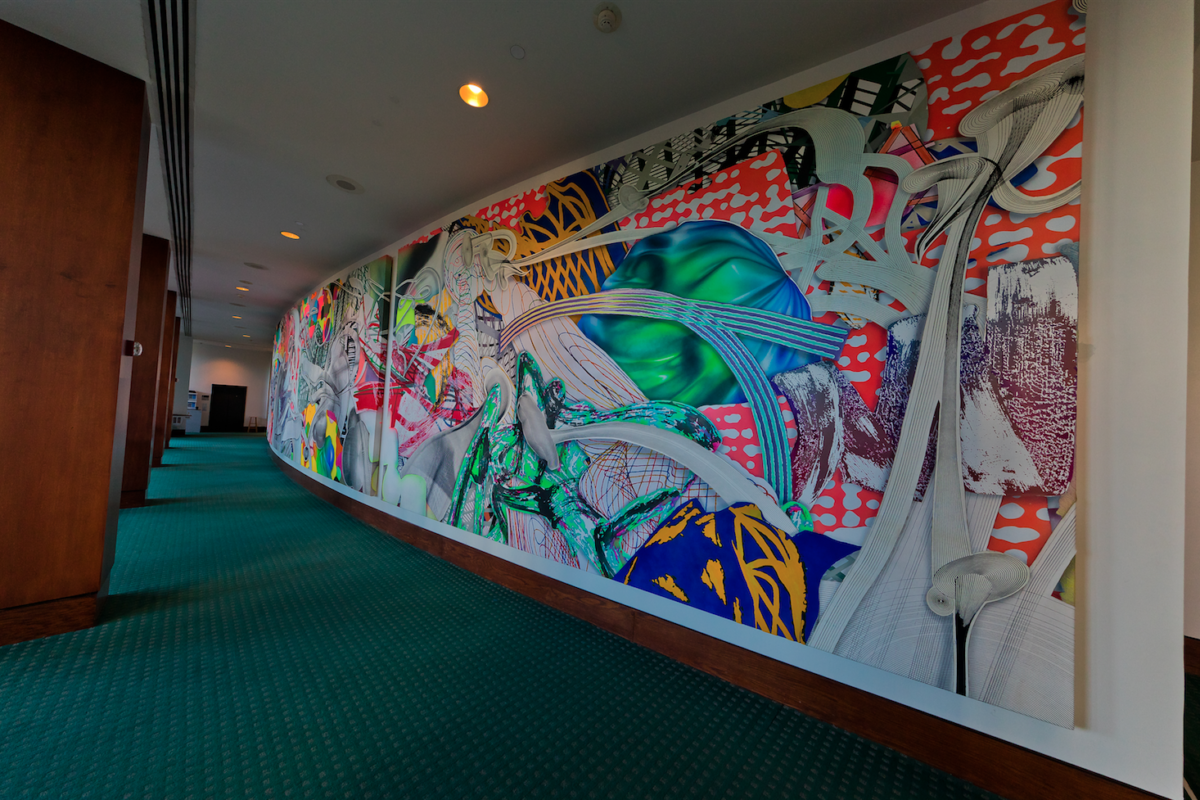
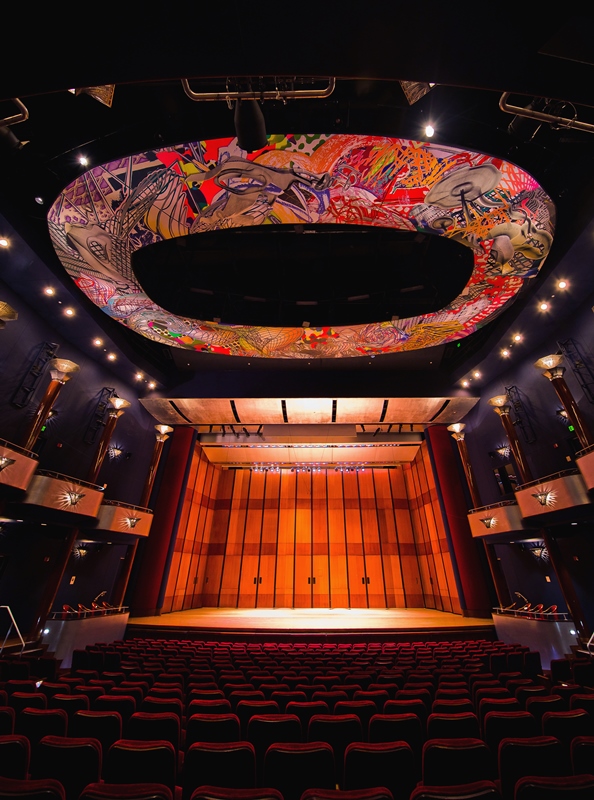
After the 1980s, Stella expanded his shapes and colors as the works turned to structures. In the 1990s, he began to employ computer design programs and three-dimensional printing to his proposals for sculptures and installations. For Public Art of the University of Houston, Stella created a massive three-part painting entitled “Euphonia, 1997.” More than 5,000 feet, this work was described by the university as a “kaleidoscopic pattern and vibrant palette…was created using early computer software to digitize and pixelate images of foreign currency, abstract patterns and cigar smoke. Under the direction of Stella, the imagery was then meticulously applied by artists utilizing a variety of methods including tape-painting, collage, projection, and stenciling.” (Source: publicartuhs.org/artwork/euphonia) Constantly searching for ways to utilize canvas, in 2009 Stella received the National Medal of Arts from President Barack Obama. In Italian Stella means star and in Stella’s work the star motif appears throughout the decades of his career. Indeed Stella’s oeuvre is a shining star.
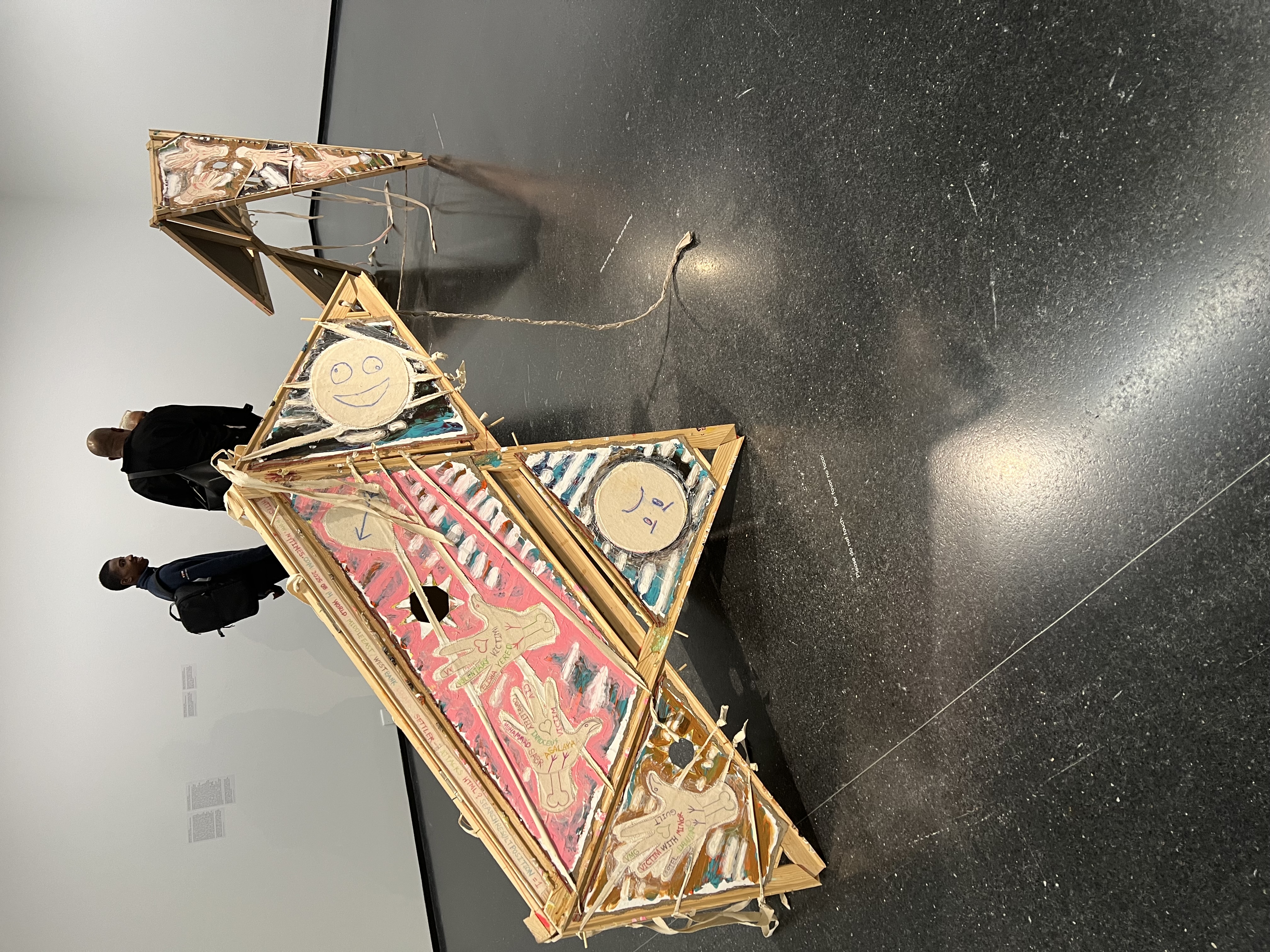
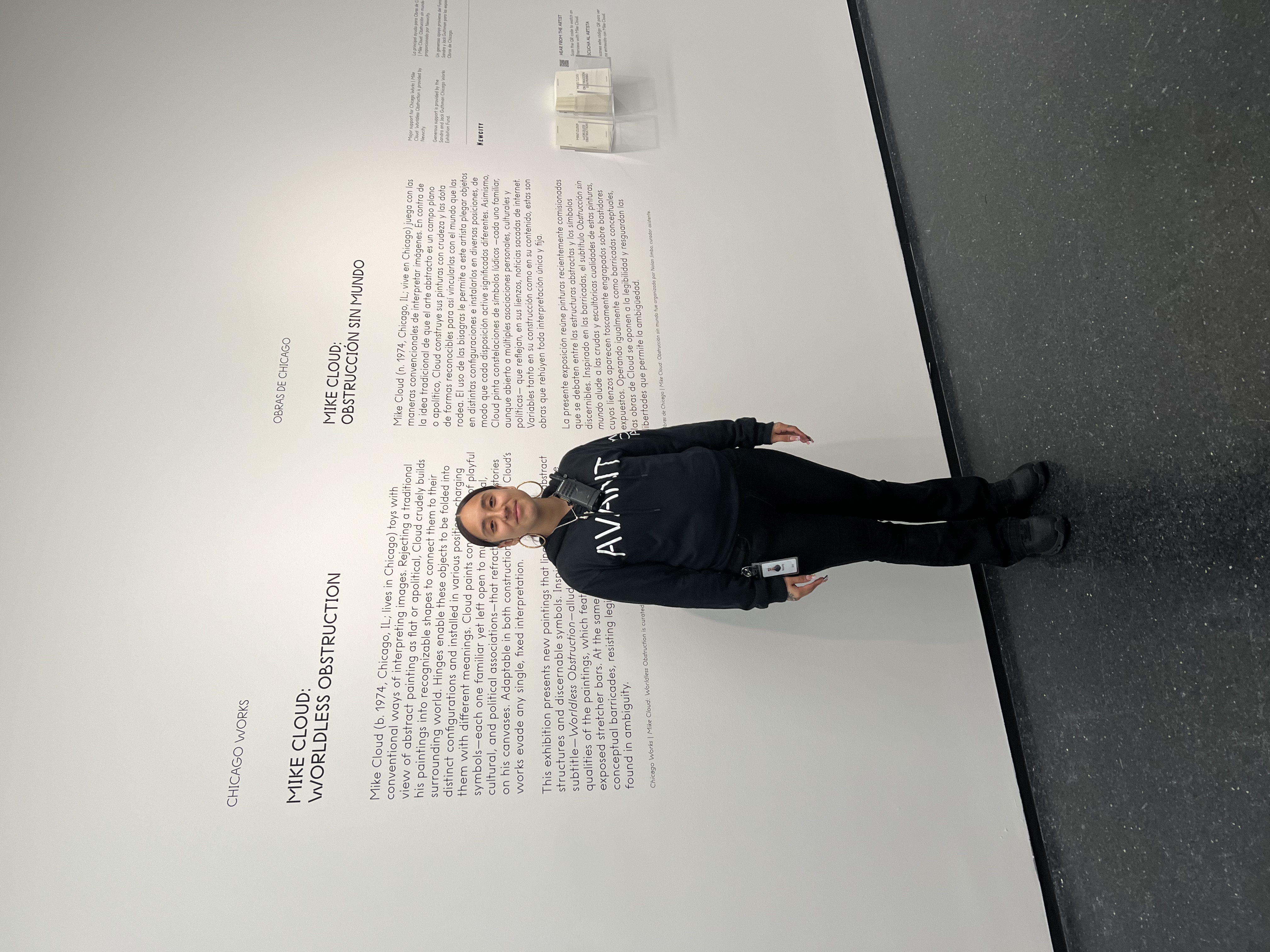
New three-dimensional paintings are in Chicago on the fourth floor in the Turner gallery at the MCA, where viewers could experience new works by Chicago artist Mike Cloud (b. 1974). The exhibition is the 27th in the series “Chicago Works,” and is entitled “Mike Cloud: Wordless Obstruction”. The seven captivating works are sculptural, enveloping walls and floors, referencing barricades and obstructions. Cloud employs acrylic on canvas and adds hinges, pegs, rope, and tape. Cloud’s paintings show many different symbols. We encounter a work in the shape of a Star of David, another work in a shape of a teepee, a third one in a shape of an arrow, and more. The shapes come with symbols such as emojis and hinges, and could link to multiple meanings. Cloud shows that paintings are objects that connect viewers to personal experiences.
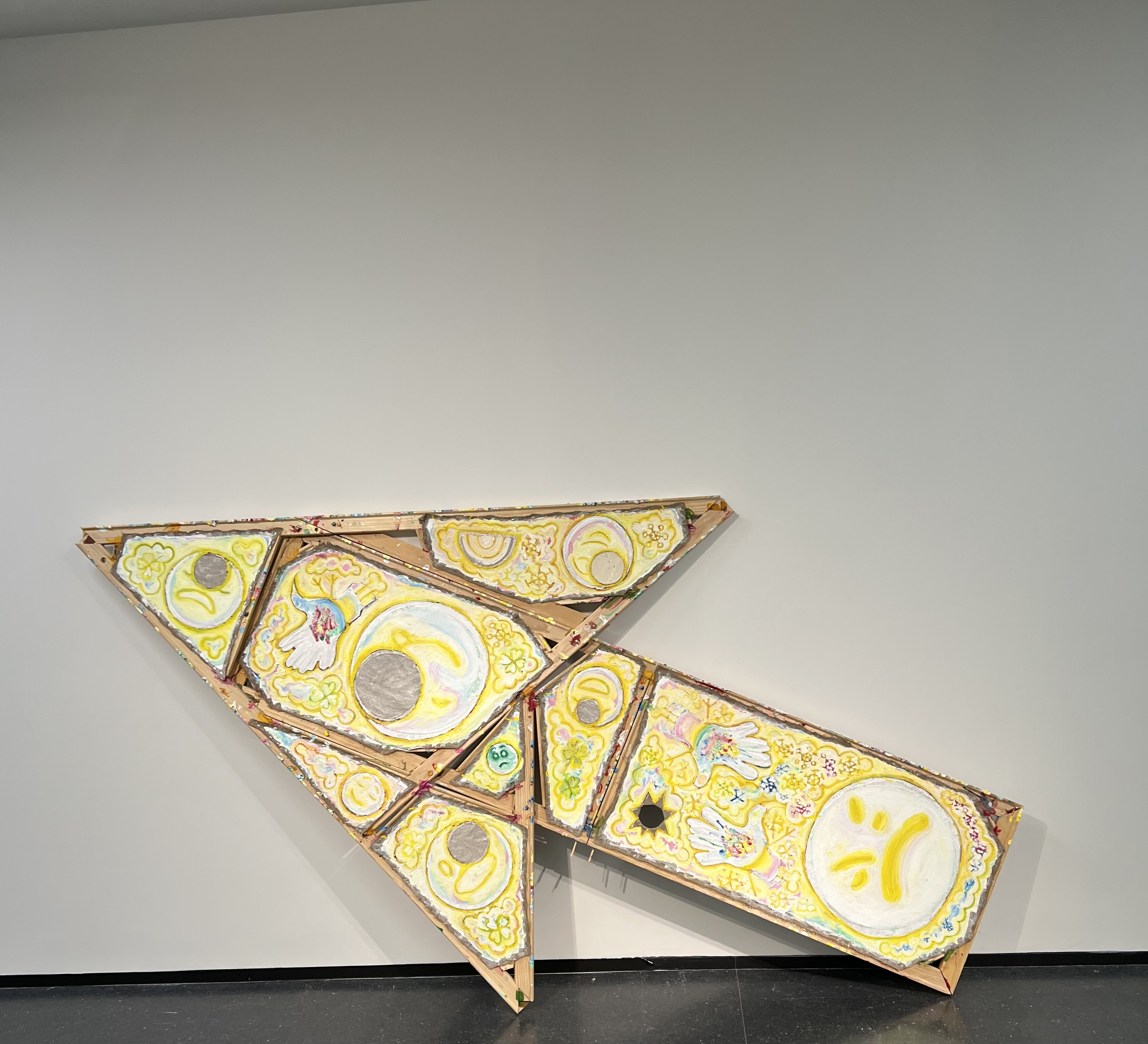
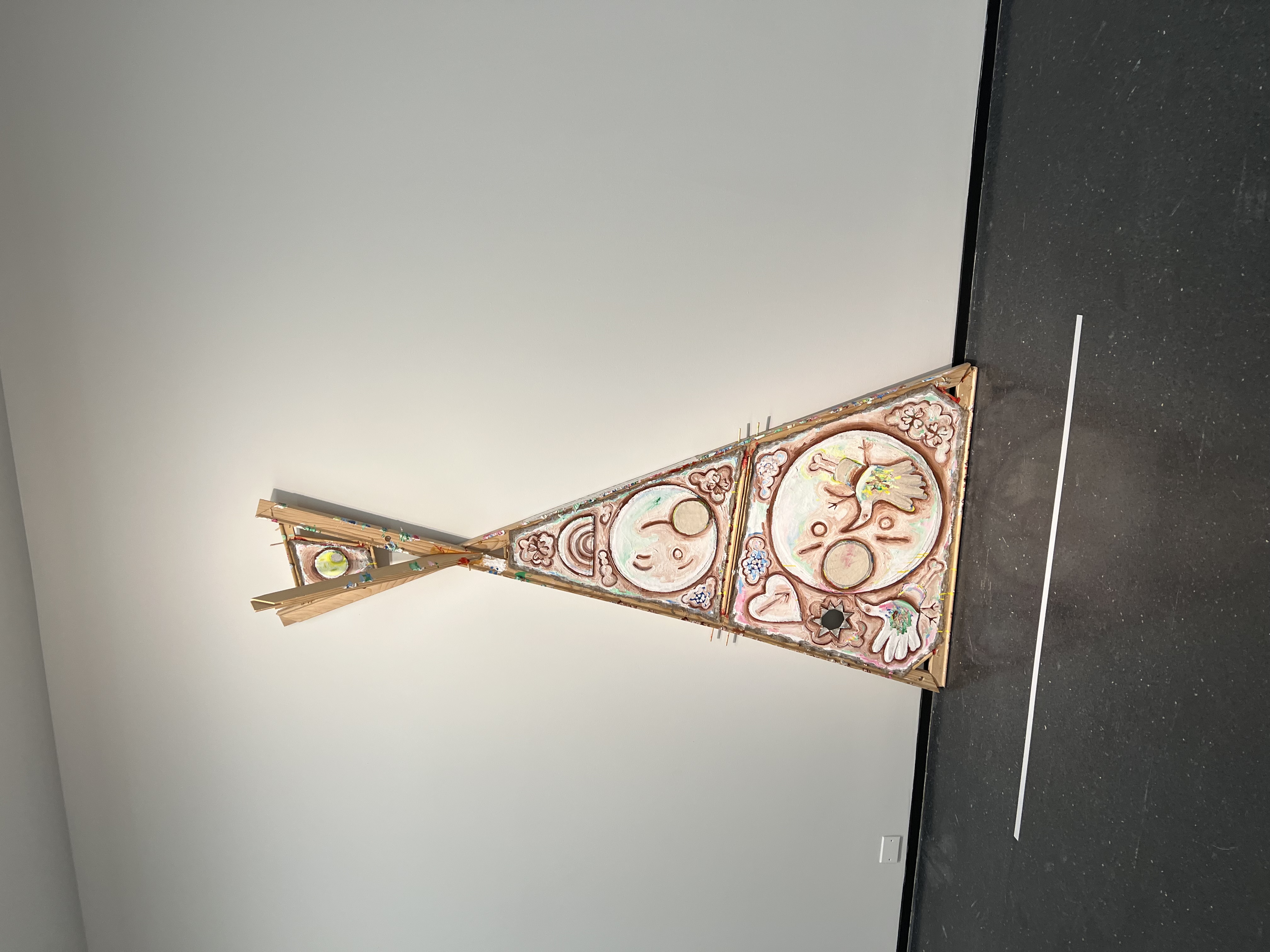
Regarding obstructions, Cloud was inspired by Eugène Delacroix's 1830 oil painting entitled “Liberty Leading the People,” located at the Louvre museum in Paris. In addition, each one of Cloud’s paintings was entitled “Poison Arrows, South Africa 2026”. The title came from announcements in January, 2026, that 60,000 year old poisoned arrowheads were discovered by archeologists in South Africa. These arrowheads used to hunt animals, and the discovery suggested that hunters-gatherers had advanced cognitive abilities. The endless links in “Mike Cloud: Wordless Obstruction” revealed our own connections to form and meaning, and Cloud created a superb piece. The exhibition will run through Sunday, February 07, 2027.