
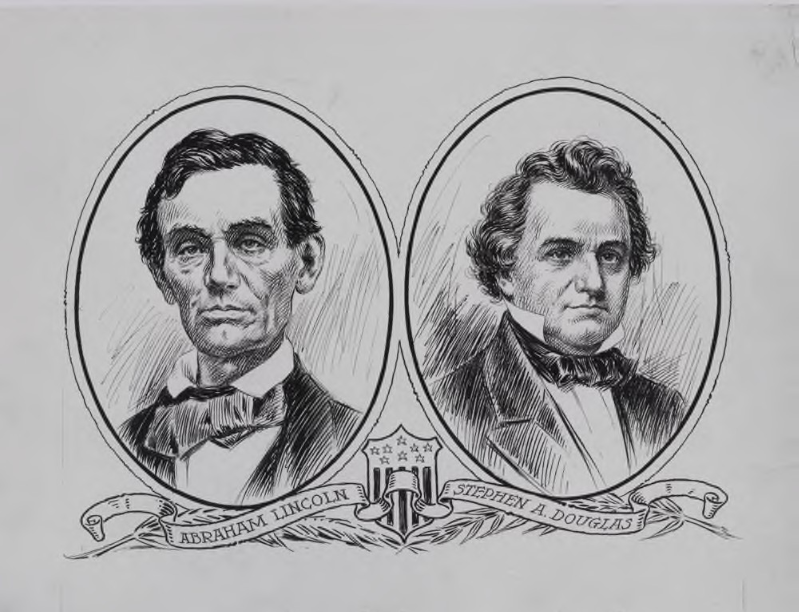
Illinois is aptly named “The Land of Lincoln.” Most folks remember Abraham Lincoln’s history was during his presidency navigating the nation during the Civil War. But historians will also argue that in addition to Lincoln’s time in the White House, Lincoln’s early political years also shaped the American political landscape. The events before the Civil War were an accumulation and a kind of prelude to war. Illinois was a free state, but most state local political debates consisted of the topic of slavery.
“The Great Debates” was a series of seven debates between Abraham Lincoln, the Republican candidate and Stephen Douglas, the Democratic candidate, vying for an open senate seat in the State of Illinois. During that era, senators were elected by state representatives and not the general electorate like today. So the general public had to be encouraged and swayed by the candidates to help influence their respective representatives. As always, the main topics of conversation had to deal with slavery. As for Lincoln, the debates were an opportunity to raise his state and national profile along with the growing Republican Party, which was newly organized in 1854.
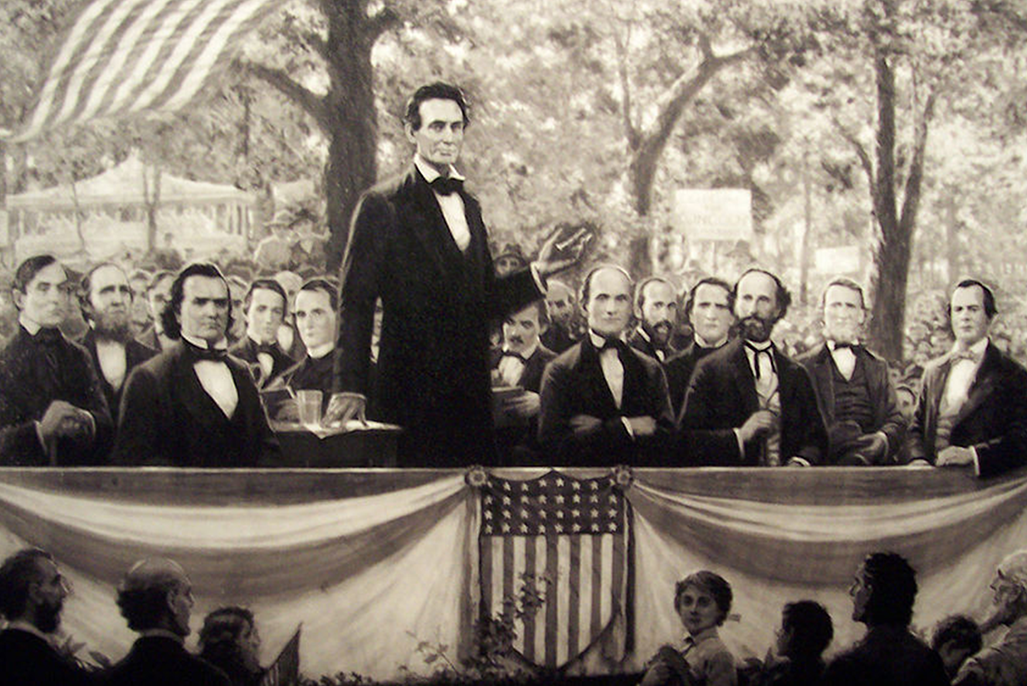
The first of seven debates took place in Ottawa on August 21, 1858. Lincoln said that popular sovereignty would nationalize and perpetuate slavery. Douglas replied that popular sovereignty was strongly believed with both Whigs and Democrats at time and the Compromise of 1850 was the example of it. Lincoln then retorted that the national policy was to limit the spread of slavery, the example policy Lincoln mentioned was the Northwest Ordinance of 1787, which banned slavery from a large part of the Midwest. Douglas accused Lincoln and members of the “Black Republican” party as abolitionists, citing his proof with Lincoln’s House Divided Speech, which Lincoln said, “I believe this government cannot endure permanently half slave and half free.”
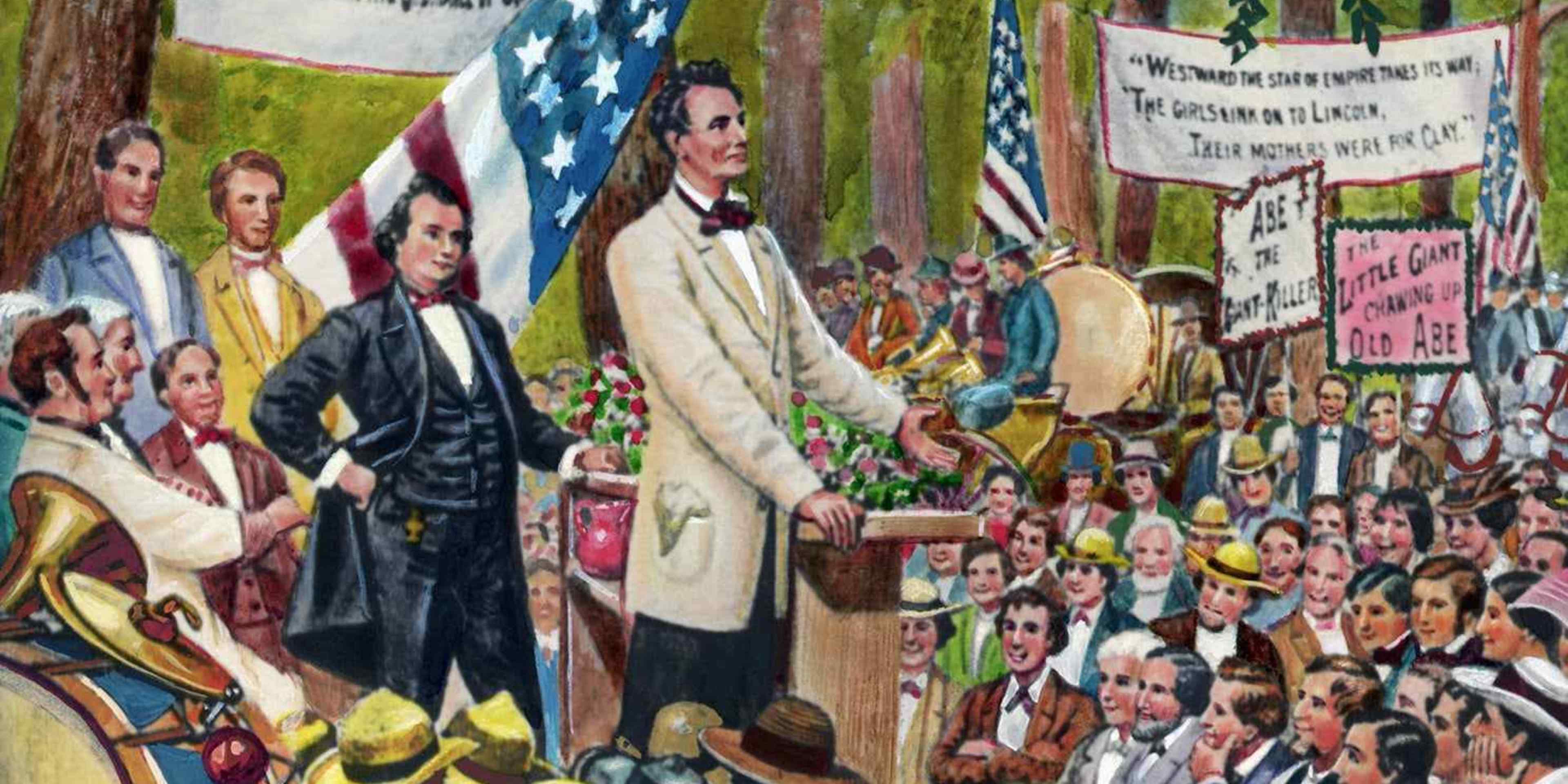
At the second debate at Freeport, Lincoln pinned Douglas down between two options, with either choice damaging Douglas’s chances of being reelected. Lincoln asked Douglas to reconcile popular sovereignty with the Supreme Court’s Dred Scott decision. Douglas said that the people of a land could keep slavery out even though the Supreme Court said that the federal government had no authority to exclude slavery, by refusing to pass a slave code and other legislation needed to protect slavery. Douglas ended up alienating Southerners with this Freeport Doctrine, which damaged his chances of winning. The outcome resulted when Southern politicians used their demand for a slave code to drive a wedge between the Northern and Southern wings of the Democratic Party, splitting the majority political party in 1858.
The rest of the debates were carried out to the rest of Illinois; Jonesboro on September 15, Charleston on September 18, Galesburg on October 7, Quincy on October 13, and lastly at Alton on October 15.
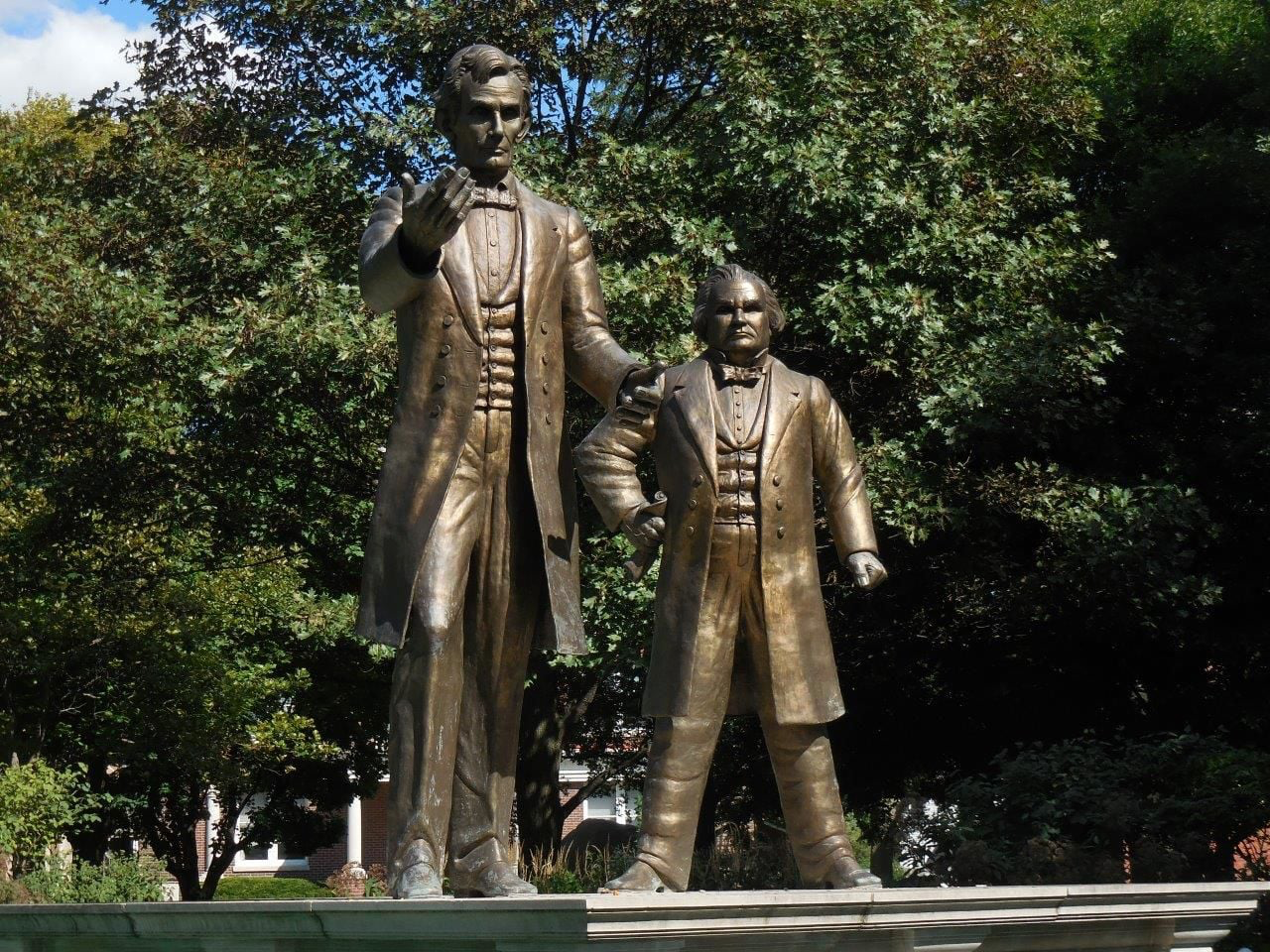
The main topic that dominated Illinois politics was slavery. The senate race mirrored what was a growing concern as an issue throughout the country. Political parties were attempting to bridge the gap between national and regional politics. Eventually once Lincoln was elected President, the Civil War began. Sometimes it stands to reason when national politics will determine state politics, making the Lincoln and Douglas debates a significant component that changed the fabric in American politics.
