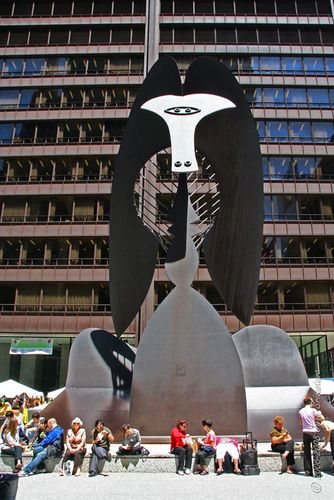
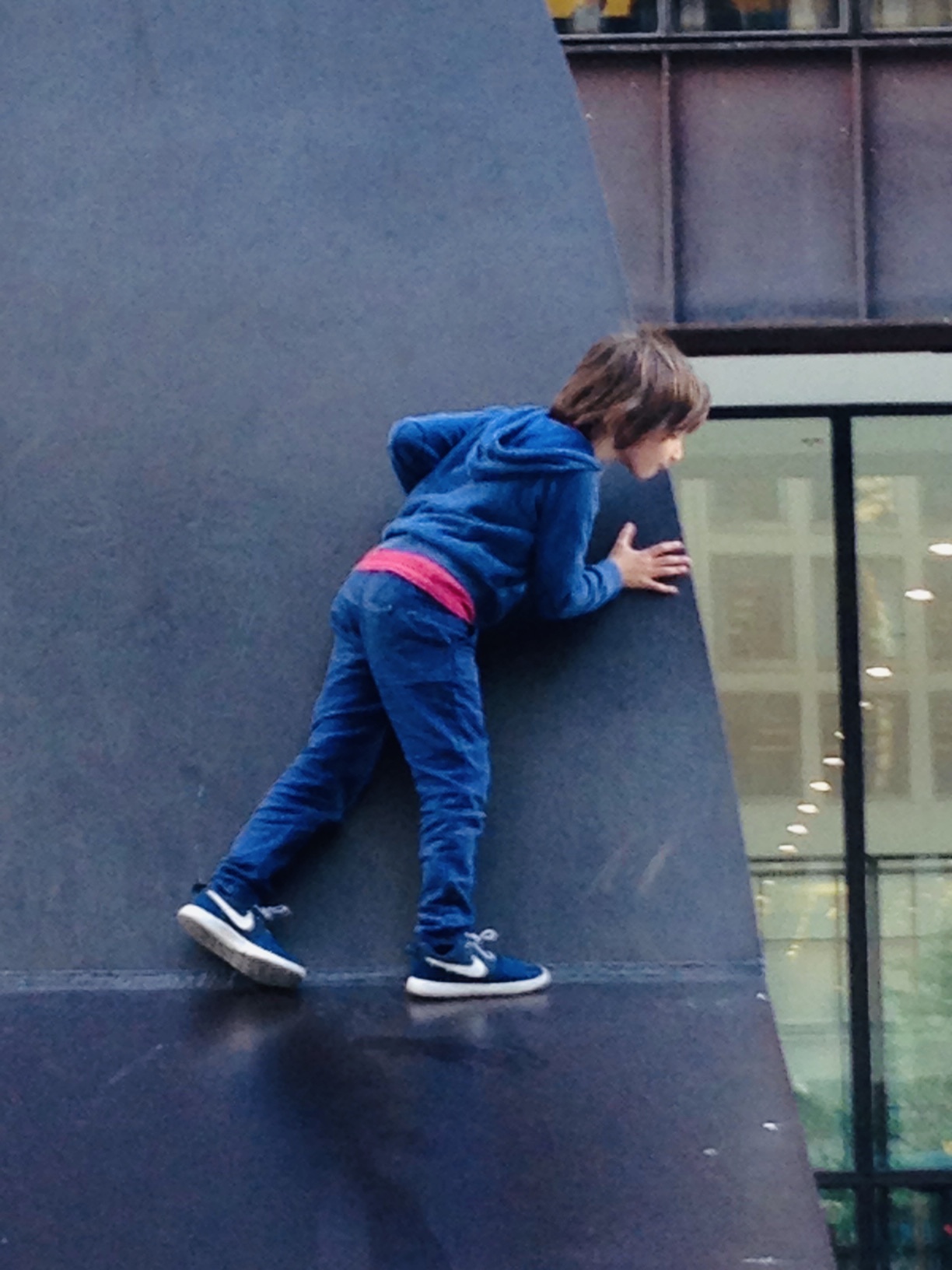
Walking around the Daley Center’s plaza, one could not miss the fifty feet tall, mighty yet playful, sculpture known as “Chicago Picasso”. The work is made of COR-TEN® steel that is of high strength, high weathering resistance, and matches the Daley Center’s exterior. The sculpture was commissioned in 1963 by the Daley Center’s architects who aimed to define the east side of the building. They invited Spanish artist Pablo Picasso (1881-1973) to create a monumental sculpture for the plaza. Picasso worked on his design for two years, and current visitors to the Art Institute of Chicago could view the sketches and model in gallery 144. On August 15, 1967, the massive sculpture was dedicated and unveiled at the Daley Center’s plaza as Chicago’s new and impressive public art. Picasso wrote a letter for the occasion, and expressed that he had given the sculpture as a gift to the people of Chicago. He did not entitle the work and left its interpretation for viewers.
Going back to the year 1920, Spanish artist Joan Miró (1893-1983,) who similar to Picasso often stayed in Paris, where they were able to connect with avant-garde poets and artists. In Paris, Miró painted colorful, dreamy, Surrealist images, and rejected traditional approach. Later, in the early 1930s, Miró made Surrealist sculptures, adding painted stones and found objects. In 1936, Miró was included in the exhibitions “Cubism and Abstract Art,” and “Fantastic Art, Dada, Surrealism” at the Museum of Modern Art in New York. In 1944 Miró started to work in ceramics and prints, and ten years later received the Grand Prize for Graphic Work at the Venice Biennale. In 1959 Miró returned to painting with a series of mural-sized canvases. During the 1960s he focused on sculpture, and museums around the world exhibited several Miró retrospectives.
In Chicago, around 1963, architect Bruce Graham (from the firm “Skidmore, Owings & Merrill”,) introduced designs for the Brunswick building that was planned to be built in the Chicago Loop. Graham’s designs included a large sculpture for the structure’s plaza. The architect invited Miró to create a public sculpture that would complement artist Picasso’s iconic work installed across the street at the Daley Center’s plaza. Miró came to Chicago, examined the site and designs for the Brunswick structure, and proposed his sculpture. The funding for the piece, however, was not available, but in 1980, Mayor Jane Byrne renewed the quest, and “Miró’s Chicago” was again in progress. The sculpture was finally dedicated in 1981, thirty-nine feet tall, made of bronze, ceramic tiles, wire mesh, steel, and concrete. The work was installed at 69 West Washington Street, and entitled “The Sun, The Moon and One Star.” The iconography told a story from Miró’s homeland in Spain. “The Chicago Public Art Guide” publication described the piece on page 19 as follows: “Using his unique visual symbolism, Miró imbued this sculpture with the mystical presence of an earth deity, both cosmic and worldly. Shapes and forms found in this composition evoke celestial imagery and common objects. The bell-shaped base draws the viewer’s gaze downward, symbolizing Miro’s association of the female form with the earth. The sphere at center represents the moon while the shape of the face is derived from that of a ceramic hook. The fork projecting from the top of the head is symbolic of a star, with individual tines representing rays of light.”
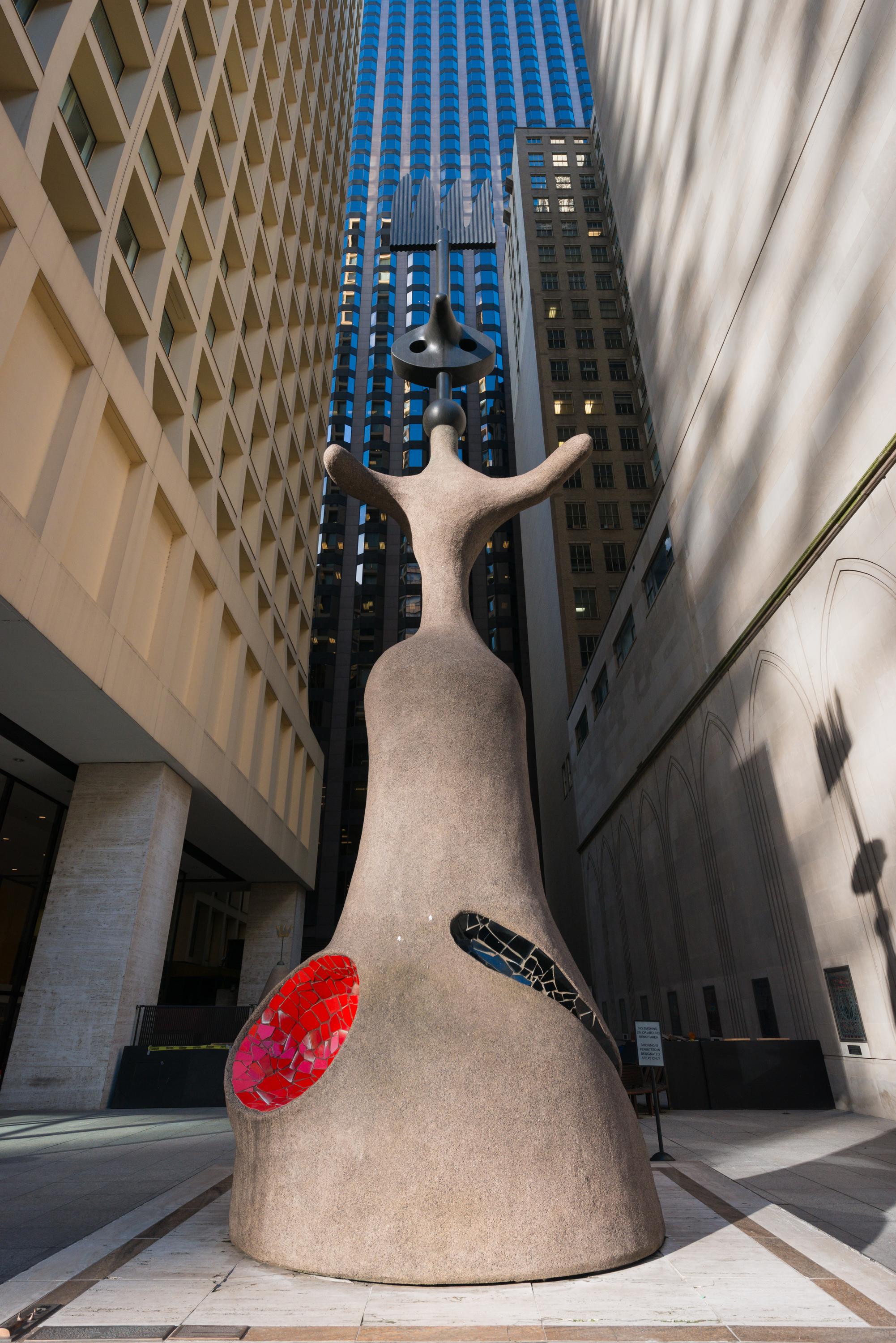
In Chicago Loop, on Washington street, “Miró’s Chicago” complements “The Picasso,” via two different Spanish modernists. Both sculptures intervene in the architectural spaces, and despite the departure of style, both challenge the conventions of time, enriching Chicago with a first-rate visual content.
Note: partial content of this article is republished from Sigalit Zetouni, “Visual Loop,” “Chicago Life Magazine,” Spring 2025, page 10.

