.jpeg)
Catherine Grace Katz and her siblings have always enjoyed watching A Christmas Story in their Winnetka home. One year, they saw young Randy excitedly open his gift of a toy zeppelin for the umpteenth time.
“My younger brother Oliver said, ‘Can you imagine what it would be like to be a passenger on one of those?’” Katz recalled. “And then he said, ‘Catherine, you should write a book about the Hindenburg disaster.’”
Mission accomplished. Shadow Before the Flame: The Hindenburg Disaster and the Prelude to War will be published by Viking, an imprint of Penguin Random House, on Sept. 22. Katz will kick off her book tour at The Book Stall in Winnetka that same evening (sign up here).
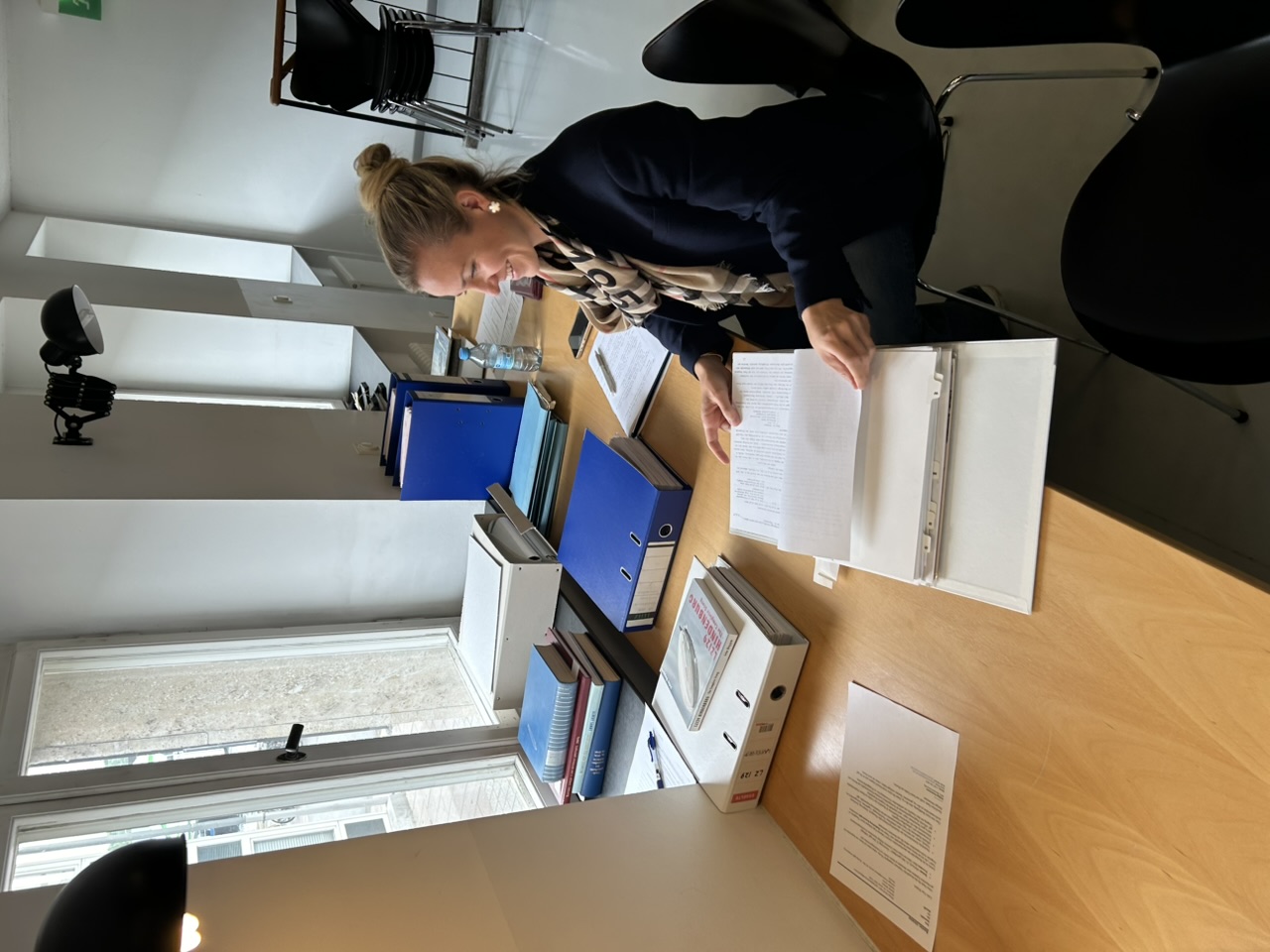
Prodigious research distinguishes the nearly 400-page work – perhaps no surprise from a woman armed with degrees in history from Harvard and from Christ College, University of Cambridge. Katz visited the National Archives in Maryland to pore through all the Hindenburg crash investigation material and interviews with witnesses. She traveled to the Zeppelin Museum in Friedrichshafen, Germany to unearth memoir-like pieces from crew members. Though no one is alive today who survived the fiery explosion, Katz interviewed family members tied to the disaster.
“A girl of 3 or 4 years old who is now in her 90s witnessed the disaster and remembers every second,” Katz noted. “She was waiting for her father to come back from Germany.” That man Joseph Spah – a vaudeville star professionally known as Ben Dova — survived.
Katz’ research of the 1937 tragedy uncovered a pleasant surprise for the New Trier High School alumna: Chicago’s impact on this story.
“It was the most represented city on board the Hindenburg,” she said. “Bert Dolan and Nelson Morris (whose meatpacking company merged with Armour in 1923) become business partners; Dolan was on the Hindenburg because he had visited Morris in Europe. He had promised his wife he wouldn’t fly, but he wanted to surprise her for Mother’s Day.”
Further, the famous radio broadcast of the calamity by Herb Morrison (“Oh, the humanity!”) was aired first by WLS in Chicago a day later.
“They flew back to Chicago with the recording. They weren’t sure what they had on their discs, because they had no way to play it,” Katz said. (Another Chicago connection; longtime Lake Forest Country Day School coach and history teacher Frank Ward was part of the landing crew that day as a teenager. He recalled seeing people fall from the wreckage, some after putting their hands on the red-hot metal.)
For those who know of zeppelins only through the Hindenburg story, Katz gives a welcome tutorial on how amazing these dirigibles (from the French word diriger, meaning to steer) were before planes dominated the skies. They could go around the world, traveling over areas like Siberia, parts of which where man had never stepped foot. In that time, “zeppelins were undoubtedly the fastest and safest means of crossing the oceans,” Katz wrote. It was a normal way of passenger travel for about a decade, before airplanes routinely crossed the Atlantic.
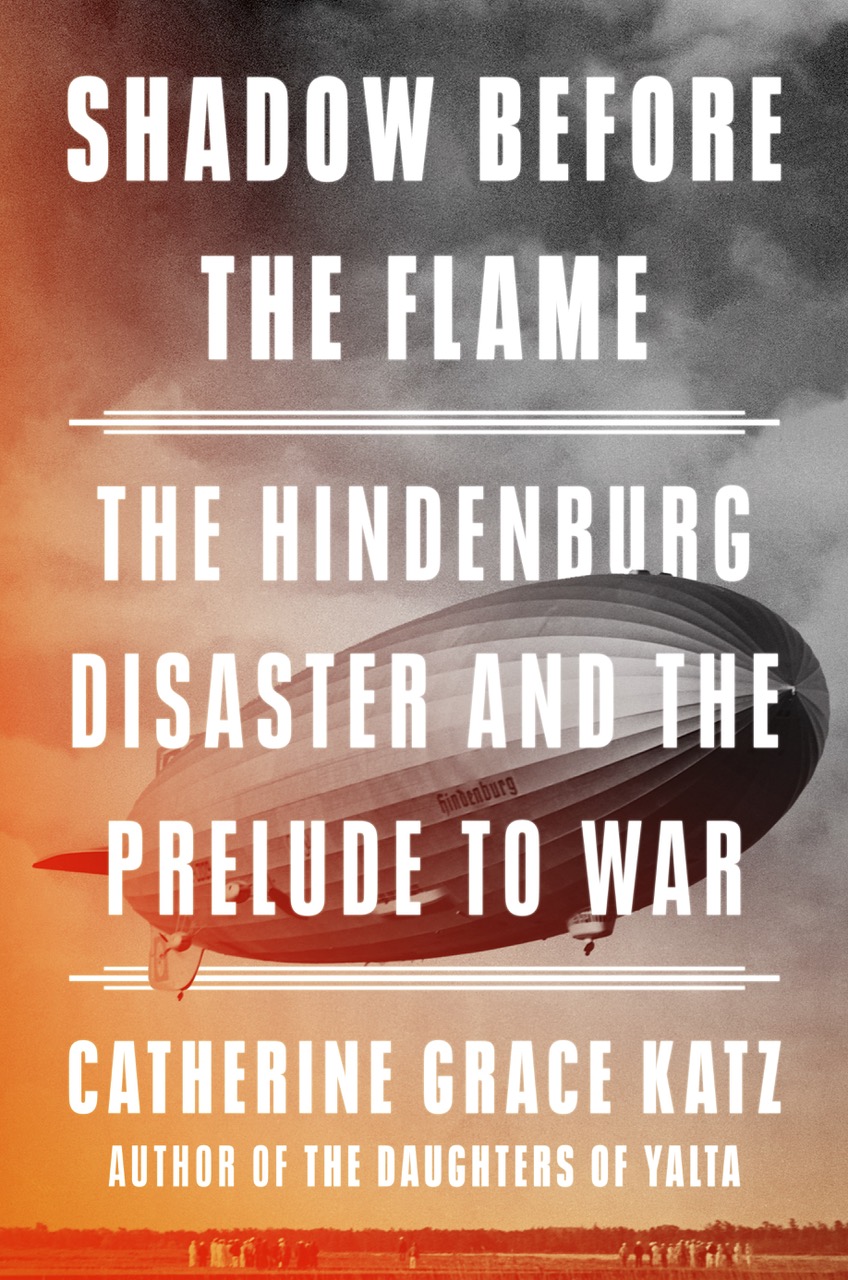
Though dirigibles built in England and France after World War I crashed and killed hundreds, the German ones built by Luftschiffbau Zeppelin (and all infused with a swastika after Hitler’s rise) suffered no casualties despite flying millions of miles. The man who owned the company, Dr. Hugo Eckener, was an airship captain who was incredibly popular in Germany.
The Hindenburg was enormous, Katz writes, bigger than the entire U.S. Capitol building and half as tall as the Empire State Building. It featured well-dressed waiters, ample liquor, food served on china and sleeping quarters.
But its three-day flight across the Atlantic Ocean from Frankfurt, Germany to a naval air station in Lakehurst, N.J. ended in tragedy. While trying to dock, an explosion rocked the airship, and it sank to the ground aflame; nearly three dozen of the 97 on board perished.
Shadow Before the Flame follows Katz’ debut work, The Daughters of Yalta. That tome examined the famous World War II conference through the eyes of Sarah Churchill, Anna Roosevelt and Kathleen Harriman, daughters of Winston, Franklin and Merrill. Wrote The Wall Street Journal, “Skillfully written and meticulously researched, it’s an extraordinary work that reveals the human side underlying the politics … The Daughters of Yalta is a thoroughly engrossing book.” Katz said a screenwriter is working on a movie version.
There is a reason her two books are based in a similar era.
“I love this time period,” she said. “My grandfather was in the Navy in World War II, and I’d run around with a notebook asking him questions as a girl. Also, I loved watching The Sound of Music (set during 1938) and other movies of that era.
“The 1930s is fascinating – we think of it as shrouded in gloom with the Great Depression and the approach to war. But it was a thrilling time to be alive with new inventions that would change daily life.”
Amazingly, the Harvard law school graduate wrote Shadow Before the Flame while working full-time as an associate in the Washington, D.C. office of Freshfields, a global law firm. She spent many weekends ensconced in the Georgetown Library.
“It’s a feeling like your pants are on fire. There’s not a moment to breathe,” she shared about the commitment.
But that’s all part of following your passion. Said Katz, “I can’t remember a time I didn’t want to be an author.”
