
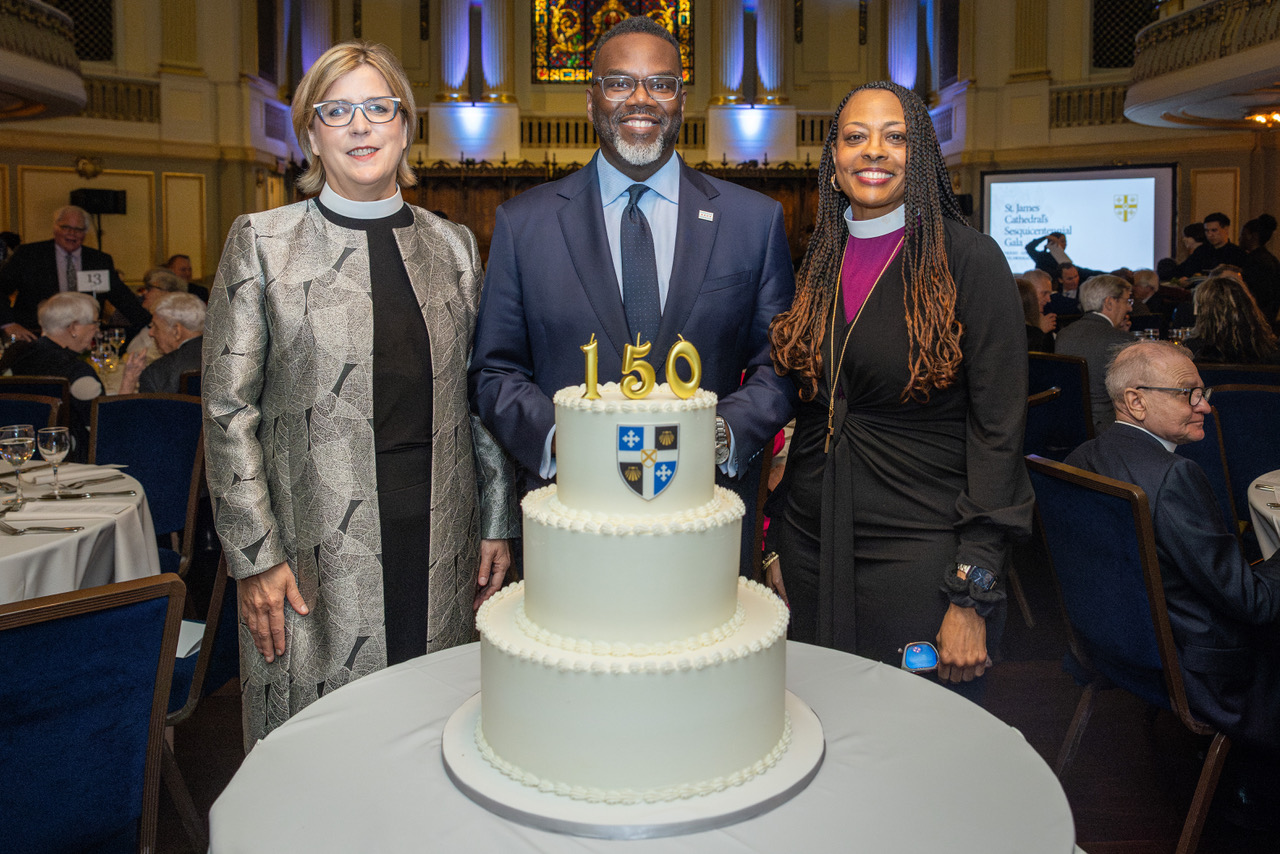
Possibly the only church where both Abraham Lincoln and the Rev. Dr. Martin Luther King worshipped, a survivor in part of the Great Chicago Fire, St. James Episcopal Cathedral has been known not only for its spirit and service but also for its bold vision for over 150 years. And at 150, their plan for the future is as bold and visionary as Burnham.

Speaking at the neighboring Driehaus campus just off Michigan Avenue at a Sesquicentennial Gala which welcomed Mayor Brandon Johnson, the Right Reverend Paula Clark, Episcopal Bishop of Chicago, and a sold-out crowd of dignitaries, architects, friends, and parishioners, the Very Reverend Lisa Hackney-James, Ninth Dean of the Cathedral, told of the urgency of preserving its plaza and buildings, both historic and modern.
"We have such an inheritance in these buildings, in this space, in this plaza. We have such an inheritance in this community, a community that cares for one another, but cares beyond themselves. It is this gift to the city that we must now safeguard for the benefit of generations to come, realizing our bold vision for the cathedral and unified campus on Huron Street."

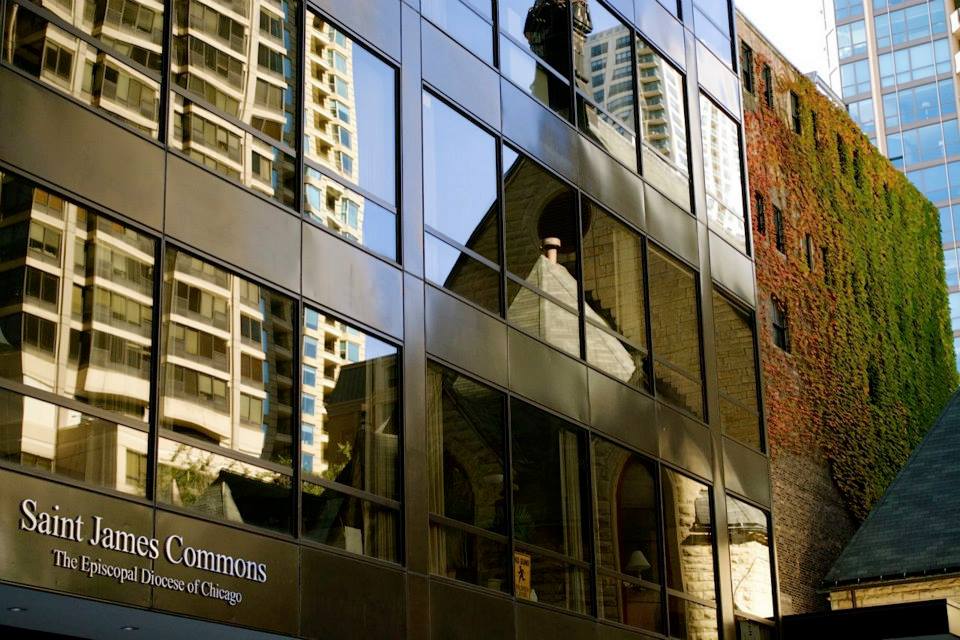
The Cathedral has so far raised $7.5 million, nearly reaching the mid-point of its campaign to purchase from the Diocese of Chicago the modernist Commons building, designed by Hammond & Roesch, and the civic plaza at 65 E. Huron, which face the danger of being razed and replaced by a high rise if sold to a developer.
At present, the Commons not only contains the Cathedral's offices and mechanical systems but also houses significant arts and outreach organizations and invaluable community gathering spaces.
"We don't need another 50-story apartment building with a coffee shop on the first floor (as much as we love coffee.) We need to own the building," said Dean Hackney-James.
"Our spaces provide shelter and sustenance for the vulnerable in our midst while promoting the flourishing of the arts, architecture, and design, pulling the past forward for all Chicago."
St. James is reclaiming a deeper role for itself in the city, building on its burgeoning outreach programs and long-held reputation for artistic and musical excellence. It seeks to activate and invest in new opportunities for cultural exchange and restoration through a unified Cathedral campus — a campus which is already inextricably connected by history and the more tangible mechanical systems that power the Cathedral building.
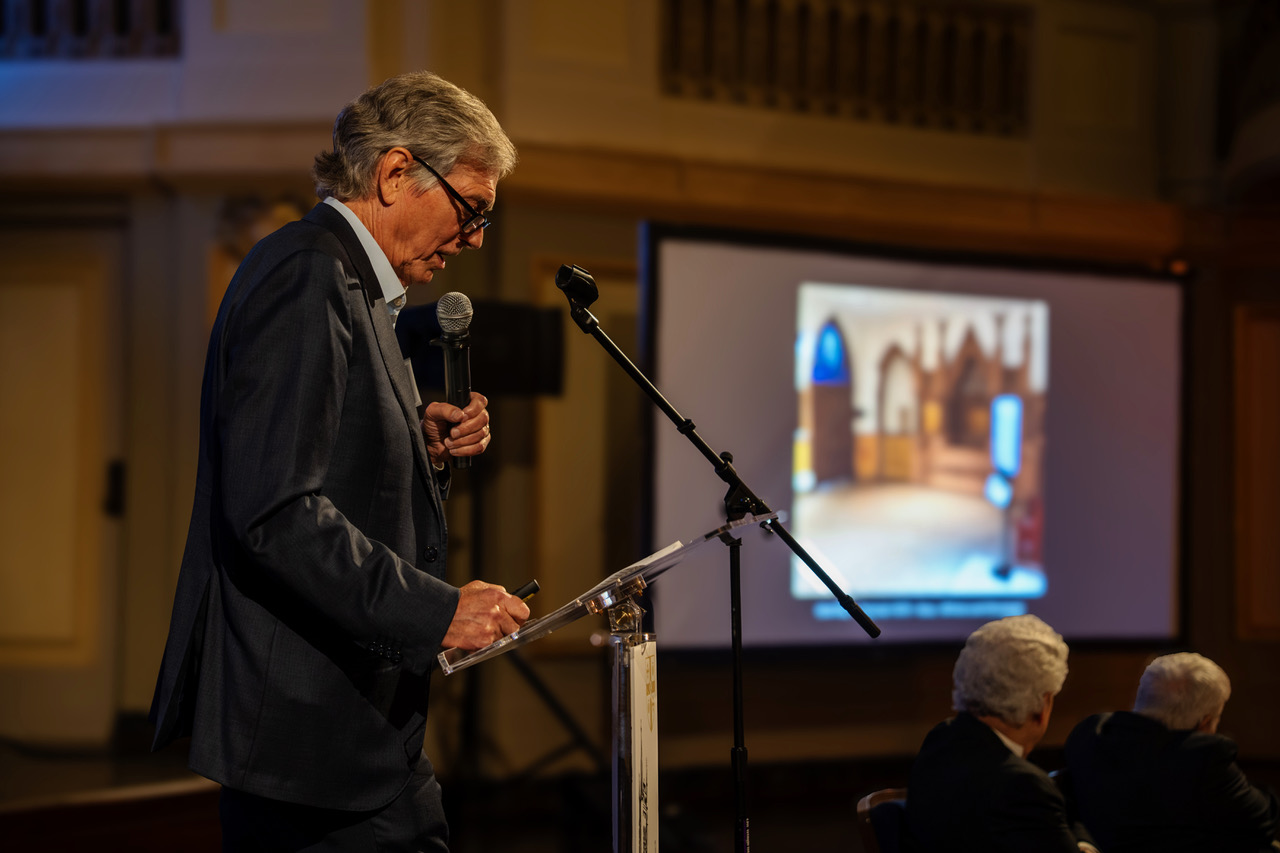
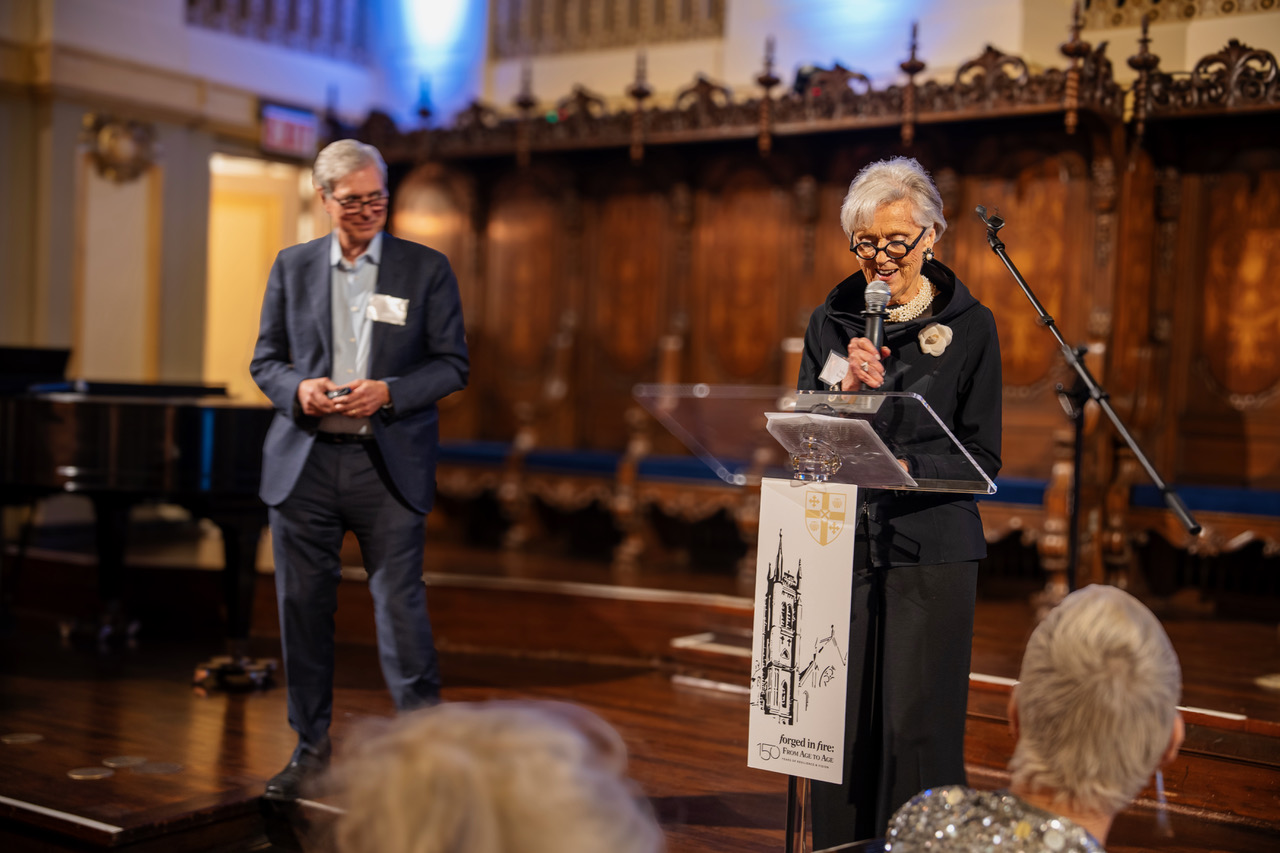
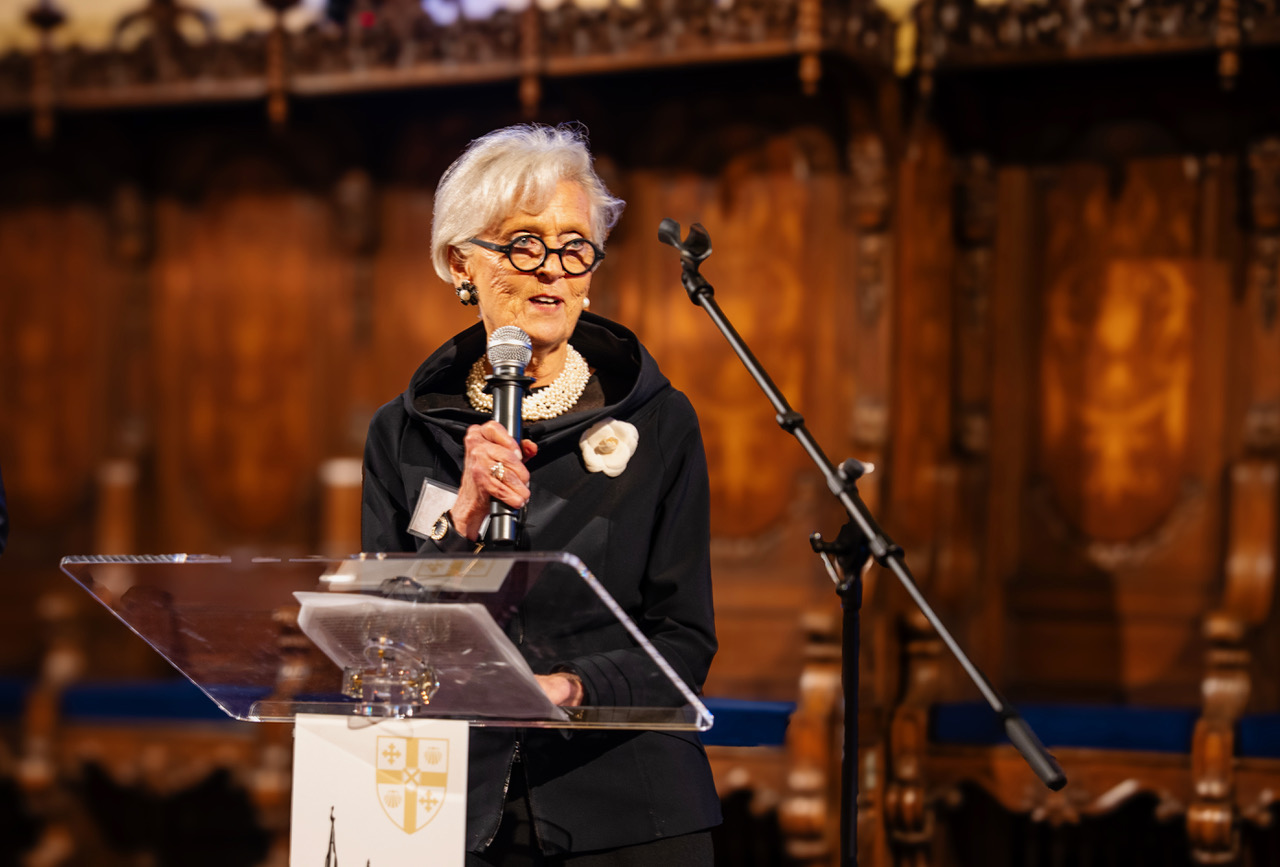
Preservation Architect Gunny Harboe and Biba Roesch, whose late husband Peter Roesch designed the Commons spaces, spoke of the architectural significance of the five-story glass and bronze building which in 1970 won AIA's Distinguished Building Award. The wide plaza located in front of the Commons, where so many gather for enjoyment, was particularly noted in this award.
Peter Roesch, of Hammond & Roesch, was a distinguished Chicago modernist architect, Illinois Institute of Technology (IIT) professor, and student of Ludwig Mies van der Rohe.
Harboe, renowned for a number of preservation projects including Frank Lloyd Wright's Unity Temple in Oak Park, announced Harboe Architects' commission to develop a masterplan for St. James, guiding the restoration and revitalization of the historic Cathedral campus.
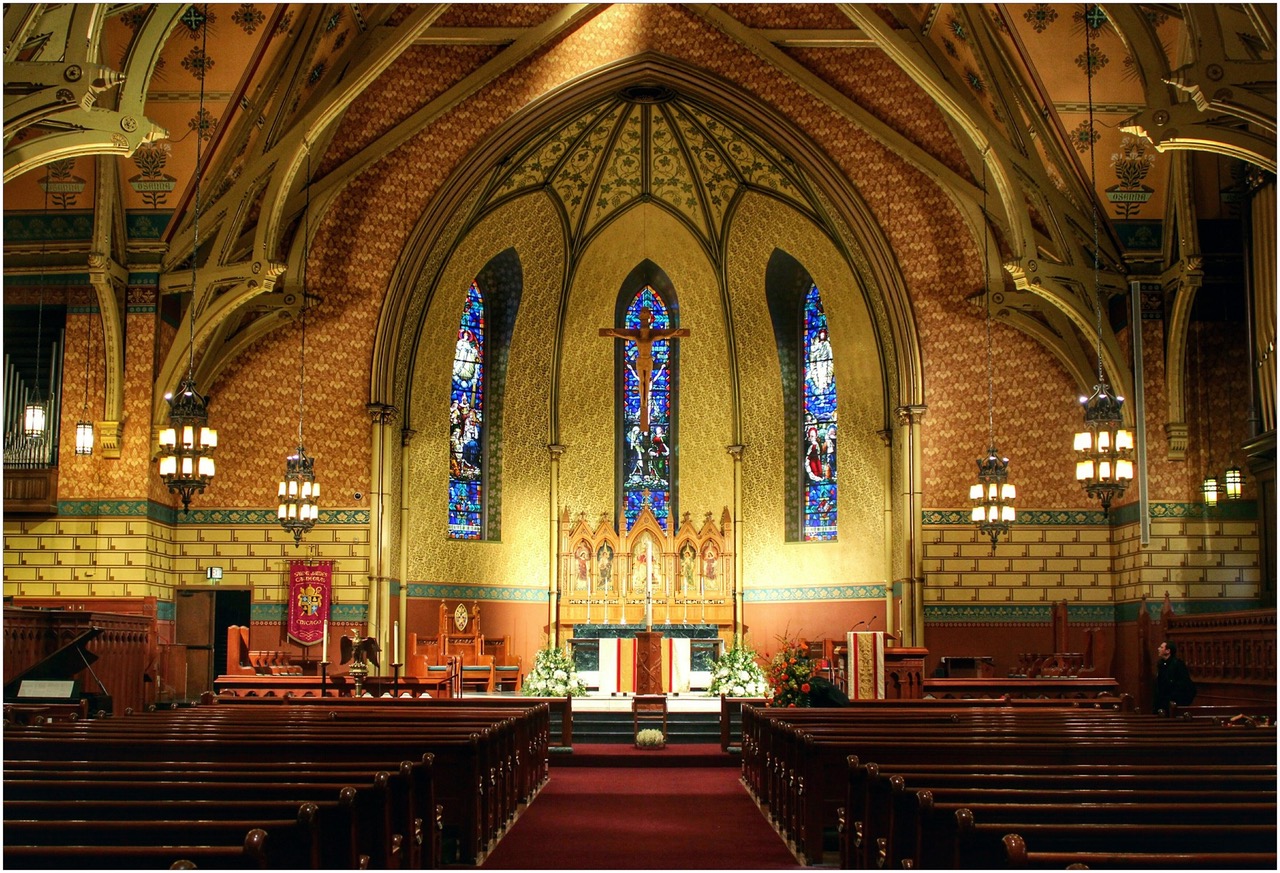
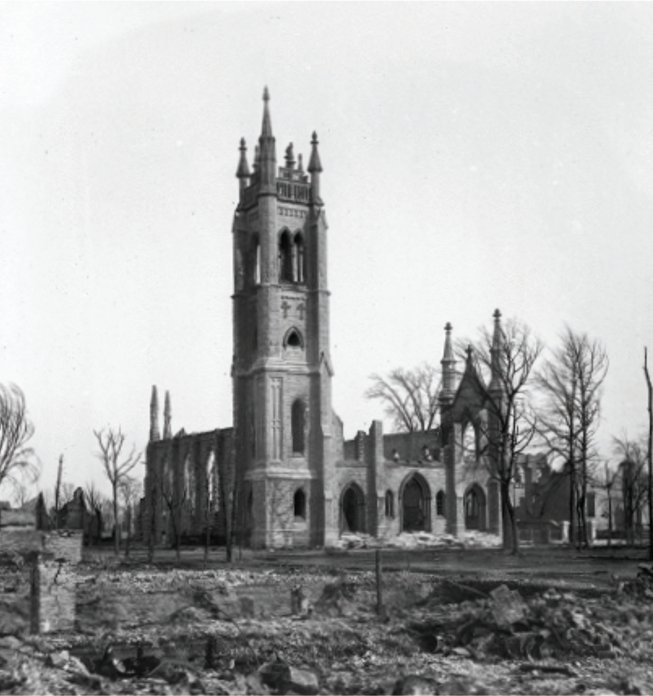
Founded in 1834 at Wabash and Illinois Street, the Cathedral moved to its current location at Wabash and Huron in 1857. Some stone walls, the Civil War Memorial, and the tower, whose bells are said to have given warning to the neighborhood of the 1871 fire, survive.
Known for her humor and sang-froid as well as her brilliant preaching and commitment to outreach, Dean Hackney-James told of St. James' significance to Chicago from the early days.
"William Ogden, Chicago's first mayor, was a member of our congregation. He ran against John H. Kinzie in 1937. Both were members and that could have been awkward at Sunday Services. Many of those street-named people — Hubbards and Kinzies as well as Ryersons, Palmers and Newberrys — had robust engagement here."
Harboe noted that Edward Burling designed the 1857 building as part of the firm of Burling and Backus and later returned to rebuild St. James in 1875 as part of the firm of Dankmar Adler.
Designed in the Gothic Revival Style, using Lemont limestone which was quarried along the Des Plaines River, the church is built in the same limestone as Holy Name Cathedral and the Water Tower.
Internally, the Arts and Crafts interior in the William Morris style and the memorial to those lost during the Civil War created by Central Park's Vaux and Olmsted, have been admired by visitors from around the world.
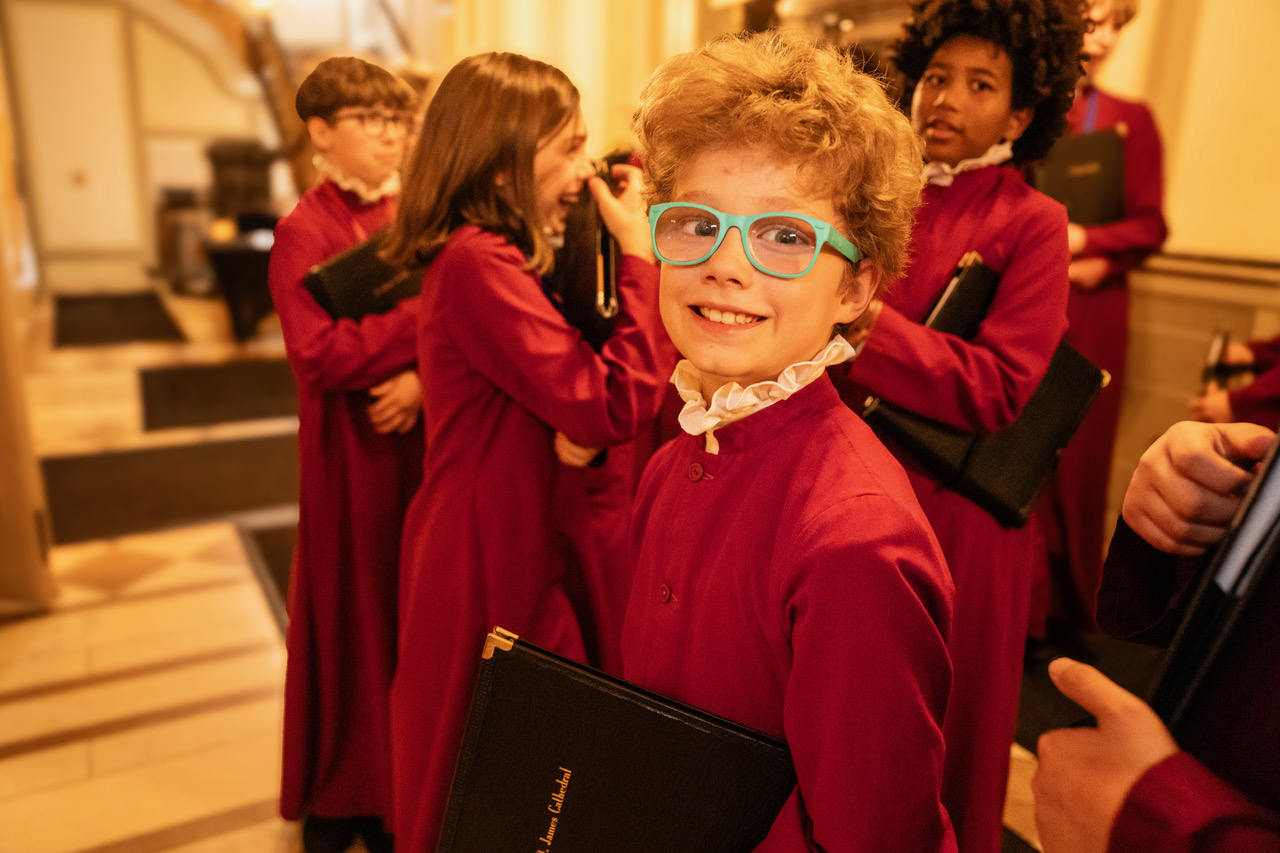
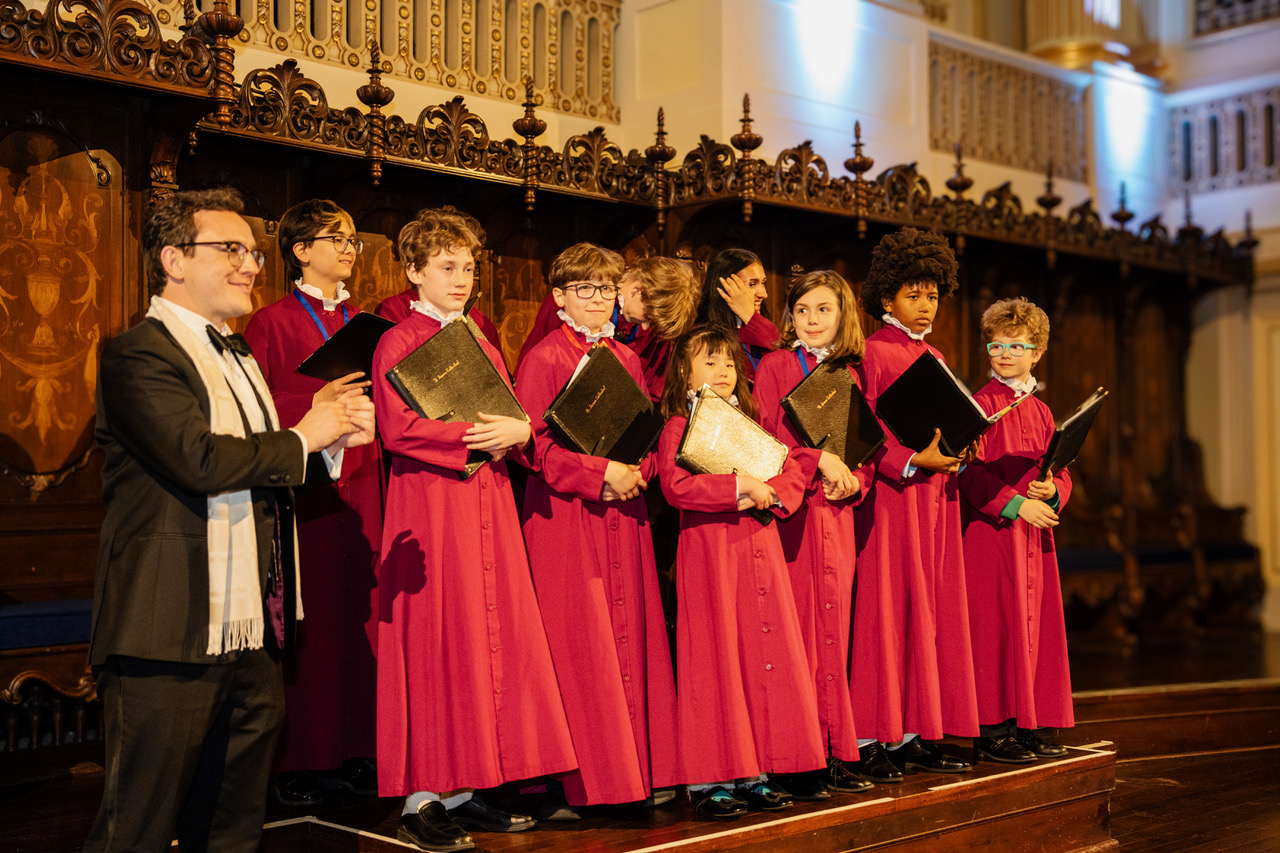
A group of talented young singers known as the St. James Choristers ended the Gala evening which began with a musical greeting from members of the church choir, recognized across the region for its sacred music. This was surely a statement, looking to the future and St. James' efforts to preserve a unified Cathedral campus for generations to come.
For more information about St. James Cathedral and its campaign, contact Robert Grisbrook, St. James' Director of Development at rgrisbrook@saintjamescathedral.org.