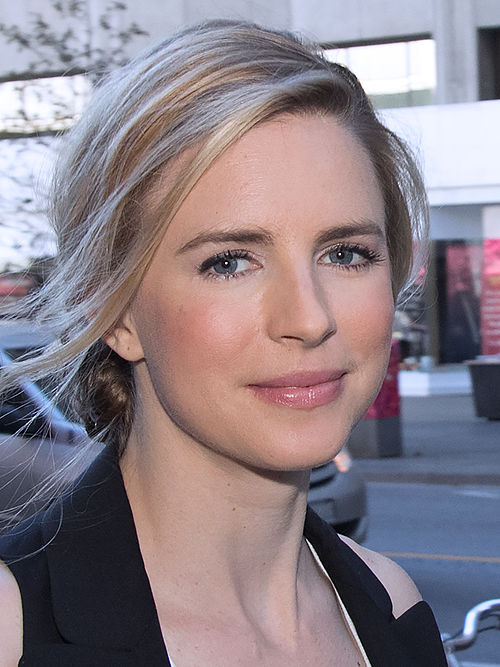
Valedictorian at Georgetown with significant investment banking options at graduation, Marling defines the new wave of emerging leadership of women in film in many ways taking film back to the silent era when women were in charge. Combining the skills of Chicago-educated pioneer polymath Jeanie Macpherson who acted, wrote and directed numerous early movies and helped found the Academy of Arts and Sciences and the mid-century beauty and serenity of Grace Kelly, Marling is helping define filmmaking in the future.
Here recently to visit family with her parents, former Chicago real estate executives Heidi and John Marling and sister Morgan, a health and wellness specialist, Marling explored her old Gold Coast neighborhood and reflected on how women are changing Hollywood today.
“The last few years have been such a powerful time for women telling stories. I have loved going to the theatre and watching a drama told from a point of view I haven’t seen before — Shakespeare’s wife in Hamnet, or the female author in Anatomy of a Fall, or young girls across multiple generations in Sound of Falling. When a work is written and then lensed by women the gaze fundamentally changes. It’s such an exciting time to tell stories and to be in the audience. You get the sense that the audience is hungry for the new.”
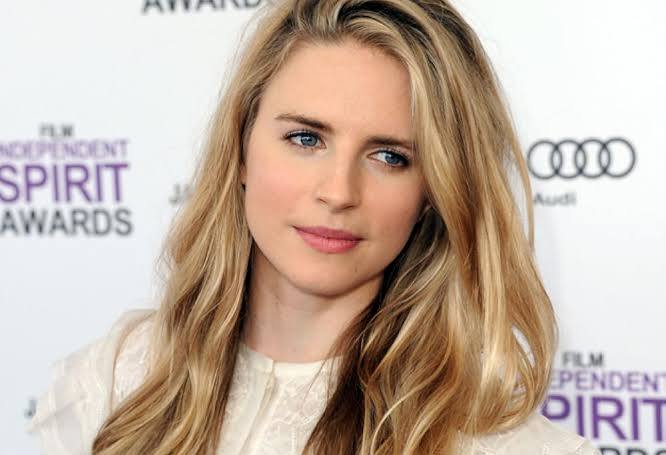
Following the success of her FX limited series A Murder at the End of the World which she co-created, co-wrote, directed and starred in and was nominated for a Critics Choice Award, Marling is currently working on film and television projects in Los Angeles with her creative partner Zal Batmanglij for the production company Sister.
Marling says she has always been telling stories. “I remember growing up in Winnetka and recruiting my friends to put on small plays in Nick Corwan park or in our backyards. My sister and I got pretty industrious about it. We would charge the parents of all the kids in the play to come watch. It was not a bad business model,” she laughs.
To Marling, story-telling is all. “I think my favorite part of filmmaking is that it’s a choral art — it’s a bunch of voices coming together to author something. Everybody works in service to the story. On A Murder at the End of the World I would come on set and constantly be moved by the work our production designer had done, or a shot our director of photography had in mind, or a location our Icelandic team had found. Our scouts there were truly adventurous. We were often suiting up into climbing gear and repelling to the bottom of icy ravines to find locations no one had yet put on screen.” Filming shots along frozen Icelandic terrains all day in sub-zero weather hearkens back to Lilian Gish, pioneer actress who directed her sister Dorothy in movies and floated for hours on a frozen river in Maine in “Way Down East”.

As a student at Georgetown University, she studied economics and photography. Her sophomore year she began writing and staring in friends’ films. She took a leave of absence to move to Havana to co-direct the documentary Boxers and Ballerinas with fellow alumn Mike Cahill about young athletes and artists working there.
“At Georgetown I studied with Professor Bernard Cook who heads the film program and Professor Roberto Bocci who founded the digital arts lab. I was lucky to be there at the beginning of the film movement on campus. We happened to come of age at a time where SLR cameras were able to shoot something that mimicked film’s 24 frame aesthetic and you could edit footage yourself on Final Cut Pro on your laptop in your dorm room. Those tools were game changers. You didn’t have to go to film school anymore to make a film. When I was at Georgetown as a freshman it had its first ever film festival — the curiosity and demand was following the technology.”
After graduating valedictorian from Georgetown she turned down a banking job at Goldman Sachs to move to Los Angeles to make movies. “In retrospect, it was a wild leap of faith. But I think I had lived my back-up plan first and saw no other way forward.”
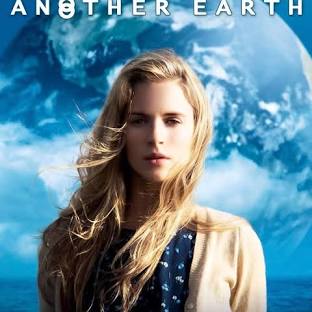
At the 2011 Sundance Film Festival, she made history as the first female actor and writer to have two films premiere side by side, her first feature length narrative film Another Earth with Cahill as director, and Sound of my Voice with Zal Batmanglij, both of which she starred in, co-wrote and co-produced. Not only was she highly recognized by Robert Redford but also Fox Searchlight acquired both films. Marling was nominated for Independent Spirit Awards for both which also won the esteemed Alfred P. Sloan Prize.
Marling went on to star in Redford’s The Company You Keep, Nick Jarecki’s “Arbitrage,” and Jesse Armstrong and Sam Bain’s series “Babylon.” She then teamed with Batmanglij to make the critically acclaimed series for Netflix The OA. She spoke of how technology is again shifting the world of film.
“I think the early streaming era was really exciting for independent film makers because there was a Silicon Valley mentality that came to Hollywood and believed in taking creative risks. I think The OA and a lot of other form breaking narratives were born from that period of technological upheaval. And the landscape is still constantly changing. You Tube and Tik Tok and other forms of more micro storytelling are changing tastes, attention spans. But I feel there will always be room for a good story well told. We might just have to dig harder for it, because going to the movie theatre or gathering around a television set for appointment viewing is no longer a given. There’s a lot to compete with.”
Returning to Chicago after a long time away had a powerful effect on Marling. “I’ve been thinking a lot about place — knowing a place deeply and what kinds of stories are born from that. I’ve also been thinking a lot about the stories that shaped me when I was a child here at Hubbard Woods Elementary — like Madeleine L’Engle’s A Wrinkle in Time. Perhaps I’m thinking a lot about source — where stories come from and why and what makes them essential.”
When asked whether she preferred acting to writing or directing to acting or what she will lean into next, Marling responded, “When I am acting I miss the writing and find the flipside true, too. I love fusing it all. Storytelling is an amazing catharsis. In acting, you feel that you are abandoning the past and future to live only in the moment. In directing, I feel you take in a lot of the history of the craft and try to play it forward. And writing — writing is always the future to me. What’s coming. Or what I hope to call in.”